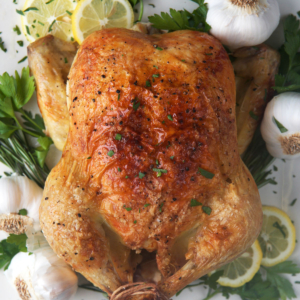
Royal Engagement Chicken Recipe
The BEST EVER Roast Chicken Recipe, garlic-y, butter-y perfection.
Servings: 8
Cost: $15
Equipment
- roasting pan
- kitchen twine
- chef's knife
- cutting board
Ingredients
- 1 4-5 pound roasting chicken giblets removed and patted dry
- kosher salt and fresh ground pepper
- 1/4 cup olive oil
- 2 lemons cut into quarters
- 2 whole heads of garlic cut in half
- 2 spanish onions peeled and cut into 1/2 inch slices
- 5 sprigs fresh thyme
- 2 sprigs fresh rosemary
- 3/4 cup dry white wine
- 3/4 cup chicken stock
- 2 tablespoons cornstarch or flour
- 2 tablespoons butter
Instructions
- Preheat oven to 425 degrees.
- Season the inside of the chicken with salt and pepper. Place half a lemon and half a head of garlic inside the chicken with a few sprigs of thyme and rosemary. Reserve the remaining lemon, garlic and herbs for later.
- Brush the entire surface of the chicken with 2 tablespoons of olive oil. Season liberally with salt and pepper.
- Tie the legs together with kitchen twine and tuck the wings under the body.
- Place the chicken in the roasting pan breast side up.
- Place the remaining lemon, herbs and garlic in a large bowl with the onion. Toss to coat with the remaining olive oil and season with salt and pepper.
- Arrange the onions and lemon around the chicken in the roasting pan.
- Roast the chicken for approximately 1 hour and 15 minutes or until the juices run clear when you cut between the leg and thigh. Transfer the chicken to a serving platter and cover with foil to keep warm.
- Place the pan on the stove and turn the heat to medium-high. Add the wine to the pan and deglaze by using a wooden spoon to scrape the brown bits off the bottom of the pan. Sprinkle the cornstarch over the sauce and cook for 30 seconds.
- Add the stock to the pan and cook for 1-2 minutes until the sauce thickens. Stir in the butter and any juices that collected on the serving platter.
- Carve the chicken and serve with the lemons, onions and pan sauce.
Notes
- Chicken size: This recipe works best with a 4–5 lb whole chicken. Smaller birds will cook a bit faster, larger ones may need an extra 10–15 minutes. Always go by internal temperature, not just time.
- Internal temperature: The chicken is done when the thickest part of the thigh reaches 165°F and the juices run clear. Check in 2–3 spots, avoiding the bone.
- Garlic usage: You’ll use 2 whole heads of garlic, halved crosswise. Some halves go inside the cavity, and the rest roast in the pan with the onions and lemons to flavor the sauce.
- Dutch oven vs roasting pan: A Dutch oven keeps the chicken extra juicy and helps concentrate the pan juices. If you use a roasting pan instead, make sure the chicken isn’t swimming in a huge pan or the onions/garlic can burn in a thin layer, add extra onion or a splash of broth, if needed.
- Crispy skin tip: Pat the chicken very dry with paper towels before seasoning, and roast it uncovered. If the skin browns too quickly, tent loosely with foil and continue cooking.
- Trussing (tying the legs): Tying the legs together helps the chicken cook more evenly and stay moist, but it’s optional. If you don’t truss, start checking for doneness 5–10 minutes earlier.
- Wine substitute: You can replace the white wine in the pan sauce with chicken broth. Add a little extra lemon juice at the end if you want more brightness.
- Herb options: Fresh thyme, rosemary, and parsley are great here. If using dried herbs, use about 1 teaspoon dried for every 1 tablespoon fresh and sprinkle over the skin and in the cavity.
- Rest before carving: Let the chicken rest for 10–15 minutes before carving so the juices can redistribute and the meat stays tender.
- Leftovers: Store leftovers in an airtight container in the fridge for 3–4 days. The meat is delicious in salads, sandwiches, grain bowls, or soup.
Nutrition
Calories: 496kcal | Carbohydrates: 9g | Protein: 37g | Fat: 32g | Saturated Fat: 9g | Polyunsaturated Fat: 7g | Monounsaturated Fat: 13g | Cholesterol: 179mg | Sodium: 178mg | Potassium: 530mg | Fiber: 1g | Sugar: 2g | Vitamin A: 1782IU | Vitamin C: 23mg | Calcium: 41mg | Iron: 3mg