
This post may contain affiliate links. Please read our disclosure policy.
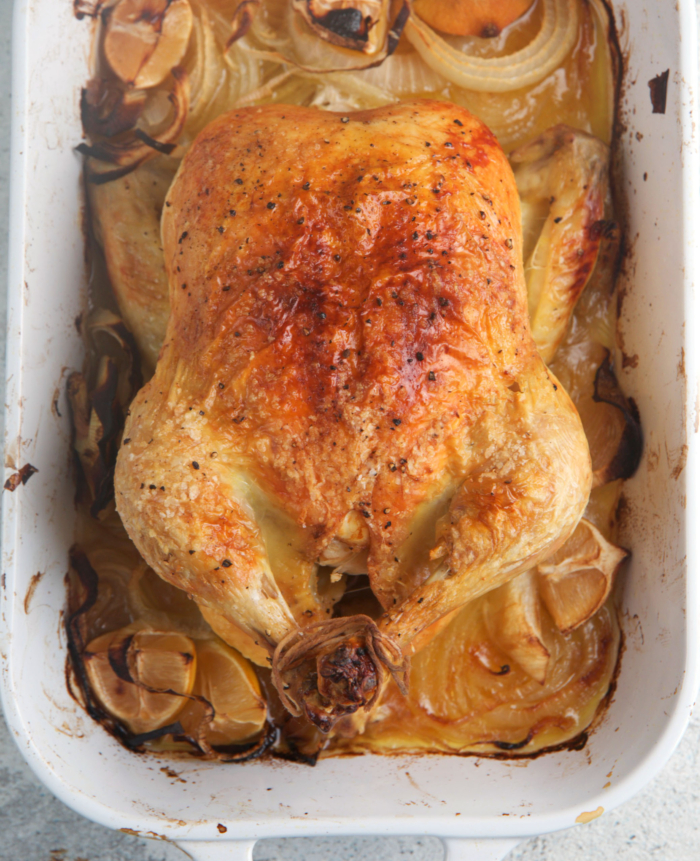
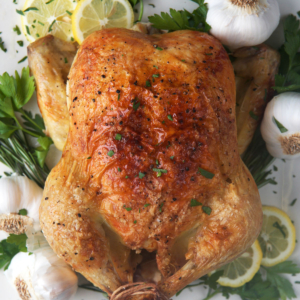
This classic Engagement Chicken is a juicy lemon-garlic roast chicken with crispy skin, tender meat, and a creamy pan sauce made right in the same pot. Inspired by the famous Glamour magazine recipe and Ina Garten’s engagement roast chicken, my version keeps all the cozy romance but uses a Dutch oven so the chicken stays extra moist without any complicated steps.
Whether you’re cooking for date night, a special occasion, or just want a fool-proof roast chicken that always impresses, this recipe is simple, comforting, and absolutely delicious. It might not guarantee a proposal, but it definitely doesn’t hurt.
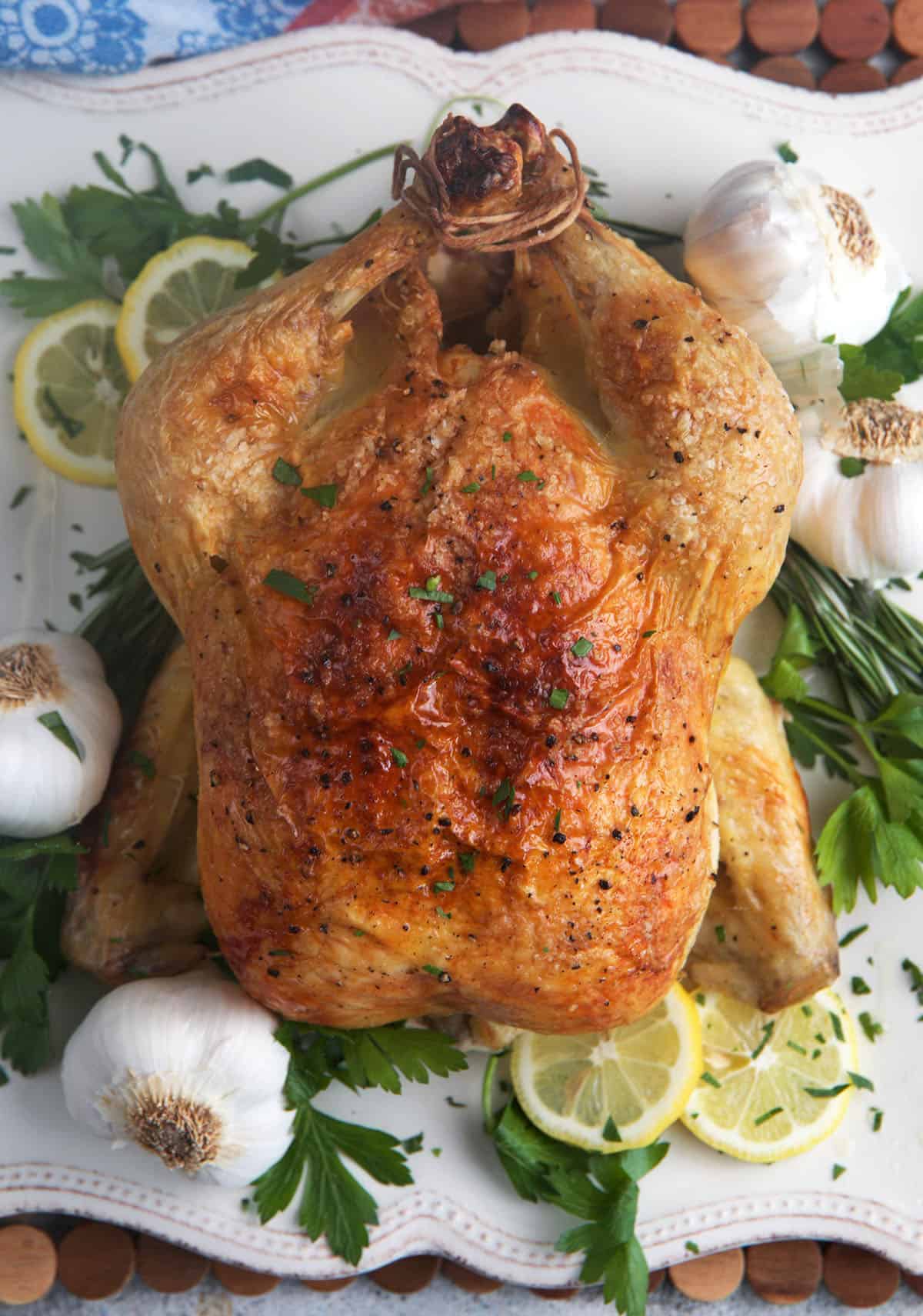
Table of Contents
- Why You’ll Love My Engagement Chicken
- Why It’s Called “Engagement Chicken”
- Ingredients for Engagement Chicken
- How to Make Engagement Chicken
- Kellie’s Tips for Perfect Engagement Chicken
- What to Serve with Engagement Chicken
- Storage, Leftovers and Reheating
- More of My Favorite Chicken Recipes
- Engagement Chicken Recipe
Why You’ll Love My Engagement Chicken
- Perfect for leftovers: Any leftover chicken is amazing in salads, sandwiches, grain bowls, or soup the next day.
- Fool-proof method: Roasting the chicken in a Dutch oven keeps it incredibly juicy and tender, even if you’re new to cooking whole chickens.
- Crispy, golden skin: Drying the bird well and roasting it uncovered gives you that shatter-y, bronzed skin everyone fights over.
- Built-in pan sauce: The lemons, garlic, onions, and juices create an easy pan sauce right in the pot – no extra pan or packet gravy needed.
- Special but simple: The ingredients are basic grocery staples, but the end result feels restaurant-worthy and date-night fancy.
Why It’s Called “Engagement Chicken”
The legend of Engagement Chicken started years ago at Glamour magazine, when an assistant brought in a lemony roast chicken for her boyfriend. Shortly after dinner, he proposed. The recipe made the rounds in the office, and the same thing kept happening, more roast chicken, more engagements – and the nickname stuck.
The chicken became even more famous when it was reported that Meghan Markle and Prince Harry got engaged after “trying to roast a chicken” together. My version is made with a cozy, Dutch-oven twist that feels special enough for a proposal but easy enough for a Sunday night.
I’ve been making this same roast chicken recipe for years after seeing a version Ina Garten made for her husband, Jeffrey. It’s just as amazing and magical as the original Engagement Roast Chicken recipe but so much easier to make.
Ingredients for Engagement Chicken
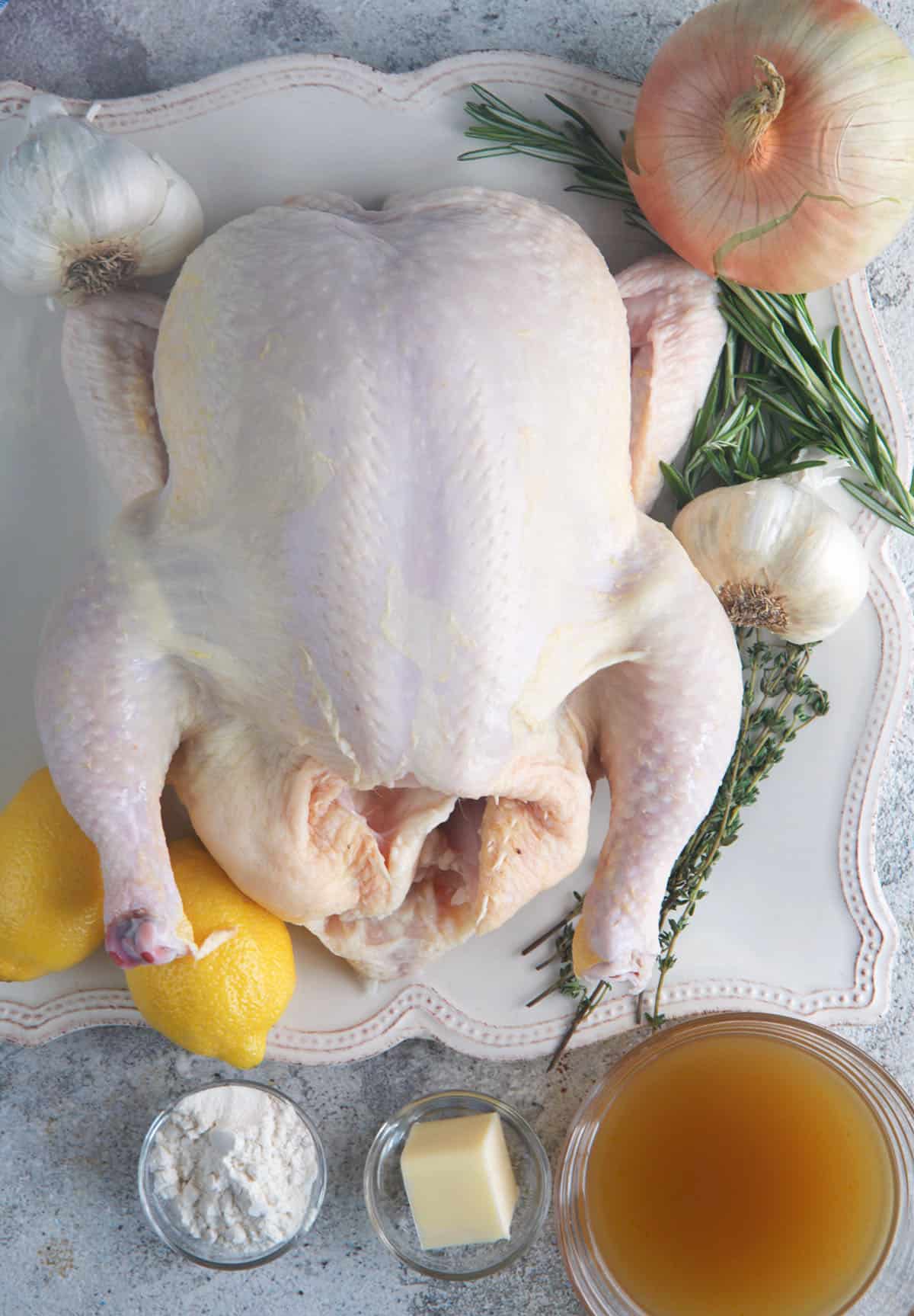
- Whole chicken – Use a whole chicken in the 4–5 pound range. Smaller birds will cook a bit faster, larger chickens may need extra time. If your chicken is closer to 5 pounds, start checking for doneness around the time listed, but don’t be afraid to add an extra 10–15 minutes if needed.
- Lemons – Fresh lemons are key for the bright, tangy flavor. You’ll stuff some in the cavity and roast the rest in the pan. If you want a slightly less intense lemon flavor, use fewer lemon halves in the pan and add a splash of chicken broth to balance it.
- Garlic – You’ll use whole heads of garlic, halved crosswise. Some of the garlic roasts inside the chicken for flavor, and the rest softens in the pan and melts into the sauce. Roasting the garlic whole keeps it sweet and mellow instead of sharp.
- Onions – Sliced onions create a flavorful bed for the chicken and help build the pan sauce. Yellow or sweet onions work best. If your pot is very big, add extra onion so they don’t burn in a thin layer.
- Fresh herbs – Use your favorite combo of fresh herbs like thyme, rosemary, and parsley. If you only have dried herbs, use about 1 teaspoon dried for every tablespoon of fresh and sprinkle them over the skin and in the cavity.
- Olive oil or butter – Olive oil keeps things simple and light, while melted butter adds richness and helps the skin brown. You can use one or a mix of both.
- White wine or Stock – Dry white wine adds flavor and helps deglaze the pan for the sauce. If you prefer to cook without alcohol, use chicken stock instead and add a squeeze of extra lemon at the end.
- Salt and pepper – Don’t be shy with the kosher salt and black pepper, especially inside the cavity and on the skin. It’s the foundation of a flavorful roast chicken.
For the full ingredient list and instructions, see the recipe card below.
How to Make Engagement Chicken
- Prep the chicken – Remove the giblets from the cavity and pat the chicken very dry with paper towels, inside and out. The drier the skin, the crispier it will get in the oven.
- Season generously – Season the cavity well with salt and pepper. Stuff it with a few lemon halves, some of the garlic halves, and a handful of fresh herbs.
- Tie the legs (optional but helpful) – Use kitchen twine to tie the legs together. This helps the chicken cook evenly and stay juicy. If you skip this step, your chicken will still be delicious – just start checking for doneness 5–10 minutes earlier.
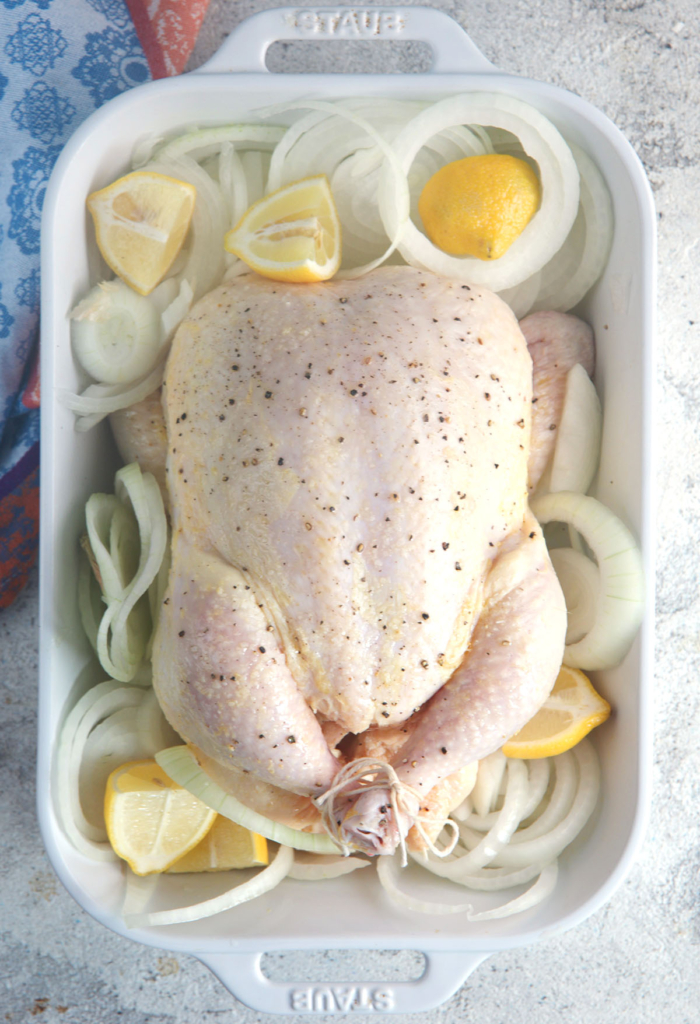
- Arrange the bed of veggies – Add the sliced onions, remaining lemon halves, and remaining garlic halves to the bottom of your Dutch oven or roasting pan. Drizzle with a little olive oil and season with salt, pepper, and herbs. This will become the base of your pan sauce.
- Season the outside – Place the chicken on top of the onions, breast side up. Drizzle with olive oil or melted butter, then rub it all over the skin. Season generously with salt, pepper, and more herbs.
- Roast the chicken – Roast the chicken uncovered until the skin is deep golden brown and the juices run clear. The internal temperature should reach 165°F in the thickest part of the thigh (not touching the bone). If the skin is browning too quickly at any point, tent the chicken loosely with foil and continue roasting.
- Rest the chicken – Transfer the chicken to a cutting board and let it rest for about 10–15 minutes before carving. This gives the juices time to redistribute so the meat stays moist.
- Make the pan sauce – Place the Dutch oven over medium heat on the stovetop. Squeeze some of the roasted lemon into the pan, mash the soft garlic cloves into the onions, and add a splash of wine or chicken broth. Simmer for a few minutes, scraping up the browned bits from the bottom of the pan, until slightly reduced and silky.
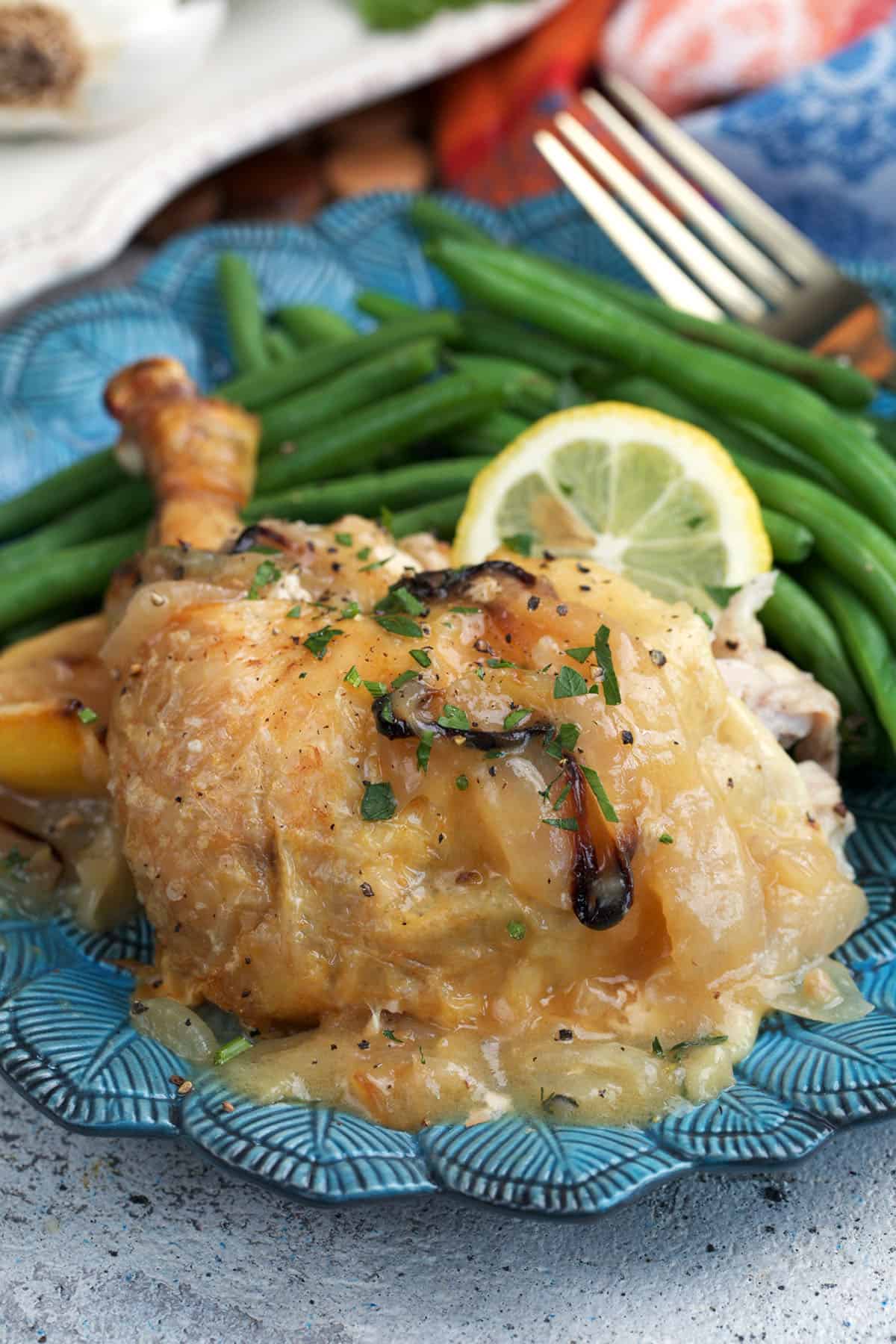
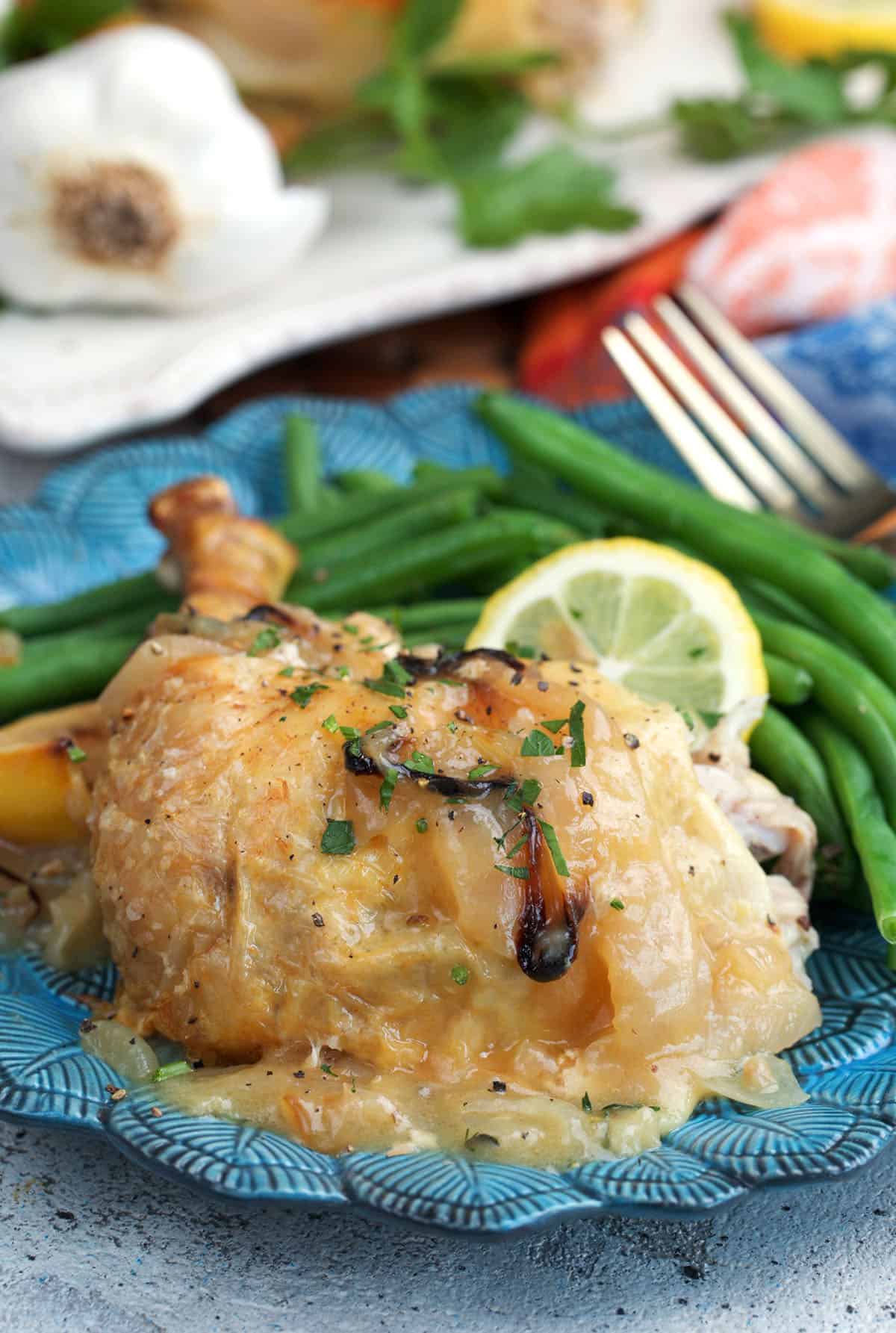
- Serve – Carve the chicken and serve it with the warm lemon-garlic-onion pan sauce spooned over the top. Garnish with extra fresh herbs and lemon slices if you like.
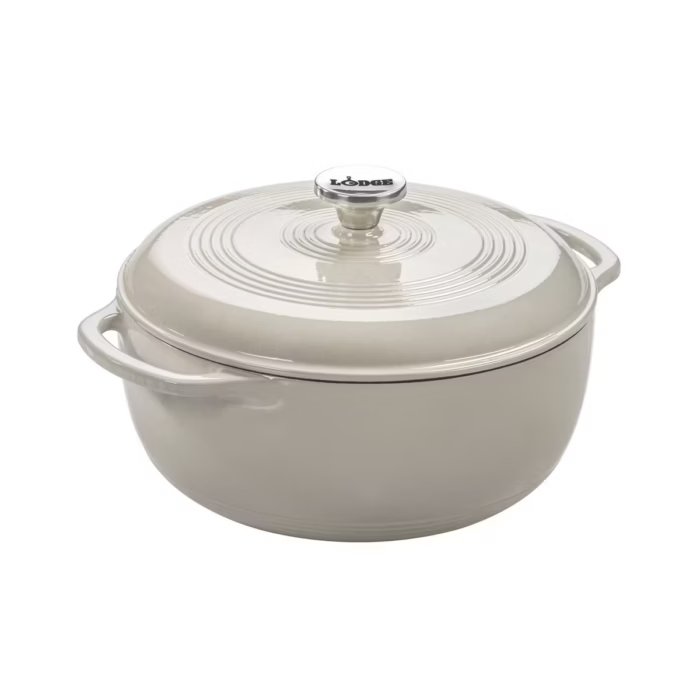
An enameled Cast Iron Dutch Oven for under $100 that can be used to bake bread, simmer soups, roast beef, chicken and more. This is a gem in the kitchen.
Kellie’s Tips for Perfect Engagement Chicken
- Rest before carving – Resting is not optional if you want juicy meat. Those 10-15 minutes make a big difference.
- Dry the chicken really well – Moisture on the skin is the enemy of crispiness. Take an extra minute to really pat it dry before you season it.
- Don’t stress about perfect trussing – Tying the legs is helpful, but it doesn’t have to be chef-level fancy. A simple knot is enough to help it cook evenly.
- Watch your pan size – A Dutch oven or roasting pan that’s too big can cause the onions and garlic to burn because they’re spread too thin. It’s okay if the chicken fits snugly – that helps the juices stay concentrated for the sauce.
- Tent if needed – If the skin is browning faster than the meat is cooking, lay a piece of foil loosely over the top. This keeps it from burning while the inside finishes.
- Check for doneness in more than one spot – Use an instant-read thermometer and check the thickest part of the thigh and breast. You’re looking for 165°F; if it’s a few degrees under, give it another 5-10 minutes and check again.
What to Serve with Engagement Chicken
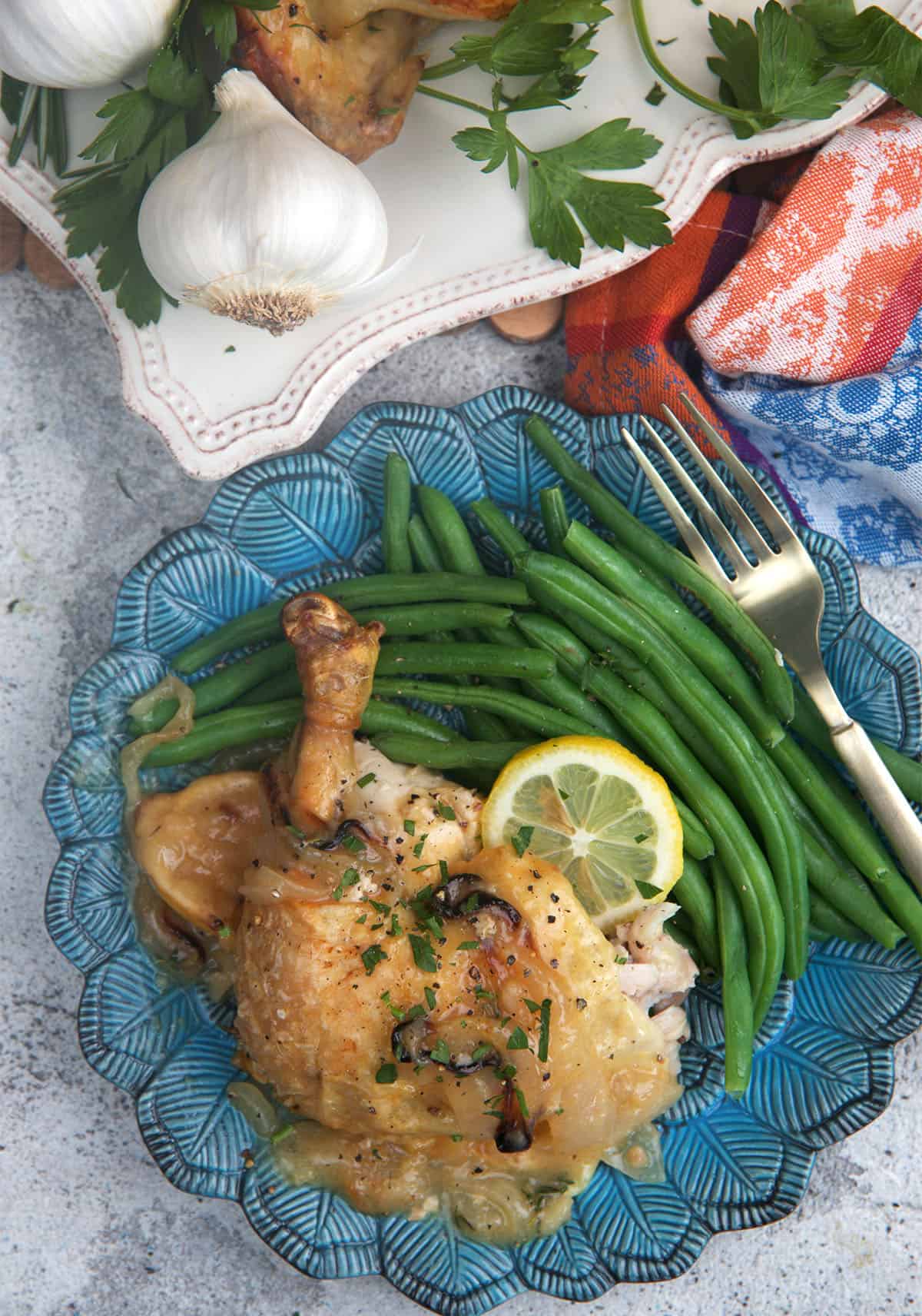
Engagement Chicken is the star of the show, but the right sides make the meal feel truly special. Try pairing it with:
- Creamy potatoes – mashed potatoes, scalloped potatoes, or potatoes au gratin are perfect for soaking up the pan sauce.
- A crisp green vegetable – sautéed or roasted green beans, baked asparagus, or broccoli balance the richness.
- Simple salad – a crisp house salad with a light vinaigrette keeps things fresh and cuts through the richness of the chicken.
- Crusty bread – I love garlic bread for dunking into any leftover pan sauce on your plate.
Storage, Leftovers and Reheating
- Storage – Let leftover chicken cool to room temperature, then store it in an airtight container in the refrigerator for up to 3–4 days. You can also remove the meat from the bones and freeze it for up to 2–3 months.
- Reheating – For best results, reheat chicken pieces in a 325°F oven, loosely covered with foil, until warmed through. This helps keep the meat from drying out. Add a spoonful of the pan sauce or a splash of broth to the pan before reheating to keep everything moist.
- Leftover ideas – Toss shredded chicken with mayo, herbs, and celery for easy chicken salad. Add it to soups, stews, or chicken noodle soup. Pile it onto toasted bread with cheese and greens for a simple sandwich or panini.
More of My Favorite Chicken Recipes
For more of the best chicken recipes, follow us on Facebook.
Engagement Chicken Recipe
Equipment
- roasting pan
- kitchen twine
- chef's knife
- cutting board
Ingredients
- 1 4-5 pound roasting chicken, giblets removed and patted dry
- kosher salt and fresh ground pepper
- 1/4 cup olive oil
- 2 lemons, cut into quarters
- 2 whole heads of garlic, cut in half
- 2 spanish onions, peeled and cut into 1/2 inch slices
- 5 sprigs fresh thyme
- 2 sprigs fresh rosemary
- 3/4 cup dry white wine
- 3/4 cup chicken stock
- 2 tablespoons cornstarch, or flour
- 2 tablespoons butter
Instructions
- Preheat oven to 425 degrees.
- Season the inside of the chicken with salt and pepper. Place half a lemon and half a head of garlic inside the chicken with a few sprigs of thyme and rosemary. Reserve the remaining lemon, garlic and herbs for later.
- Brush the entire surface of the chicken with 2 tablespoons of olive oil. Season liberally with salt and pepper.
- Tie the legs together with kitchen twine and tuck the wings under the body.
- Place the chicken in the roasting pan breast side up.
- Place the remaining lemon, herbs and garlic in a large bowl with the onion. Toss to coat with the remaining olive oil and season with salt and pepper.
- Arrange the onions and lemon around the chicken in the roasting pan.
- Roast the chicken for approximately 1 hour and 15 minutes or until the juices run clear when you cut between the leg and thigh. Transfer the chicken to a serving platter and cover with foil to keep warm.
- Place the pan on the stove and turn the heat to medium-high. Add the wine to the pan and deglaze by using a wooden spoon to scrape the brown bits off the bottom of the pan. Sprinkle the cornstarch over the sauce and cook for 30 seconds.
- Add the stock to the pan and cook for 1-2 minutes until the sauce thickens. Stir in the butter and any juices that collected on the serving platter.
- Carve the chicken and serve with the lemons, onions and pan sauce.
Notes
- Chicken size: This recipe works best with a 4–5 lb whole chicken. Smaller birds will cook a bit faster, larger ones may need an extra 10–15 minutes. Always go by internal temperature, not just time.
- Internal temperature: The chicken is done when the thickest part of the thigh reaches 165°F and the juices run clear. Check in 2–3 spots, avoiding the bone.
- Garlic usage: You’ll use 2 whole heads of garlic, halved crosswise. Some halves go inside the cavity, and the rest roast in the pan with the onions and lemons to flavor the sauce.
- Dutch oven vs roasting pan: A Dutch oven keeps the chicken extra juicy and helps concentrate the pan juices. If you use a roasting pan instead, make sure the chicken isn’t swimming in a huge pan or the onions/garlic can burn in a thin layer, add extra onion or a splash of broth, if needed.
- Crispy skin tip: Pat the chicken very dry with paper towels before seasoning, and roast it uncovered. If the skin browns too quickly, tent loosely with foil and continue cooking.
- Trussing (tying the legs): Tying the legs together helps the chicken cook more evenly and stay moist, but it’s optional. If you don’t truss, start checking for doneness 5–10 minutes earlier.
- Wine substitute: You can replace the white wine in the pan sauce with chicken broth. Add a little extra lemon juice at the end if you want more brightness.
- Herb options: Fresh thyme, rosemary, and parsley are great here. If using dried herbs, use about 1 teaspoon dried for every 1 tablespoon fresh and sprinkle over the skin and in the cavity.
- Rest before carving: Let the chicken rest for 10–15 minutes before carving so the juices can redistribute and the meat stays tender.
- Leftovers: Store leftovers in an airtight container in the fridge for 3–4 days. The meat is delicious in salads, sandwiches, grain bowls, or soup.
Nutrition
Nutrition information is automatically calculated, so should only be used as an approximation.










I don’t have Facebook either .
You don’t say what exactly to do with the 2nd garlic. Whole, peeled?
Why do the legs have to be tied. I’m 80 years old, roasted plenty of chickens but have never tied the legs.
Should the chicken be covered when in the oven?
No, I don’t cover the chicken. But if it seems to be getting too dark before it’s finished roasting you can cover it with a piece of foil (lightly, no need to press it down and risk burning yourself) to keep it from browning further.
I’m sad that you can only enter to win the Dutch oven if you have Instagram!
I’m so sorry….I’ll have more contests in the future that will not have that requirement.