This post may contain affiliate links. Please read our disclosure policy.
This easy Pepper Steak Recipe is my answer to takeout on busy weeknights! Tender strips of beef, colorful bell peppers, and onions are tossed in a savory garlic-ginger sauce that’s just begging to be spooned over rice. It’s ready in just 30 minutes and tastes even better than takeout.
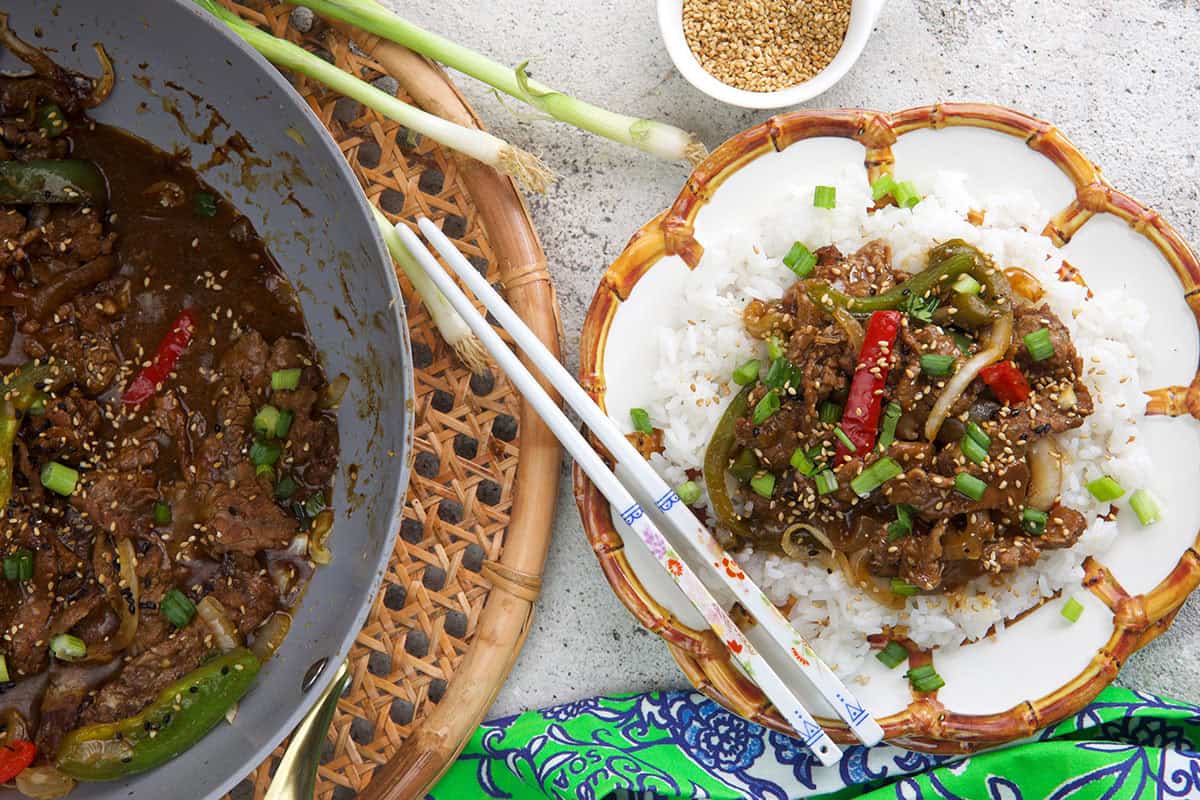
Table of Contents
- Kellie’s Note Wok-solid Dinner
- Why You’ll Love My Pepper Steak Recipe
- Ingredients for Pepper Steak
- How to Make Pepper Steak
- What Is the Best Steak for Pepper Steak?
- Kellie’s Tips for the Best Pepper Steak
- Easy Pepper Steak Variations
- What to Serve with Pepper Steak
- How to Store and Reheat Pepper Steak
- More Easy Takeout Recipes
- Easy Pepper Steak Recipe
Kellie’s Note
Wok-solid Dinner

I love a good beef stir fry, especially when dinner comes together faster than delivery. After making pepper steak for years, I’ve perfected this version with tender sirloin, crisp-tender peppers, and a rich, savory sauce that coats every bite. A quick toss in soy sauce and cornstarch helps keep the beef tender without a long marinade.
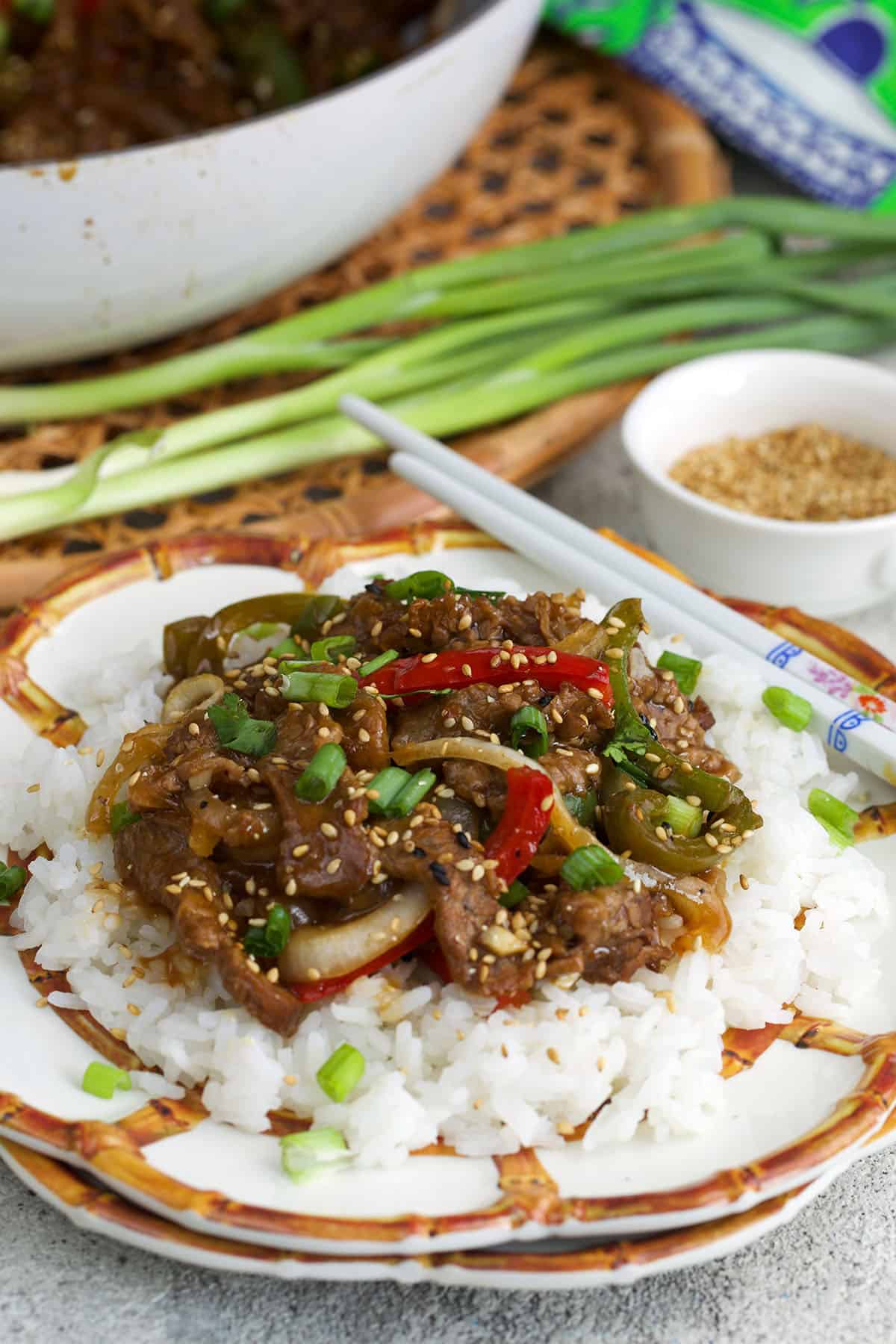
Pepper Steak is a Chinese-American stir-fry made with thinly sliced beef, bell peppers, and onions in a savory brown sauce. It’s a takeout favorite that’s surprisingly easy to make at home.
Despite the name, pepper steak isn’t a special cut of beef. The name comes from the combination of steak and peppers. Sirloin and flank steak are both great choices because they cook quickly and work well in a stir-fry.
It’s one of those easy dinners that feels like a treat but takes very little effort. And honestly, that’s my favorite kind of cooking.

Why You’ll Love My Pepper Steak Recipe
- Ready in 30 minutes. Faster than ordering takeout and made entirely in one skillet or wok.
- Tender, flavorful beef. A quick coating of soy sauce and cornstarch helps keep the steak juicy as it cooks.
- The BEST savory sauce. Garlic, ginger, soy sauce, and oyster sauce create a rich, glossy sauce with just the right amount of sweetness.
- Easy to customize. Swap the peppers, add extra vegetables, or adjust the heat to make it your own.
- Perfect for busy weeknights. Simple ingredients, quick cooking, and leftovers that make a pretty fantastic lunch.
Ingredients for Pepper Steak
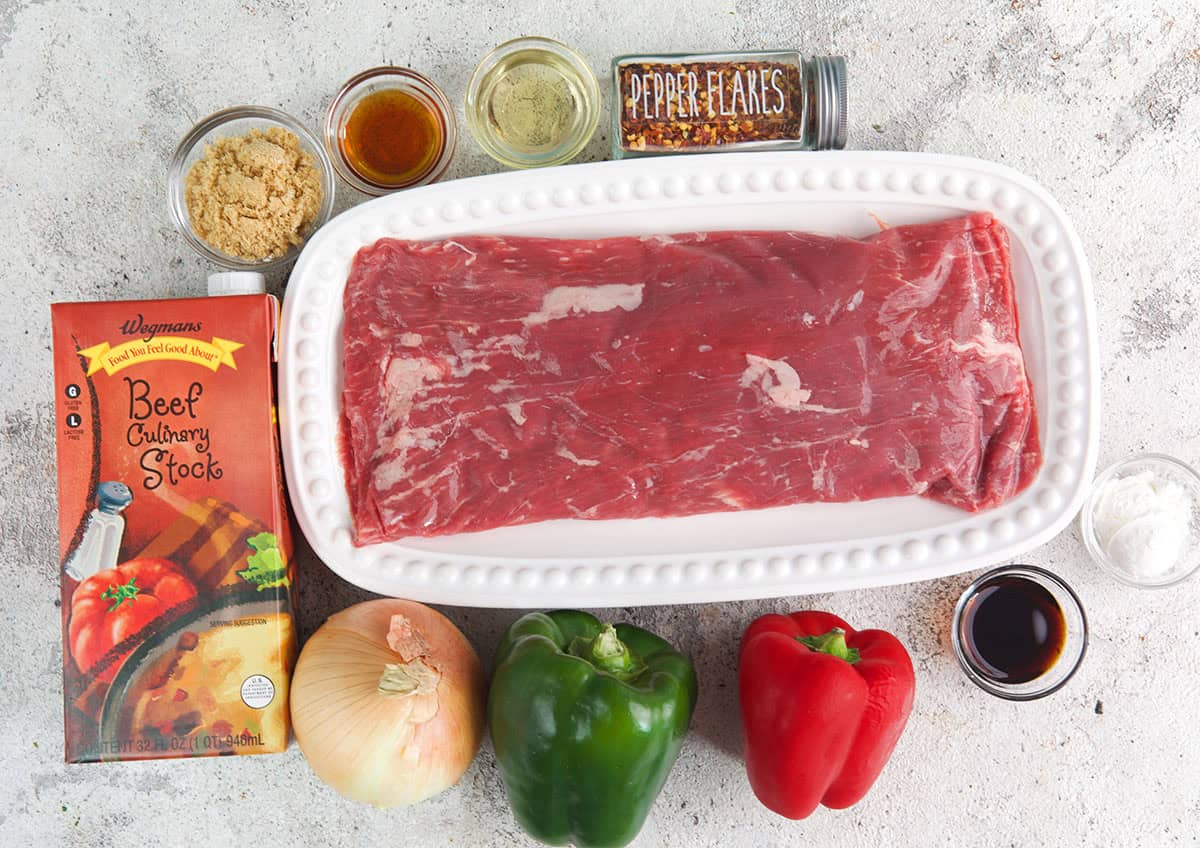
You don’t need anything complicated to make a delicious homemade Pepper Steak Recipe. A handful of fresh ingredients and a few pantry staples are all it takes.
For the Steak and Vegetables
- Sirloin Steak or Flank Steak: Sirloin is my favorite because it’s naturally tender and cooks quickly. Flank steak works beautifully, too. Just be sure to slice either cut thinly against the grain.
- Soy Sauce and Cornstarch: A quick coating adds flavor and helps protect the beef from drying out as it cooks. Use low-sodium soy sauce if you prefer.
- Avocado Oil: Perfect for stir-frying over medium-high heat. Vegetable oil or canola oil work just as well.
- Bell Peppers: I use red and green for a combination of sweetness and a slightly earthy flavor. Yellow or orange bell peppers are great substitutes.
- Yellow Onion: Adds sweetness as it softens. Sweet onions or white onions work, too.
- Garlic and Fresh Ginger: These give the stir-fry its signature flavor. Fresh is best, but ground ginger can work in a pinch.
For the Pepper Steak Sauce
- Beef Broth: Creates a savory base for the sauce. Choose low-sodium broth to control the saltiness.
- Low-Sodium Soy Sauce: Adds rich, salty umami flavor. Tamari can be used as a gluten-free alternative if needed.
- Brown Sugar: Balances the savory ingredients with a little sweetness. Honey is another option, although it will slightly change the flavor.
- Oyster Sauce: Adds depth and that delicious restaurant-style flavor. For a substitute, look for a vegetarian mushroom-based oyster sauce.
- Rice Vinegar: Adds a little acidity to balance the sauce. Unseasoned rice vinegar works best.
- Sesame Oil: Just a little adds a wonderful nutty finish.
- Cornstarch: Thickens the sauce so it clings to the beef and vegetables.
- Black Pepper and Red Pepper Flakes: Add a subtle peppery kick. Leave out the red pepper flakes for a milder version.
You can find the full ingredient amounts in the printable recipe card below.
How to Make Pepper Steak
This easy Pepper Steak comes together quickly, so I recommend having everything sliced and ready before you heat the skillet.
- Prepare the beef. Toss the thinly sliced steak with soy sauce and cornstarch until evenly coated.
- Whisk the sauce. Combine the beef broth, soy sauce, brown sugar, oyster sauce, rice vinegar, sesame oil, cornstarch, and seasonings.
- Sear the steak. Heat the oil in a large skillet or wok. Cook the beef in batches until browned, then transfer it to a plate.
- Stir-fry the vegetables. Cook the bell peppers and onion until slightly softened but still crisp.
- Add the aromatics. Stir in the garlic and ginger and cook briefly until fragrant.
- Finish the stir-fry. Return the steak to the skillet, add the sauce, and simmer until thickened and glossy.
- Serve. Spoon over hot rice and dig in!
My favorite tip: Don’t crowd the skillet! Giving the beef room to sear instead of steam makes a big difference in the finished dish.
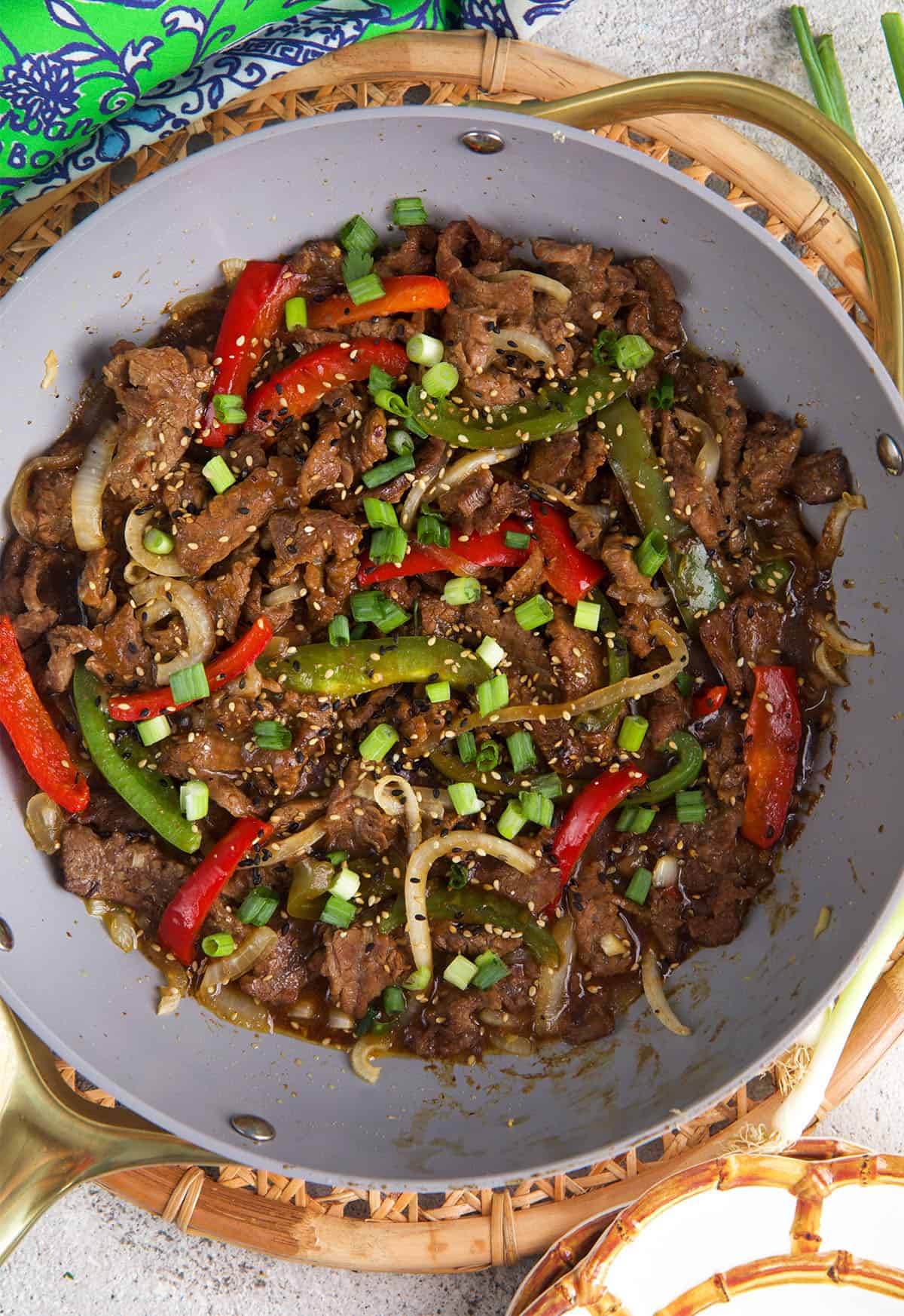
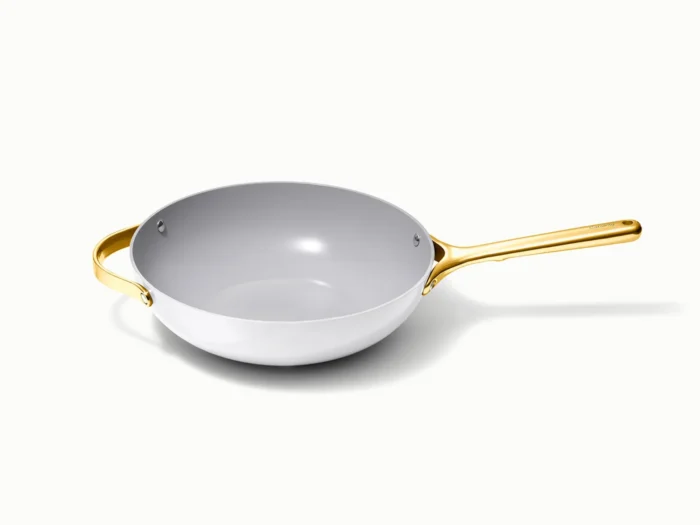
My non-stick, ceramic coated stir fry pan is made designed with high, sloped walls and a concentrated heating zone, this wok-inspired pan is perfect for stir fry, curry, and one-pot recipes.
What Is the Best Steak for Pepper Steak?
Sirloin steak is my favorite cut for Pepper Steak because it’s tender, flavorful, relatively lean, and cooks quickly without a lot of fuss.
Flank steak is another great option. It has a slightly beefier flavor but needs to be sliced thinly against the grain for the most tender results.
Skirt steak and ribeye will also work, although ribeye has more fat, and skirt steak can become chewy if it’s cut incorrectly.
Whatever cut you choose, remember these two things: slice the beef thinly and always cut against the grain. You’ll get tender pieces of steak instead of a stir-fry that requires a little too much chewing.
Kellie’s Tips for the Best Pepper Steak
- Slice against the grain. Cutting across the muscle fibers makes the beef much easier to chew.
- Freeze the steak briefly. Pop it in the freezer for 20–30 minutes before slicing. It firms up enough to make thin, even slices much easier.
- Don’t overcrowd the skillet. Cook the beef in batches so it gets a nice sear instead of steaming.
- Keep the peppers crisp-tender. You want them slightly softened with a little bite, not mushy.
- Whisk the sauce again before adding it. Cornstarch tends to settle at the bottom, so a quick stir ensures it thickens evenly.
- Don’t overcook the beef. It only needs a quick sear before returning to the pan to finish cooking in the sauce.
Easy Pepper Steak Variations
- Make it spicy. Add extra red pepper flakes, a drizzle of sriracha, or a spoonful of chili crisp.
- Add mushrooms. Sliced cremini or button mushrooms make a delicious addition to the savory sauce.
- Use different peppers. Red, orange, and yellow bell peppers are sweeter than green and add even more color.
- Add broccoli. A handful of small broccoli florets adds extra vegetables without much work.
- Try another cut of beef. Skirt steak or thinly sliced ribeye can be used in place of sirloin or flank steak.
I love keeping this recipe simple, but it’s also a great way to use up extra vegetables hanging out in the refrigerator.
What to Serve with Pepper Steak
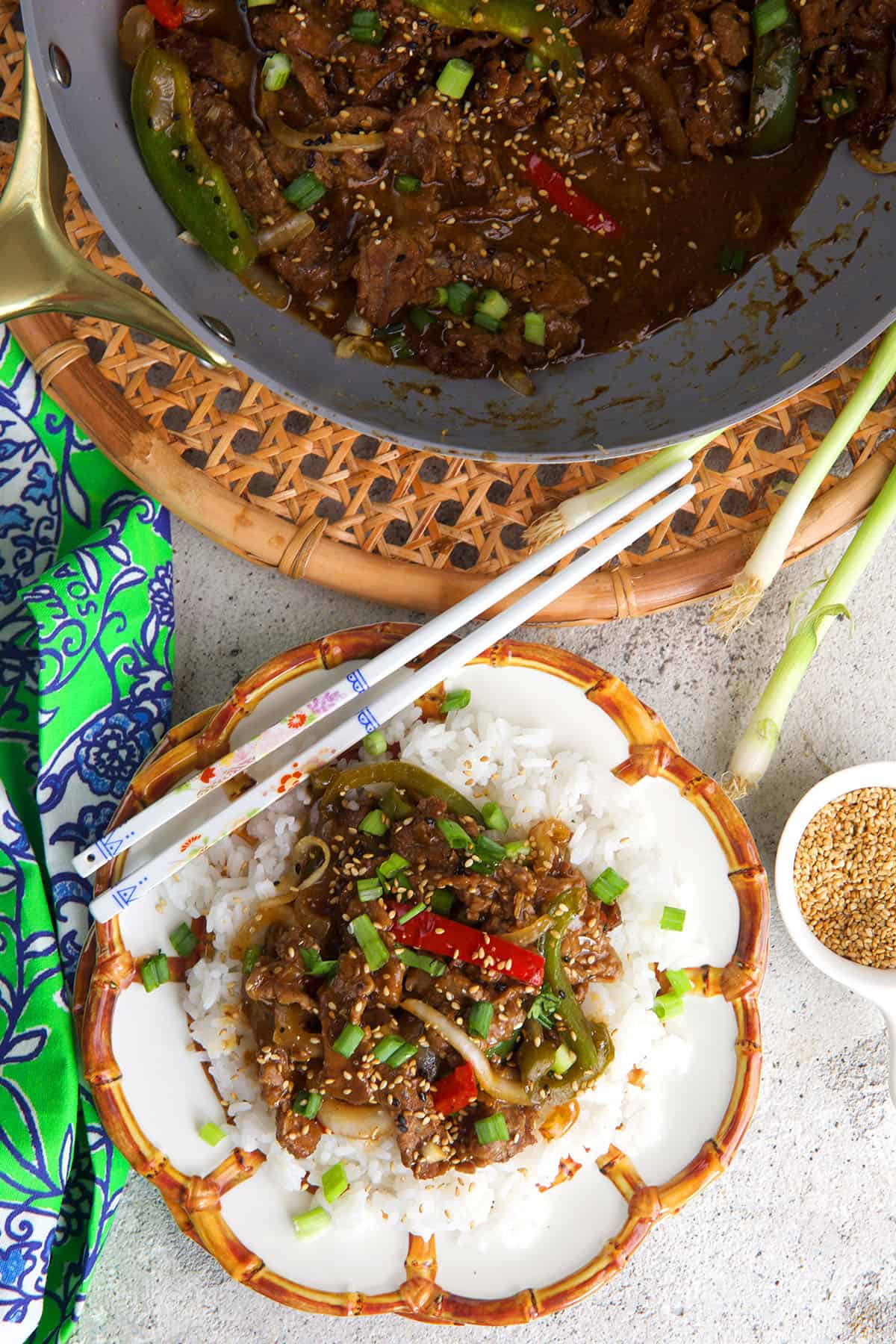
My favorite way to serve Pepper Steak is over a big bowl of fluffy white rice. It soaks up all that delicious garlic-ginger sauce, and there’s really no need to make dinner more complicated than that.
A few other favorites:
- Jasmine Rice: A hearty alternative that works beautifully with the savory sauce.
- Fried Rice: Perfect when you want to make your homemade takeout night extra special.
- Rice Noodles: Toss the noodles with the steak, vegetables, and sauce for a complete meal.
- Cauliflower Rice: A lighter option that’s still great for soaking up the sauce.
- Steamed Broccoli or Green Beans: Easy vegetables that round out dinner.
- Asian Cucumber Salad: Something cool and crunchy to balance the savory beef.
You can also serve Pepper Steak on its own for a lighter dinner, although I never complain about having a little extra rice for the sauce.
How to Store and Reheat Pepper Steak
- Refrigerator: Store leftover Pepper Steak in an airtight container in the refrigerator for up to 3–4 days.
- Freezer: Freeze cooled Pepper Steak in an airtight, freezer-safe container for up to 2–3 months for best quality. The peppers may be softer once thawed.
- Reheating: Warm gently in a skillet over medium-low heat with a splash of beef broth or water to loosen the sauce. You can also microwave individual portions until heated through.
- Make Ahead: Slice the steak and vegetables and prepare the sauce up to one day in advance. Store everything separately in the refrigerator and cook just before serving.
Meal prep tip: Keep the rice separate from the Pepper Steak when storing leftovers so it doesn’t soak up all the sauce.
More Easy Takeout Recipes
If you love making your favorite restaurant dinners at home, here are a few more easy recipes to add to your rotation.
- Mongolian Beef Stir Fry: Tender beef tossed in a sweet and savory sauce that’s perfect over rice.
- Easy Beef Stir Fry with Rice Noodles: A satisfying one-pan dinner loaded with flavor.
- Hunan Shrimp: A spicy, savory shrimp dinner when you’re craving something with a little kick.
- Singapore Noodles: A flavorful noodle dinner that makes staying in taste even better.
- Szechuan Chicken: Bold, flavorful chicken that’s perfect when you’re craving spicy takeout.
- Shrimp Chow Mein: A quick noodle dinner with plenty of vegetables and takeout-inspired flavor.
For more easy dinner ideas, follow us on Instagram and Facebook!
Did you make my Pepper Steak Recipe? I’d love to hear how it turned out! Leave a comment and a five-star rating if you loved it. And tell me if you added any extra veggies or made it spicy!
Easy Pepper Steak Recipe
Equipment
- 1 skillet
- 1 chef's knife
- 1 cutting board
- 1 whisk
- 1 measuring cup
- 1 measuring spoons
- 1 Medium mixing bowl
Ingredients
For the Steak
- 1 1/2 pounds sirloin steak or flank steak, thinly sliced against the grain
- 1 tablespoon soy sauce
- 1 tablespoon cornstarch
- 1 tablespoon avocado oil or vegetable oil, divided
- 1 red bell pepper, sliced
- 1 green bell pepper, sliced
- 1 medium yellow onion, sliced
- 2 garlic cloves, minced
- 1 teaspoon fresh grated ginger
For the Pepper Steak Sauce
- 1/2 cup beef broth
- 1/4 cup low-sodium soy sauce
- 2 tablespoons brown sugar
- 1 tablespoon oyster sauce
- 1 tablespoon rice vinegar
- 1 teaspoon sesame oil
- 1 tablespoon cornstarch
- 1/2 teaspoon freshly ground black pepper
- 1/4 teaspoon crushed red pepper flakes, optional
Instructions
- Prepare the beef. Add the sliced steak to a bowl with 1 tablespoon soy sauce and 1 tablespoon cornstarch. Toss until evenly coated and set aside while you prepare the remaining ingredients.
- Make the sauce. In a small bowl or measuring cup, whisk together the beef broth, soy sauce, brown sugar, oyster sauce, rice vinegar, sesame oil, cornstarch, black pepper, and red pepper flakes.
- Cook the steak. Heat 2 teaspoons of oil in a large skillet or wok over medium-high heat. Add the steak in a single layer, working in batches if necessary so you don’t overcrowd the pan. Cook for 1–2 minutes per side until browned. Transfer the beef to a plate.
- Cook the vegetables. Add the remaining oil to the skillet. Add the bell peppers and onion and stir-fry for 3–4 minutes, until slightly softened but still crisp.
- Add the aromatics. Stir in the garlic and ginger and cook for about 30 seconds, just until fragrant.
- Finish the Pepper Steak. Return the beef and any accumulated juices to the skillet. Whisk the sauce again, then pour it over the beef and vegetables.
- Thicken the sauce. Toss everything together and simmer for 1–2 minutes, until the sauce is glossy and thick enough to coat the steak.
- Serve. Spoon the Pepper Steak over hot steamed rice and serve immediately.
Notes
- Best Steak: Sirloin is my favorite because it’s tender, flavorful, and cooks quickly. Flank steak works well, too. Slice thinly against the grain for the best results.
- Easy Slicing: Freeze the steak for 20–30 minutes before slicing to make thin, even pieces easier to cut.
- Don’t Crowd the Pan: Sear the steak in batches to prevent steaming.
- Sauce: Whisk the sauce again immediately before adding it to the skillet since the cornstarch settles.
- Make Ahead: Slice the steak and vegetables and prepare the sauce up to one day in advance. Refrigerate separately until ready to cook.
- Storage: Refrigerate leftovers in an airtight container for up to 3–4 days.
- Freezing: Freeze in an airtight container for up to 2–3 months for best quality. The peppers may soften when thawed.
- Reheating: Warm gently in a skillet with a splash of beef broth or water until heated through.
Nutrition
Nutrition information is automatically calculated, so should only be used as an approximation.