
This post may contain affiliate links. Please read our disclosure policy.
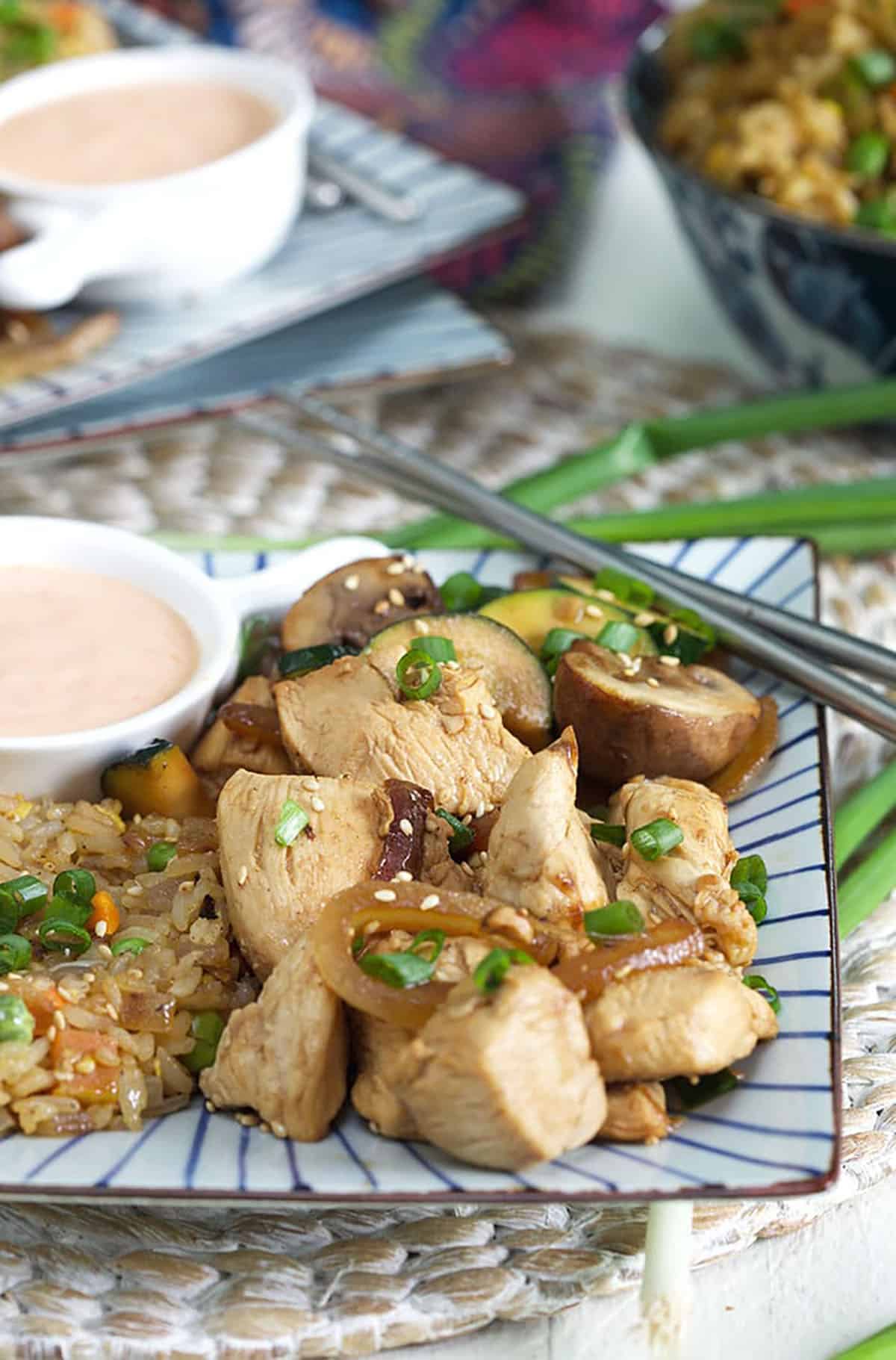
This easy Hibachi Chicken recipe brings Japanese steakhouse night home in about 25 minutes. Tender bites of chicken cook in a hot skillet with garlic, butter and savory seasonings, then zucchini, mushrooms and onions join the party for an easy one-pan dinner. Add Hibachi Fried Rice and Yum Yum Sauce and you may not miss the restaurant at all.

Table of Contents
- Kellie’s Note Wok This Way
- Why You’ll Love This Hibachi Chicken
- What Is Hibachi Chicken?
- Hibachi Chicken Ingredients
- Do I Need a Hibachi Grill?
- How to Make Hibachi Chicken
- Kellie’s Tips for the Best Hibachi Chicken
- Hibachi Chicken Variations
- What to Serve With Hibachi Chicken
- Storage, Freezing and Reheating
- More Japanese Steakhouse and Takeout Favorites
- Hibachi Chicken Recipe
- Hibachi Chicken FAQs
Kellie’s Note
Wok This Way

I first fell for hibachi chicken at my son’s birthday dinner at Benihana. The onion volcano was fun, obviously, but the chicken completely stole the show. I went home determined to recreate it, and after some trial and error, this easy chicken hibachi dinner became one of our favorite ways to do Japanese steakhouse night at home.
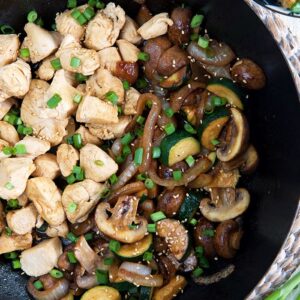
This chicken dinner wouldn’t be complete without hibachi veggies. Mushrooms, zucchini and white onion are all sautéed to perfection, creating the ultimate healthy side dish for this meal. Oh, and you can cook it all in the same pan then serve it along with homemade Yum Yum Sauce for dipping.
Who doesn’t love a one pan dinner?! That way, you spend less time cleaning up, and more time planning when you can make this dinner again. For the complete hibachi experience, don’t forget the Hibachi Fried Rice on the side.

Why You’ll Love This Hibachi Chicken
- Family friendly. Add rice and Yum Yum Sauce and everyone can build their own plate.
- Fast and easy. Dinner is on the table in about 25 minutes.
- One-pan dinner. The chicken and vegetables cook in the same skillet for easy cleanup.
- Japanese steakhouse flavor at home. Garlic, butter, sesame oil and soy sauce give it that savory hibachi-style flavor.
- Easy to customize. Use chicken breast or thighs and swap in whatever vegetables you have on hand.
What Is Hibachi Chicken?
Hibachi chicken is made with bite-size pieces of chicken cooked quickly over high heat with butter, garlic and savory seasonings. At Japanese steakhouses in the U.S., it’s typically served with sautéed vegetables, fried rice and dipping sauces like Yum Yum Sauce or ginger sauce.
Technically, the flat-top restaurant cooking most of us call hibachi is closer to teppanyaki cooking, but Hibachi Chicken is the name most people know and search for when they want to recreate that Japanese steakhouse-style dinner at home.
Hibachi Chicken Ingredients
- Chicken Breast – Boneless, skinless chicken breast cooks quickly and stays tender when cut into evenly sized pieces. Boneless chicken thighs work well, too.
- Canola Oil – A neutral oil is best for high-heat cooking. Avocado, peanut or grapeseed oil are good substitutes.
- Sesame Oil – A little adds nutty, savory flavor without overpowering the chicken.
- Butter – Gives the chicken and vegetables that rich Japanese steakhouse-style finish.
- Garlic – Freshly minced garlic gives you the best flavor.
- Soy Sauce – Adds salty, savory depth. Low-sodium soy sauce works well, and tamari is a good gluten-free substitute.
- Fresh Lemon Juice – Adds brightness and balances the rich butter and soy sauce.
- Salt and Pepper – Keep the seasoning simple since the soy sauce already brings plenty of flavor.
- Vegetables – Onion, zucchini and mushrooms are my go-to combination. Bell peppers, broccoli, carrots and snap peas are great additions, too.
For the full ingredient amounts, scroll down to the recipe card.
Do I Need a Hibachi Grill?
Nope! A large wok, cast iron skillet or heavy 12-inch skillet works perfectly for making Hibachi Chicken at home. The most important thing is using a pan that can get nice and hot so the chicken browns instead of steaming.
If you have a Blackstone or flat-top griddle, you can use that, too.
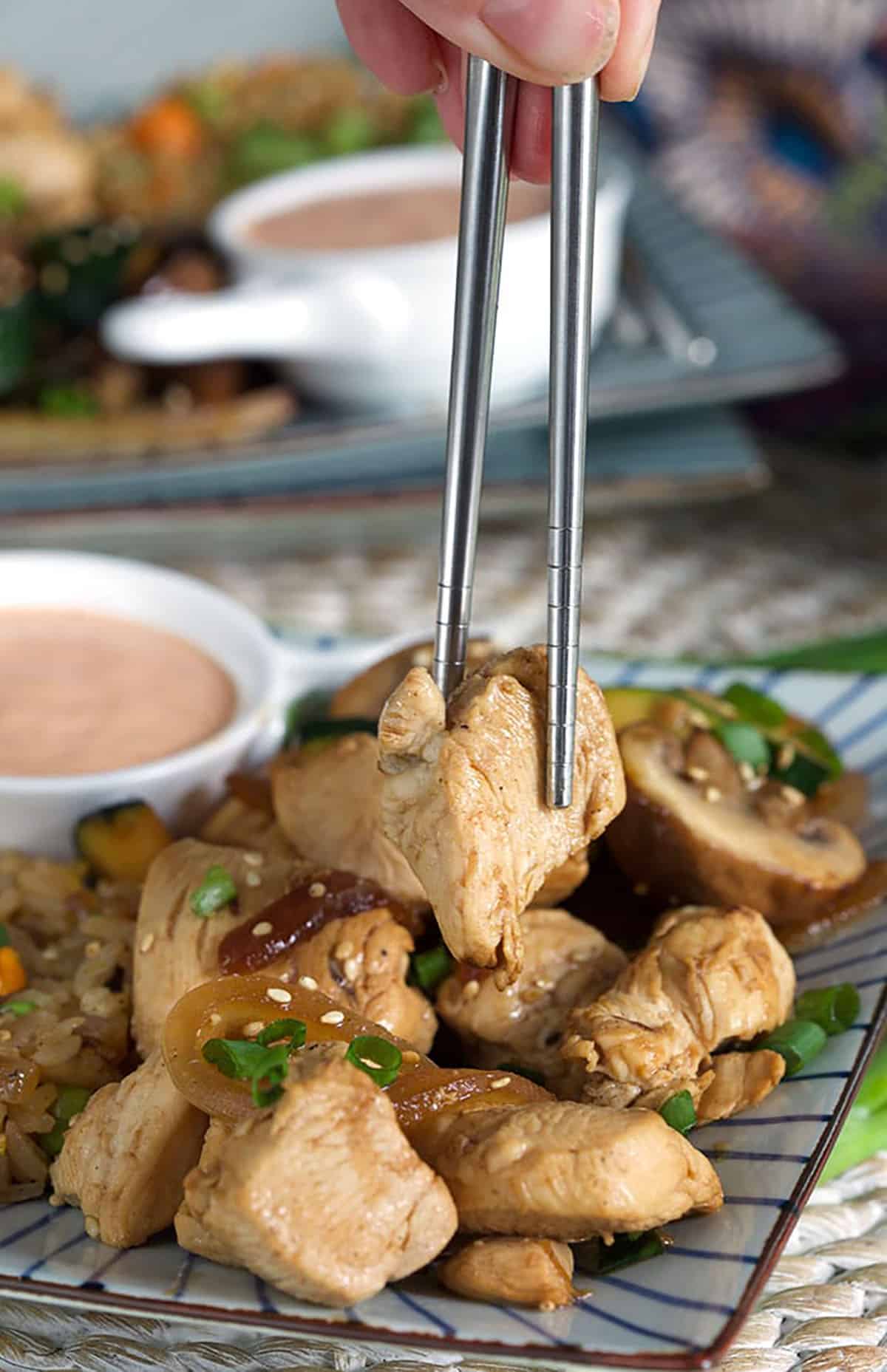
How to Make Hibachi Chicken
- Prep the chicken. Cut the chicken into evenly sized bite-size pieces so it cooks quickly and evenly.
- Heat the skillet. Heat the oil, sesame oil and butter in a large wok or skillet over medium-high heat.
- Add the garlic. Cook the garlic for about 30 seconds, just until fragrant.
- Cook the chicken. Add the chicken and stir-fry for 4–5 minutes, until browned and cooked through.
- Move the chicken aside. Push it to the edge of the pan or transfer it to a plate and keep warm.
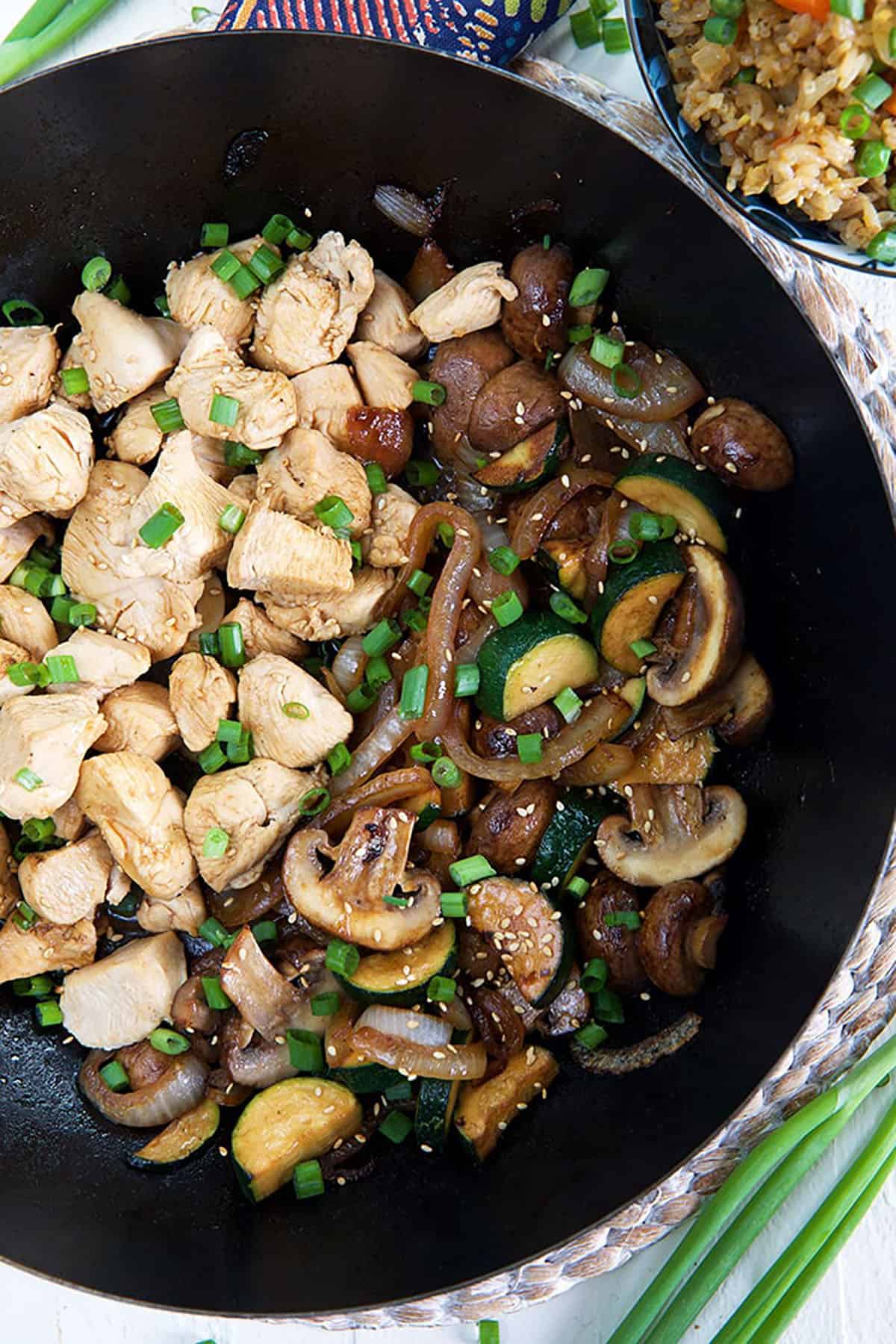
- Cook the vegetables. Add the remaining oils, then cook the onion for 1–2 minutes. Stir in the zucchini and mushrooms and cook until golden and crisp-tender.
- Finish the vegetables. Stir in the butter and soy sauce.
- Bring it together. Return the chicken to the pan, toss everything together and cook for another minute.
- Serve. Serve hot with Hibachi Fried Rice and Yum Yum Sauce.
You can top a pile of jasmine rice, brown rice or even cauliflower rice for a japanese hibachi inspired dinner in the comfort of your own home.
Kellie’s Tips for the Best Hibachi Chicken
- Start with a hot pan. Hibachi-style cooking is fast, so let the skillet get hot before adding the chicken.
- Pat the chicken dry. Too much surface moisture causes the chicken to steam instead of brown.
- Cut everything evenly. Similar-size pieces cook at roughly the same rate.
- Don’t crowd the skillet. Give the chicken some room so it can sear. If you’re doubling the recipe, cook it in batches.
- Prep first, cook second. Have the vegetables, sauces and seasonings ready before you turn on the heat because everything moves quickly.
- Keep the vegetables crisp-tender. Cook them until browned but don’t let the zucchini become soft or mushy.
- Check for doneness. Chicken is fully cooked when the thickest pieces reach 165°F.
Hibachi Chicken Variations
- Lower Carb – Serve the chicken and vegetables with cauliflower rice instead of traditional fried rice.
- Chicken Thighs – Use boneless, skinless chicken thighs for an even juicier result.
- More Vegetables – Add broccoli, bell peppers, carrots, snap peas, bok choy or green beans.
- Gluten-Free – Swap the soy sauce for gluten-free tamari or another certified gluten-free soy sauce.
- Different Protein – Try the same style of dinner with shrimp or steak.
What to Serve With Hibachi Chicken
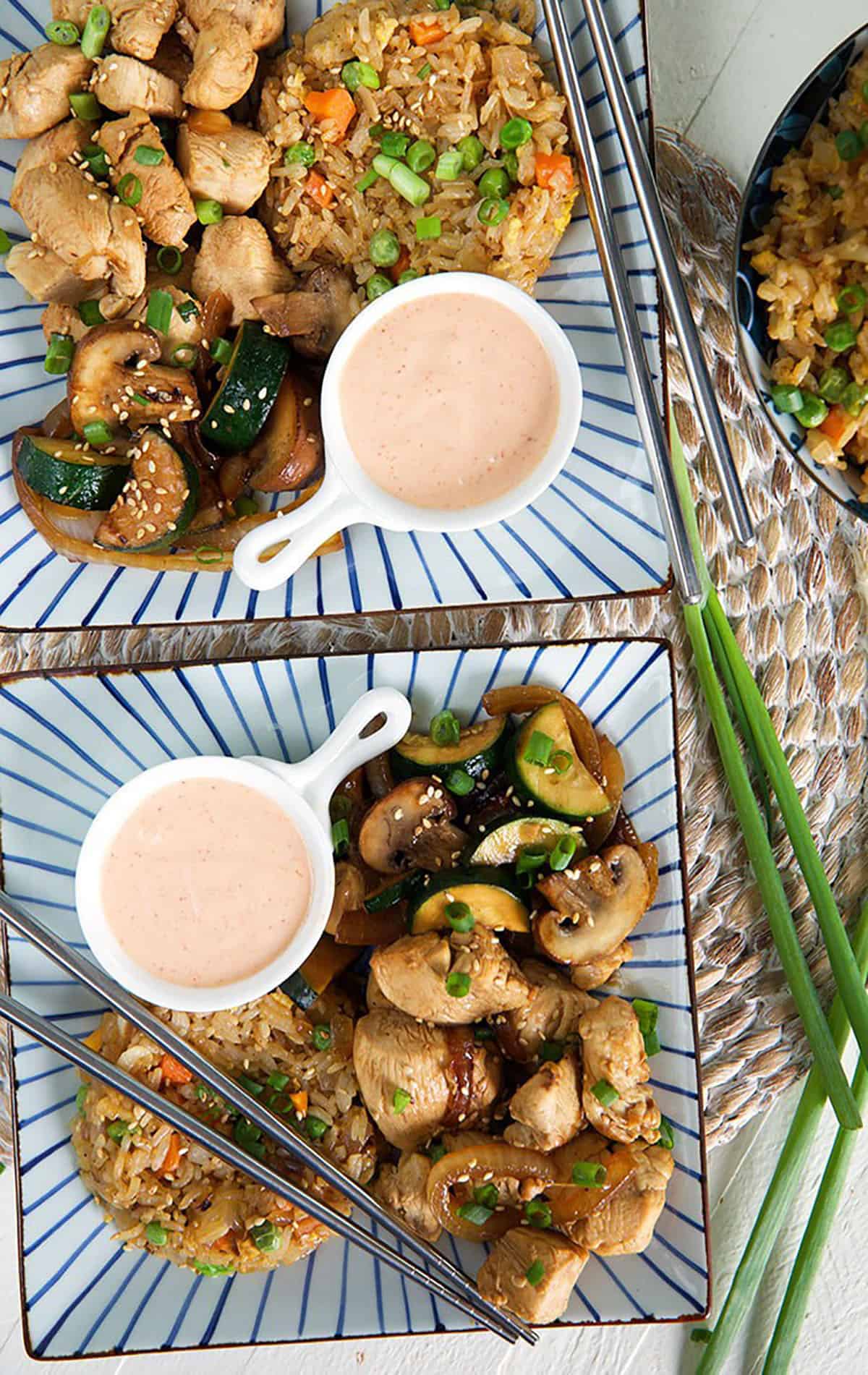
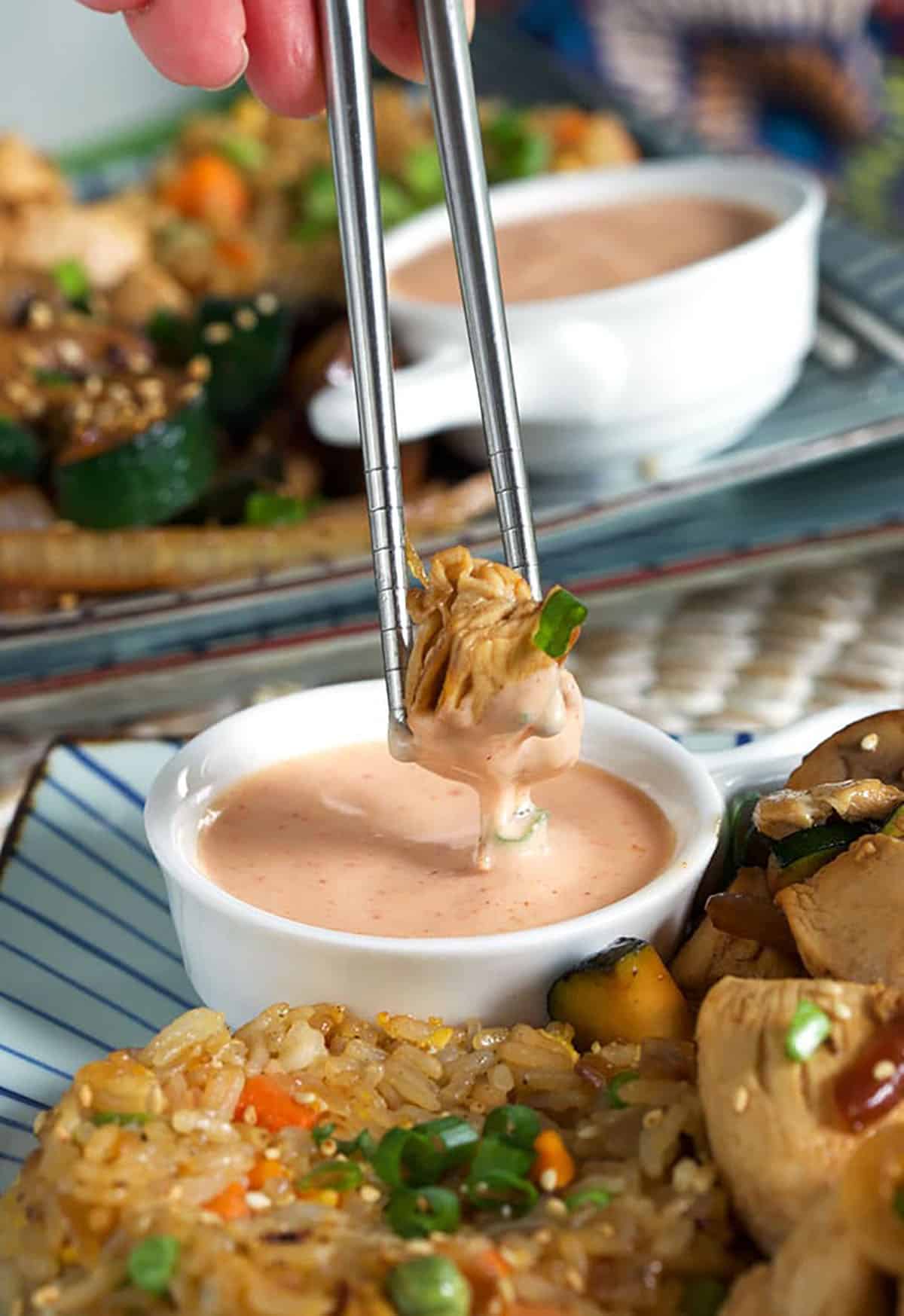
For the full Japanese steakhouse experience, serve Hibachi Chicken with my Hibachi Fried Rice and plenty of Yum Yum Sauce for dipping. My family considers the Yum Yum Sauce non-negotiable.
You can also serve it with:
- Hibachi noodles
- Steamed jasmine rice
- Brown rice
- Cauliflower rice
- Ginger sauce
- Mustard sauce
- Teriyaki sauce
Finish everything with sliced green onions and sesame seeds for a little extra color and crunch.
Storage, Freezing and Reheating
- Store: Transfer leftover Hibachi Chicken to an airtight container and refrigerate for 3–4 days.
- Reheat: For the best texture, reheat the chicken and vegetables in a skillet over medium heat until warmed through. You can also use the microwave, although the vegetables will be a little softer.
- Freeze: The cooked chicken can be frozen in an airtight freezer-safe container for up to 3 months. Thaw overnight in the refrigerator before reheating. The vegetables can be frozen, too, but zucchini and mushrooms will be softer once thawed.
- Make Ahead: Cut the chicken and vegetables ahead of time and refrigerate them separately. You can also prepare the Yum Yum Sauce and rice in advance. For the best texture, cook the chicken and vegetables just before serving.
More Japanese Steakhouse and Takeout Favorites
If restaurant-style dinners at home are your thing, here are a few more favorites to try next:
- Japanese Pork Katsu (Tonkatsu)
- Kung Pao Chicken
- Easy Hunan Shrimp
- Easy Szechuan Chicken
- Spicy Kani Salad
- Miso Ginger Dressing
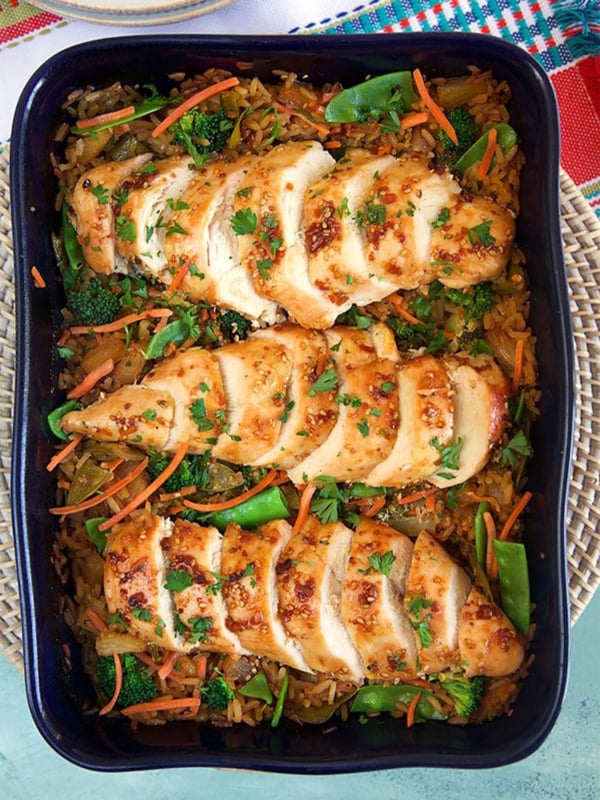
- Baked Teriyaki Chicken Casserole
For more easy family friendly recipes, follow us on Instagram and Facebook!
Hibachi Chicken Recipe
Equipment
- 1 large wok or 12 inch skillet
- Instant Read Thermometer optional
Ingredients
- 1 1/2 lb chicken breast
- 1 tablespoon canola oil
- 1/2 teaspoon sesame seed oil
- 1 tablespoon butter
- 1 garlic clove, minced
- 3 tablespoons soy sauce
- 2 tablespoons fresh lemon juice, juice of one lemon, approximately
- 1/2 teaspoon kosher salt
- 1/2 teaspoon pepper
For the vegetables:
- 1 tablespoon canola oil
- 1 1/2 teaspoons sesame seed oil
- 1 cup sliced white onion
- 1 1/2 cups sliced zucchini
- 8 ounces mushrooms, halved
- 1 tablespoon butter
- 2 tablespoons soy sauce
- Salt and pepper, to taste
Instructions
- Cut the chicken into bite sized pieces, set aside.
- Heat the oil, sesame oil and butter in a large wok or skillet over medium-high heat.
- Add the garlic and cook for 30 seconds. Stir in the soy sauce, lemon juice, salt and pepper.
- Add the chicken and stir fry until cooked through, approximately 4-5 minutes.
- Push the chicken off to the sides of the pan (or transfer to a platter and keep warm.)
- Add the remaining canola oil and sesame oil to the pan heating until shimmering.
- Add the onion and cook for 1-2 minutes.
- Stir in the zucchini and mushrooms cooking until golden brown, approximately 2-3 minutes.
- Add the butter and soy sauce stirring to coat.
- Return the chicken to the pan and cook for an additional minute.
- Season with salt and pepper, to taste.
Video
Notes
- Boneless, skinless chicken thighs can be substituted for chicken breast.
- Tamari can be used in place of soy sauce for a gluten-free option.
- If doubling the recipe, cook the chicken in batches so it browns instead of steaming.
- Store leftovers in an airtight container in the refrigerator for 3–4 days.
- Reheat in a skillet for the best texture.
- Cooked chicken can be frozen for up to 3 months. Thaw overnight in the refrigerator before reheating.
Nutrition
Nutrition information is automatically calculated, so should only be used as an approximation.
Hibachi Chicken FAQs
Can I use chicken thighs instead of chicken breast?
Yes. Boneless, skinless chicken thighs work very well and tend to stay especially juicy when cooked over high heat. Cut them into bite-size pieces and cook until they reach 165°F.
Why isn’t my Hibachi Chicken browning?
The skillet may not be hot enough, the chicken may have too much surface moisture or the pan may be overcrowded. Pat the chicken dry, preheat the skillet and cook in batches if necessary so the chicken sears instead of steaming.
How do I know when Hibachi Chicken is done?
The chicken should be browned outside and completely opaque inside. For the most accurate test, use an instant-read thermometer. Chicken is fully cooked at 165°F.
Can I make Hibachi Chicken ahead of time?
You can do most of the prep ahead. Cut the chicken and vegetables and refrigerate them separately, make the Yum Yum Sauce and prepare your rice in advance. Cook the chicken and vegetables just before serving for the best texture.
Can I freeze Hibachi Chicken?
Yes. Freeze the cooked chicken in an airtight freezer-safe container for up to 3 months. Thaw overnight in the refrigerator before reheating. The vegetables may be softer after freezing and thawing.
Can I double the recipe?
Yes, but cook the chicken in batches so you don’t overcrowd the skillet. Too much chicken in the pan at once will cause it to steam instead of brown.
Can I make Hibachi Chicken on a Blackstone?
Yes. A Blackstone or other flat-top griddle is great for hibachi-style cooking because you have plenty of room to cook the chicken and vegetables separately and combine them at the end.
What can I substitute for soy sauce?
Tamari is the closest substitute and is available in gluten-free versions. Coconut aminos can also be used, although the flavor is a little sweeter and less salty.
What vegetables are good for hibachi?
Zucchini, mushrooms and onions are classic choices, but broccoli, carrots, bell peppers, snap peas and bok choy all work well.
What should I serve with Hibachi Chicken?
Hibachi Fried Rice and Yum Yum Sauce are my favorites. You can also serve it with steamed rice, hibachi noodles, cauliflower rice, ginger sauce or mustard sauce.









You didn’t give recipe or link for yum yum sauce?!
It’s coming this week! 🙂