This post may contain affiliate links. Please read our disclosure policy.
When time is tight and I don’t want to fuss with a bunch of dishes but want a quick dinner, this Kung Pao Beef is exactly what I make.
I’m a takeout-inspired dinner girl through and through, and after plenty of so-so homemade attempts, I finally nailed the best-ever version: tender beef, a sweet-tangy-savory sauce, and just enough spice (totally adjustable for your crew).
If you love bold Chinese takeout flavors, you’re going to put this one on repeat.
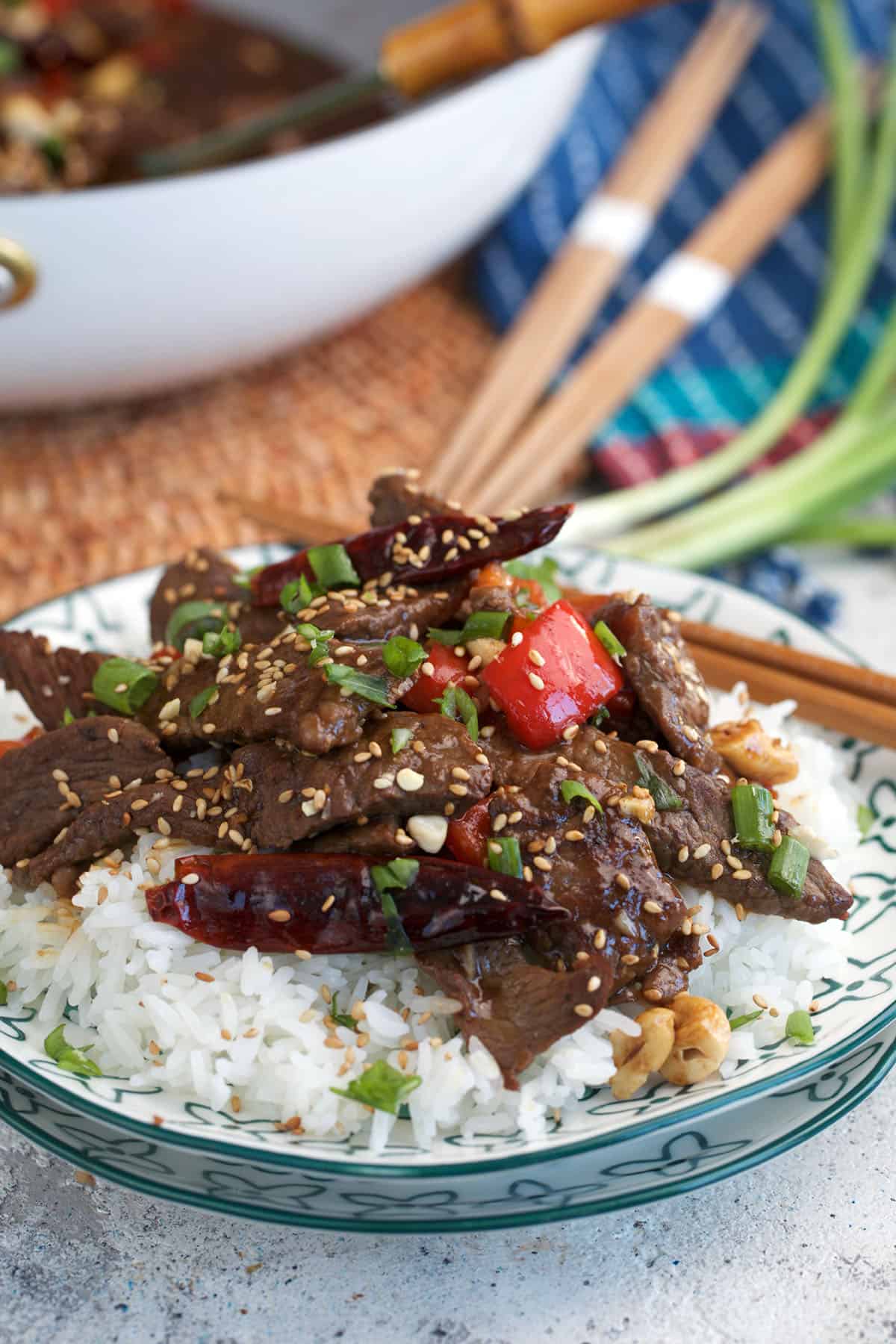
Why You’ll Love My Kung Pao Beef
- Perfect weeknight dinner: Serve it over rice (or noodles) and call it done.
- Faster than takeout: It’s on the table in about 20 minutes once you get rolling.
- Big flavor, simple steps: A quick marinade + a whisk-and-pour sauce = maximum payoff.
- Tender, juicy beef: Slicing correctly + a little cornstarch magic makes a huge difference.
- Heat you control: Make it mild-ish, medium, or “hello, I’m sweating” spicy.
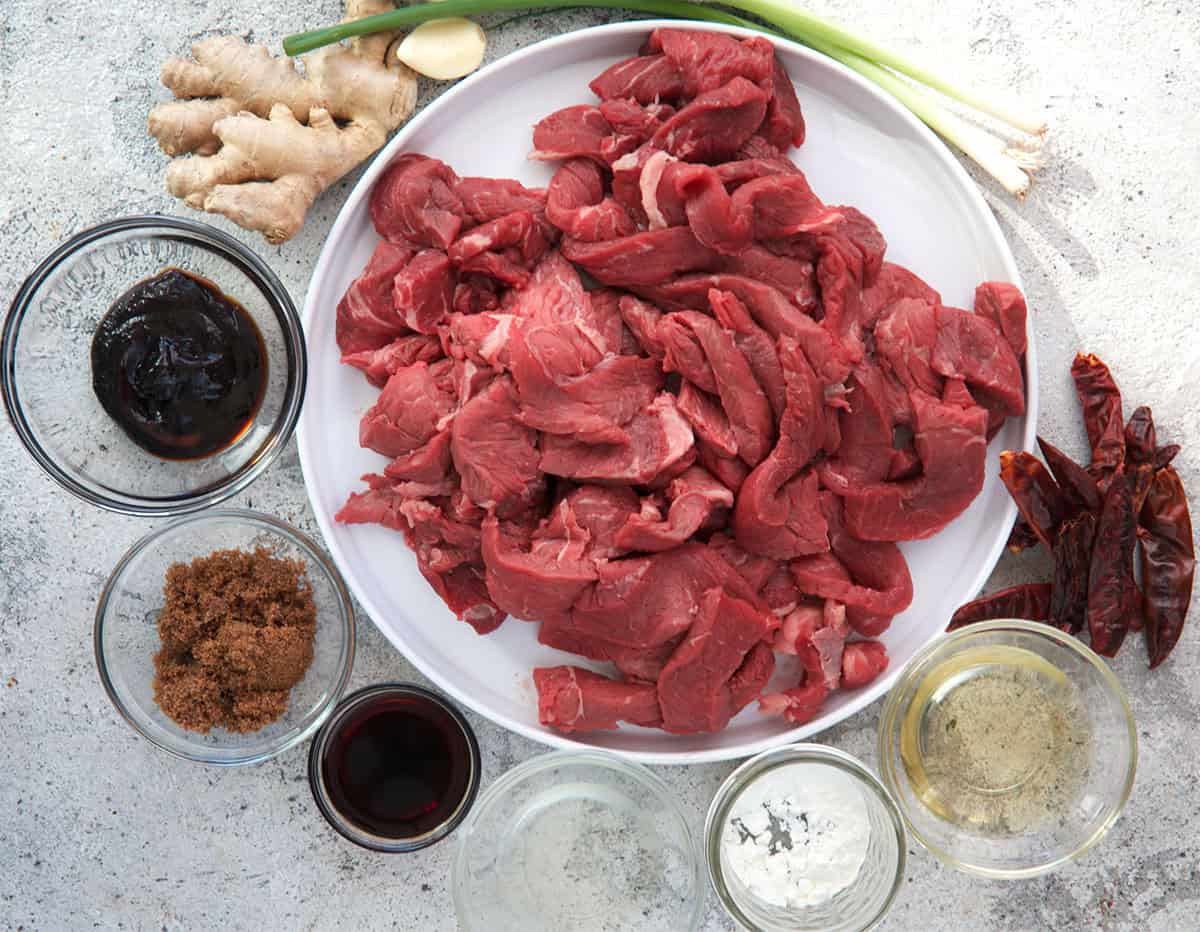
Ingredients for Kung Pao Beef
No measurements here (those are in the recipe card), but let’s talk ingredients like we’re standing in the kitchen together, plus easy swaps if you need them.
- Beef – Flank steak or sirloin, sliced thin against the grain. Skirt steak works too; even ribeye if you’re feeling fancy. For a budget-friendly option, look for “stir fry beef” and slice it thinner if needed. You can also swap in chicken thighs if you’re out of beef (same sauce, same method).
- Soy Sauce and Flavor Boosts – Soy sauce brings the salty-savory base; hoisin adds sweetness and depth; toasted sesame oil adds that unmistakable “restaurant” flavor. Use tamari for a gluten-free swap. If you don’t have hoisin, a little extra brown sugar plus a tiny splash of Worcestershire (or a dab of oyster sauce if you have it) gets you close. No sesame oil? It’s optional, but you’ll miss the nutty finish, still delicious without it.
- Vinegar and Sugar – Rice vinegar and brown sugar for the sweet-tang balance. No rice vinegar? Use apple cider vinegar or white wine vinegar (start with a bit less and adjust). Brown sugar can be swapped with honey or maple syrup for a slightly different vibe.
- Shaoxing Wine – A splash in the marinade for extra tenderness and that subtle “takeout” flavor. Mirin works, or dry sherry. If you want to skip it entirely, you can, your beef will still be tasty, this just adds a little something.
- Cornstarch – A little in the marinade and a little in the sauce for that perfectly thickened sticky sauce. Arrowroot starch works similarly (often thickens faster), or potato starch. In a pinch, flour will thicken, but the sauce won’t be quite as shiny and smooth.
- Aromatics – Garlic, ginger and scallions build that bold stir-fry base. Jarred garlic and ginger works if that’s what you have (fresh is best). No scallions? Use thin-sliced yellow onion for the peppery onion bite and finish with chives if you have them.
- Chilies and Peppercorns – Dried red chilies for heat; Sichuan peppercorns for that classic tingly, citrusy kick (optional but so fun). If you don’t have dried chilies, use crushed red pepper flakes, just go easy at first. No Sichuan peppercorns? Skip them; it’ll still be delicious and plenty “Kung Pao-inspired.”
- Bell Pepper and Nuts – Red bell pepper for crunch and sweetness; roasted cashews or peanuts for that signature nutty bite. Swap bell pepper for zucchini, broccoli, or snap peas, anything that stays crisp-tender. Nuts can be peanuts, cashews, or even almonds. Nut-free? Skip them and add extra veggies for crunch.
How to Make Kung Pao Beef
This one cooks fast once you start, so get everything prepped and within arm’s reach.
- Slice the beef thin (against the grain) so it stays tender. If it’s hard to slice, chill it in the freezer for 10-15 minutes first.
- Quick-marinate the beef with soy sauce, cornstarch, and a little oil (plus Shaoxing wine if you’re using it). It should look lightly coated, not wet.
- Whisk the sauce until smooth, then set it aside. (Give it one more quick whisk right before pouring, cornstarch settles.)
- Sear the beef in a hot skillet/wok until the edges brown and it’s mostly cooked through. You should hear a strong sizzle. Remove to a plate so it doesn’t overcook.
- Toast the chilies briefly, then add garlic, ginger, and the white parts of the scallions. Stir constantly, this step turns super fragrant fast.
- Add bell pepper and stir-fry just until crisp-tender (bright, slightly softened, still crunchy).
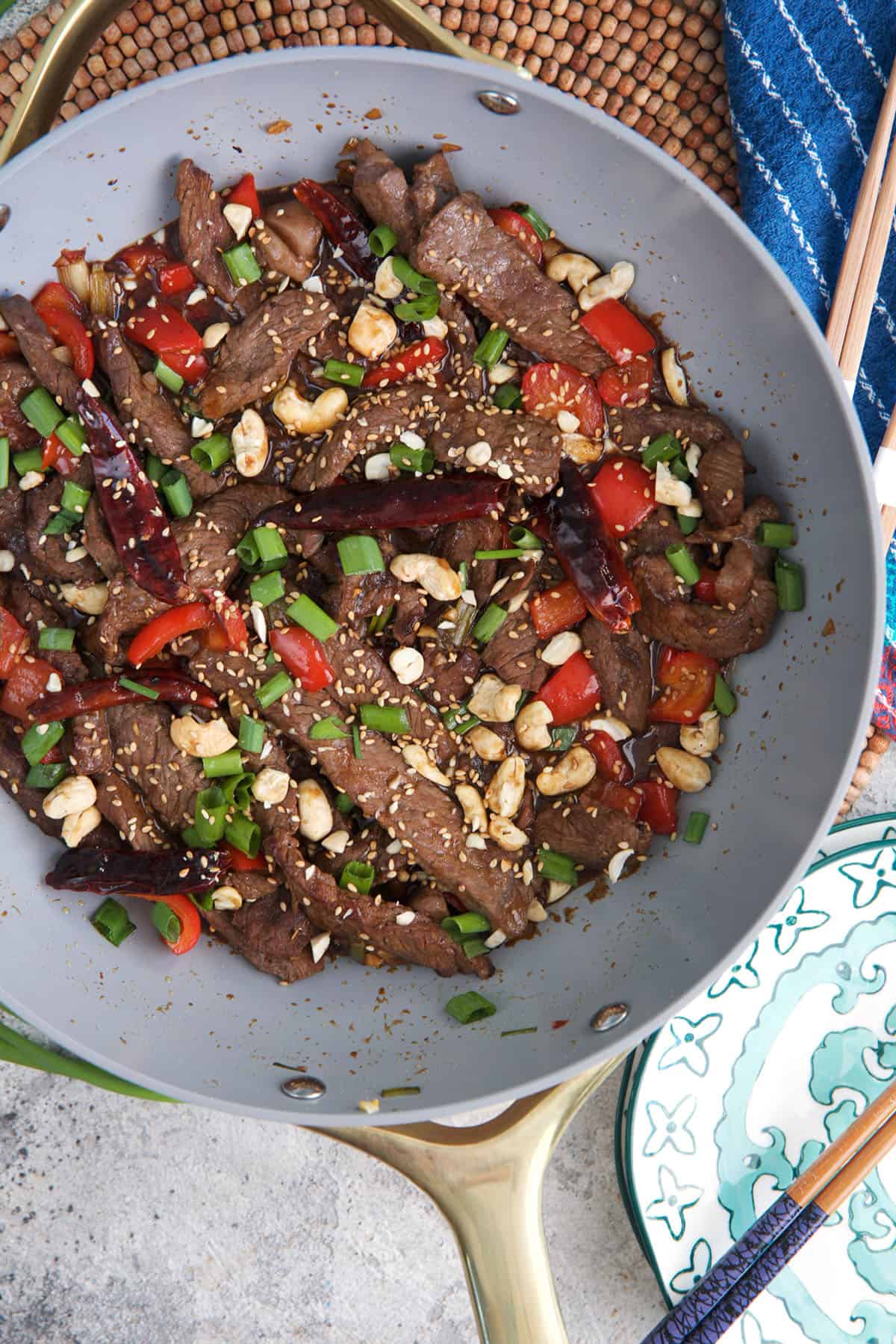
- Pour in the sauce and stir as it bubbles and turns glossy. Add the beef back in, toss to coat, then stir in the nuts and finish with the green onions.
- Serve immediately over rice or noodles while it’s hot and saucy.
How to Store Leftovers
- Refrigerator: Store in an airtight container for up to 3-4 days.
- Reheating: Warm in a skillet over medium heat with a small splash of broth or water to loosen the sauce. Microwave works, too, just cover it so it stays saucy, and heat in short bursts so the beef doesn’t become tough.
- Freezing: You can freeze Kung Lao Beef, but the bell pepper will soften more after thawing. If you’re making this as a freezer meal, consider freezing the beef with the sauce and adding fresh veggies when reheating.
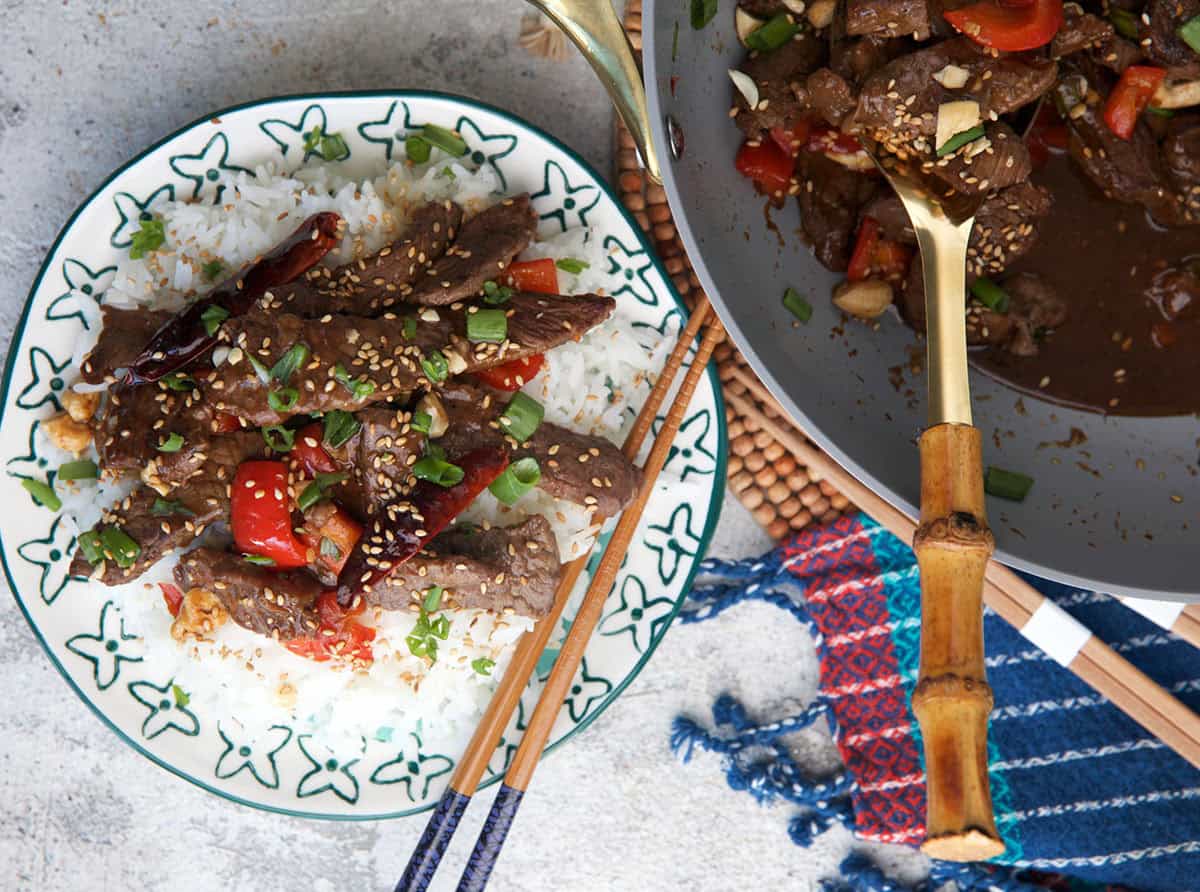
Kellie’s Tips for The Best Kung Pao Beef
- Control the heat: Start with fewer dried chilies for a milder dish, or remove them after they’ve flavored the oil. Love spice? Add more chilies or a pinch of crushed red pepper.
- Slice thin, against the grain: This is the #1 tenderness trick, and it matters.
- Don’t skip the cornstarch: It protects the beef during the sear and gives you that restaurant-style sauce cling.
- High heat, quick cook: You want a fast sear, not a slow simmer, slow cooking can make thin-sliced beef chewy.
- Cook in one even layer: If you crowd the pan, the beef steams and turns gray instead of browned. If your skillet is small, cook in batches.
- Whisk the sauce twice: Once when you mix it, and again right before pouring. Cornstarch settles fast.
What to Serve with Kung Pao Beef
- Steamed jasmine rice or basmati rice (classic and perfect)
- Hibachi Fried rice (because why not make it a takeout night at home?)
- Lo mein or rice noodles for a noodle bowl situation
- Steamed broccoli, sautéed green beans, or snap peas for extra veg
- Quick Asian cucumber salad to cool things down if you went spicy
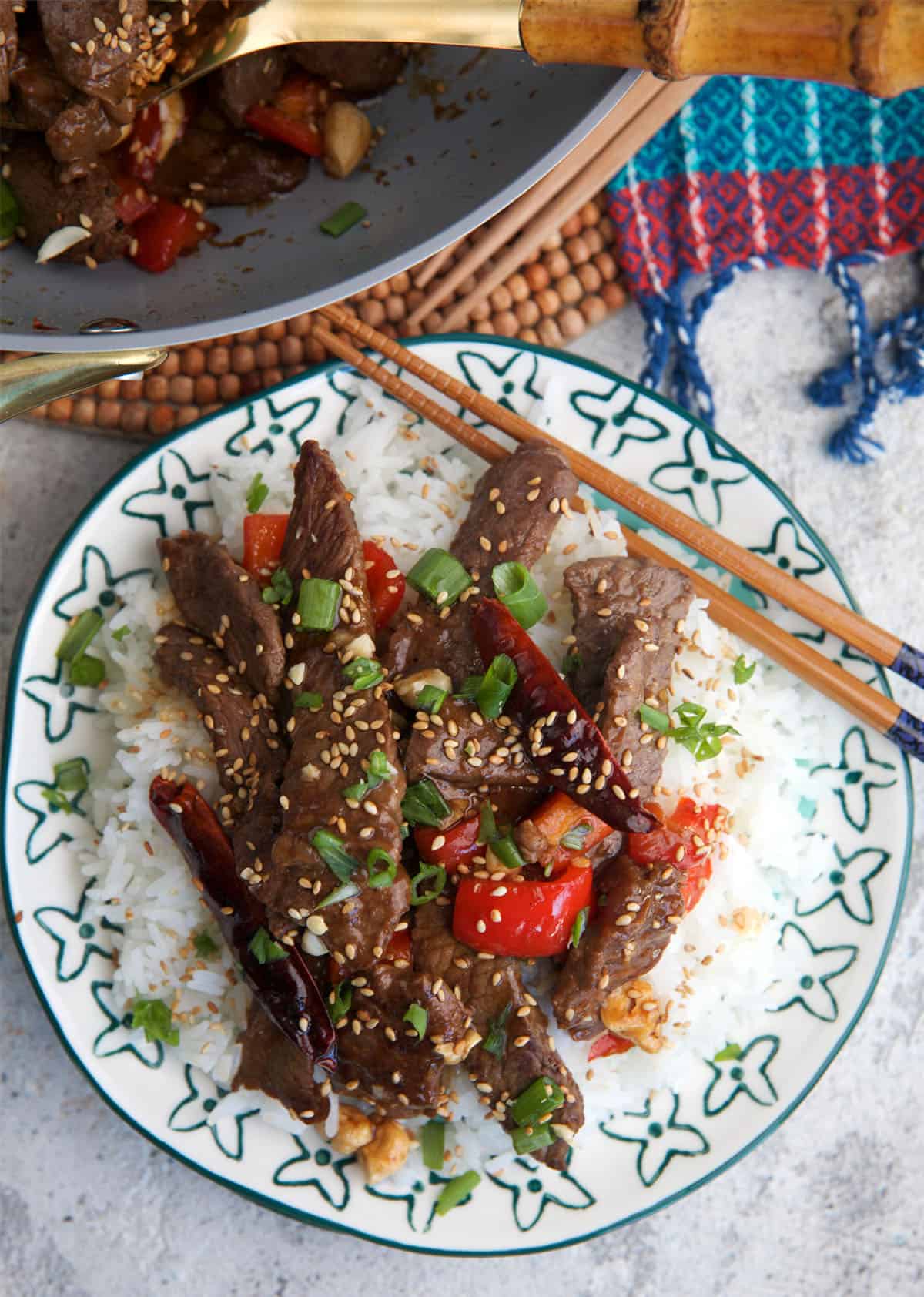
More Easy Dinner Recipes
If you’re into quick, bold, takeout-inspired dinners, here are a few “same energy” ideas to add to your rotation:
- Quick Beef and Broccoli Stir Fry
- Easy Kung Pao Shrimp
- Szechuan Chicken
- Sesame Chicken (Better Than Takeout)
- Easy Shrimp Fried Rice
- Easy Kung Pao Chicken
- Mongolian Beef
- Chicken Lettuce Wraps
For more easy dinner ideas, follow us on Facebook.
Kung Pao Beef Recipe
Equipment
- chef's knife
- cutting board
- wok or deep skillet
- spatula
- measuring cup
- measuring spoons
- whisk
Ingredients
Beef and Marinade
- 1 pound flank steak or sirloin, thinly sliced against the grain
- 1 tablespoon soy sauce
- 1 tablespoon Shaoxing wine, Mirin or dry sherry (optional but great)
- 1 teaspoon cornstarch
- 1 teaspoon olive oil
Kung Pao Sauce
- 3 tablespoons soy sauce
- 2 tablespoons rice vinegar
- 1½ tablespoons brown sugar
- 1 tablespoon hoisin sauce
- 1 teaspoon toasted sesame oil
- 1 teaspoon cornstarch
- ¼ cup low-sodium beef broth
Stir Fry Ingredients
- 2 tablespoons olive oil, divided
- 6 dried red chilies, adjust to taste
- 2 teaspoon Sichuan peppercorns, lightly crushed (optional)
- 4 cloves garlic, minced
- 1 tablespoon fresh ginger, minced
- 4 scallions, cut into 1-inch pieces (whites and greens separated)
- 1 red bell pepper, diced (larger dice)
- ½ cup roasted cashews or peanuts
To Serve
- Steamed rice, or noodles, sesame seeds, extra scallions
Instructions
- In a bowl, toss beef with soy sauce, Shaoxing wine, cornstarch, and 1 tsp oil. Set aside while you prep everything else.
- Whisk together all sauce ingredients until smooth. (The cornstarch should dissolve.)
- Heat a large skillet or wok over high heat. Add 1 tbsp oil. Spread beef in a single layer and sear 1–2 minutes, flip/stir and cook another 1 minute until mostly cooked. Remove to a plate.
- Add remaining 1 tbsp oil. Add dried chilies and Sichuan peppercorns; stir 20–30 seconds until fragrant (don’t burn). Add garlic, ginger, and scallion whites; stir 20–30 seconds.
- Add bell pepper (if using). Stir-fry until crisp-tender.
- Whisk sauce again (cornstarch settles), pour into pan, and stir until glossy and thickened—about 30–60 seconds. Add beef back in, toss to coat. Stir in peanuts and scallion greens for the last 30 seconds.
- Spoon over rice. Top with sesame seeds/scallions if you want.
Notes
- Slice the beef thin and against the grain for the most tender bite. If it’s hard to slice, freeze the steak for 10–15 minutes first.
- Adjust the heat: use fewer dried chilies for mild, or remove them after flavoring the oil. Add crushed red pepper flakes if you want extra heat.
- Whisk the sauce again right before adding it to the pan, cornstarch settles quickly.
- Don’t overcrowd the pan when searing the beef; cook in batches if needed so it browns instead of steaming.
- Substitutions: tamari works for gluten-free; mirin or dry sherry can replace Shaoxing wine; cashews and peanuts are interchangeable.
Nutrition
Nutrition information is automatically calculated, so should only be used as an approximation.