This post may contain affiliate links. Please read our disclosure policy.
This Sweet and Sour Pork Recipe is my easy, weeknight-friendly answer to takeout cravings. Tender bites of pork are pan-seared, tossed with crisp bell peppers, onion, pineapple, and a glossy sweet-tangy sauce that tastes like your favorite takeout order but fresher, faster, and made right at home.
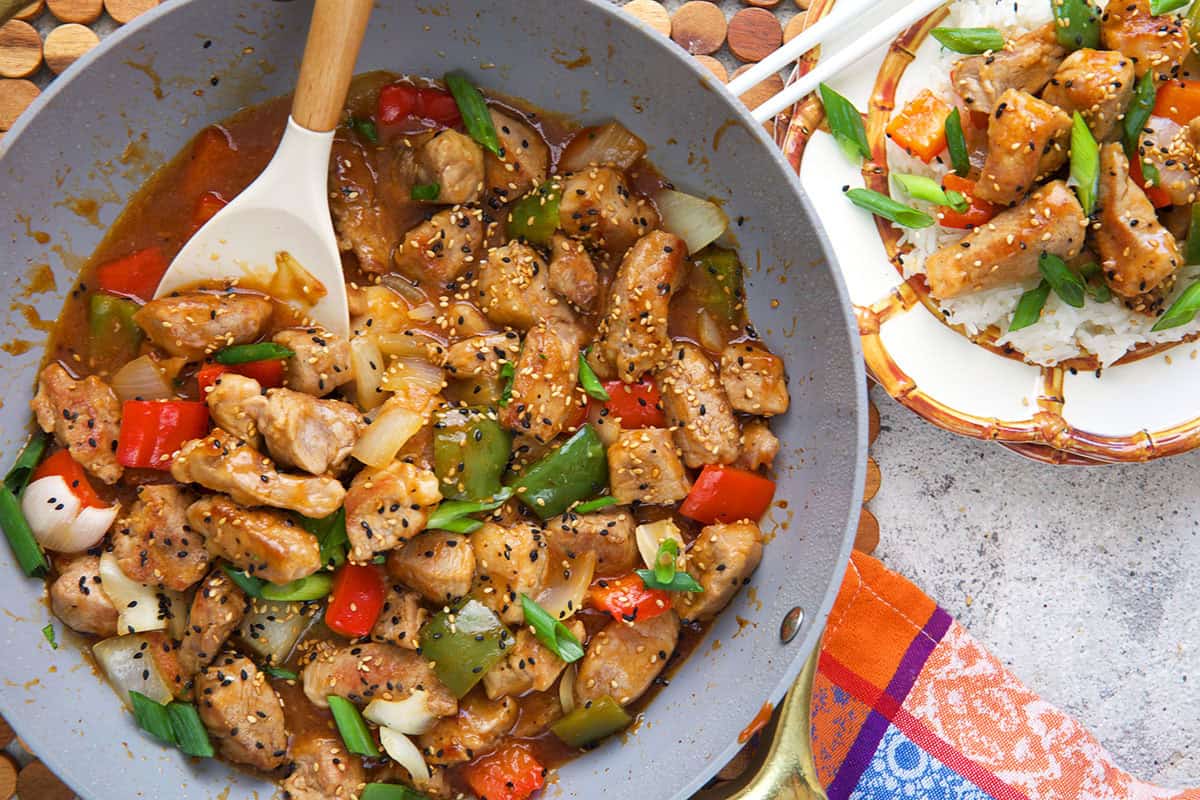
Table of Contents
- Kellie’s Note Wok This Way
- Why You’ll Love My Sweet and Sour Pork
- Ingredients For Sweet and Sour Pork
- How to Make Sweet and Sour Pork
- How to Store Sweet and Sour Pork
- Kellie’s Tips for the Best Sweet and Sour Pork
- What to Serve With Sweet and Sour Pork
- More Easy Take Out Inspired Recipes
- Sweet and Sour Pork Recipe
Kellie’s Note
Wok This Way

Sometimes takeout sounds like the answer to an overwhelmingly busy day. And honestly, sometimes it is. But when I want that same sweet, tangy, saucy dinner without waiting for delivery, this Sweet and Sour Pork is exactly what I make.
I’ve made a lot of takeout-inspired dinners, and the biggest lesson I’ve learned is this: homemade doesn’t need to be complicated to be better. Most often, I can make the whole takeout fake out in just one pan. This version is pan-seared, quick, colorful, and packed with that bright pineapple spiked sauce that clings to every bite.
It’s the kind of dinner that the whole family gets excited about. The peppers stay crisp-tender, the pork is juicy, the pineapple balances everything perfectly, and the homemade sweet and sour sauce gets thick and sticky in the pan like magic. Spoon it over rice and you’ve got a quick takeout dinner at home that tastes fresh, satisfying, and just a little bit nostalgic.

Why You’ll Love My Sweet and Sour Pork
- Better than takeout. It has all the sweet, tangy, saucy flavor you crave, but it tastes brighter and lighter because it’s made right in your own skillet.
- No deep frying. This Sweet and Sour Pork Recipe uses pan-seared pork, so you still get golden, tender bites without a pot of oil or a greasy stovetop.
- Quick weeknight dinner. Prep your vegetables while the pork rests in the seasoning and the whole thing comes together fast.
- That sauce. Pineapple juice, vinegar, ketchup, brown sugar, and soy sauce make the perfect glossy sweet and sour sauce that’s balanced, not cloying.
- Family-friendly. It’s colorful, saucy, a little sweet, and easy to serve over rice for a dinner everyone can get behind.
- Great for cleaning out the fridge. Bell peppers, onions, pineapple, and pork are the classic combo, but there’s room to play with what you have on hand.
Ingredients For Sweet and Sour Pork
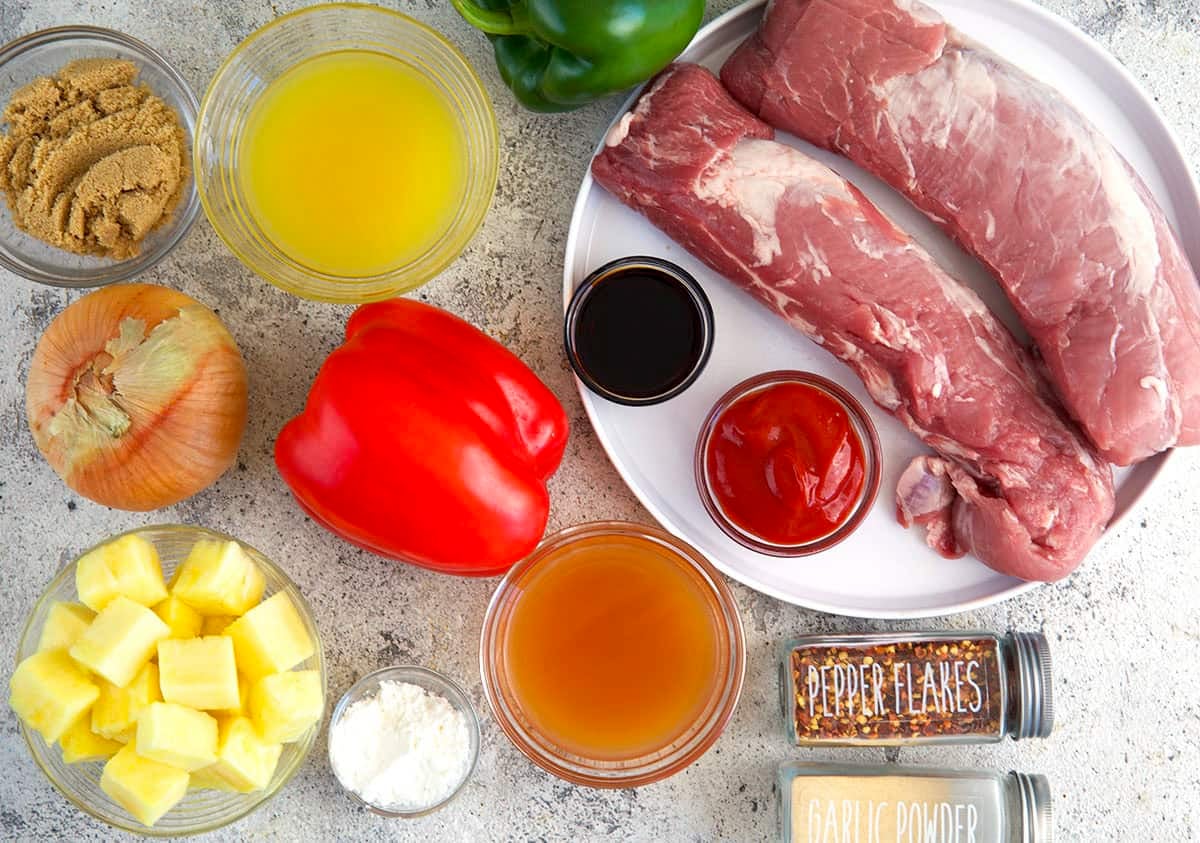
Here’s what you’ll need to make this easy Sweet and Sour Pork. Full measurements are in the recipe card below.
- Pork: Pork tenderloin stays tender and cooks quickly, but boneless pork loin chops work, too. You can also swap in chicken or shrimp.
- Soy Sauce: Adds savory flavor to the pork and sauce. Use low-sodium soy sauce, tamari, or coconut aminos if preferred.
- Cornstarch: Helps the pork brown and thickens the sauce so it turns glossy. Arrowroot starch works in a pinch.
- Pineapple Juice: Gives the sauce its fruity sweetness. Use the juice from canned pineapple if that’s what you have.
- Vinegar: Rice vinegar adds the best bright tang, but apple cider vinegar works well, too.
- Ketchup and Brown Sugar: These create that classic sweet and sour flavor with a little tomato richness and caramel-like sweetness.
- Bell Peppers and Onion: Keep things colorful and crisp. Swap in snap peas, broccoli, carrots, or mushrooms if you like.
- Pineapple Chunks: Fresh or canned pineapple both work and add juicy, sweet-tangy bites.
- Rice and Garnishes: Serve over white rice, jasmine rice, brown rice, cauliflower rice, or noodles. Green onions and sesame seeds make an easy finish.
How to Make Sweet and Sour Pork
This is a quick skillet dinner, so have your ingredients prepped before you start cooking. Once the pork hits the pan, everything moves fast.
- Season the pork. Toss the pork pieces with soy sauce, cornstarch, salt, and pepper. Let it hang out for a few minutes while you whisk the sauce and chop the vegetables. The pork will look lightly coated and a little tacky, which helps it brown nicely in the skillet.
- Whisk the sauce. Stir together the pineapple juice, vinegar, ketchup, brown sugar, and soy sauce until smooth. In a separate small bowl, mix the cornstarch and water so it’s ready to thicken the sauce later.
- Sear the pork. Heat the oil in a large skillet over medium-high heat. Add the pork in a single layer and let it get golden on the outside before turning. You’re looking for browned edges and juicy centers, not dry little pork pebbles. Work in batches if needed so the pan doesn’t get crowded.
- Cook the vegetables. Add the peppers and onion to the skillet. They should soften slightly but still have a little snap when you bite into them. The color gets brighter, the onion mellows out, and the whole pan starts smelling like dinner is absolutely happening.
- Simmer the sauce. Pour the sauce into the skillet and let it bubble. Stir in the cornstarch slurry and watch it go from thin and splashy to glossy and spoon-coating in just a minute or two.
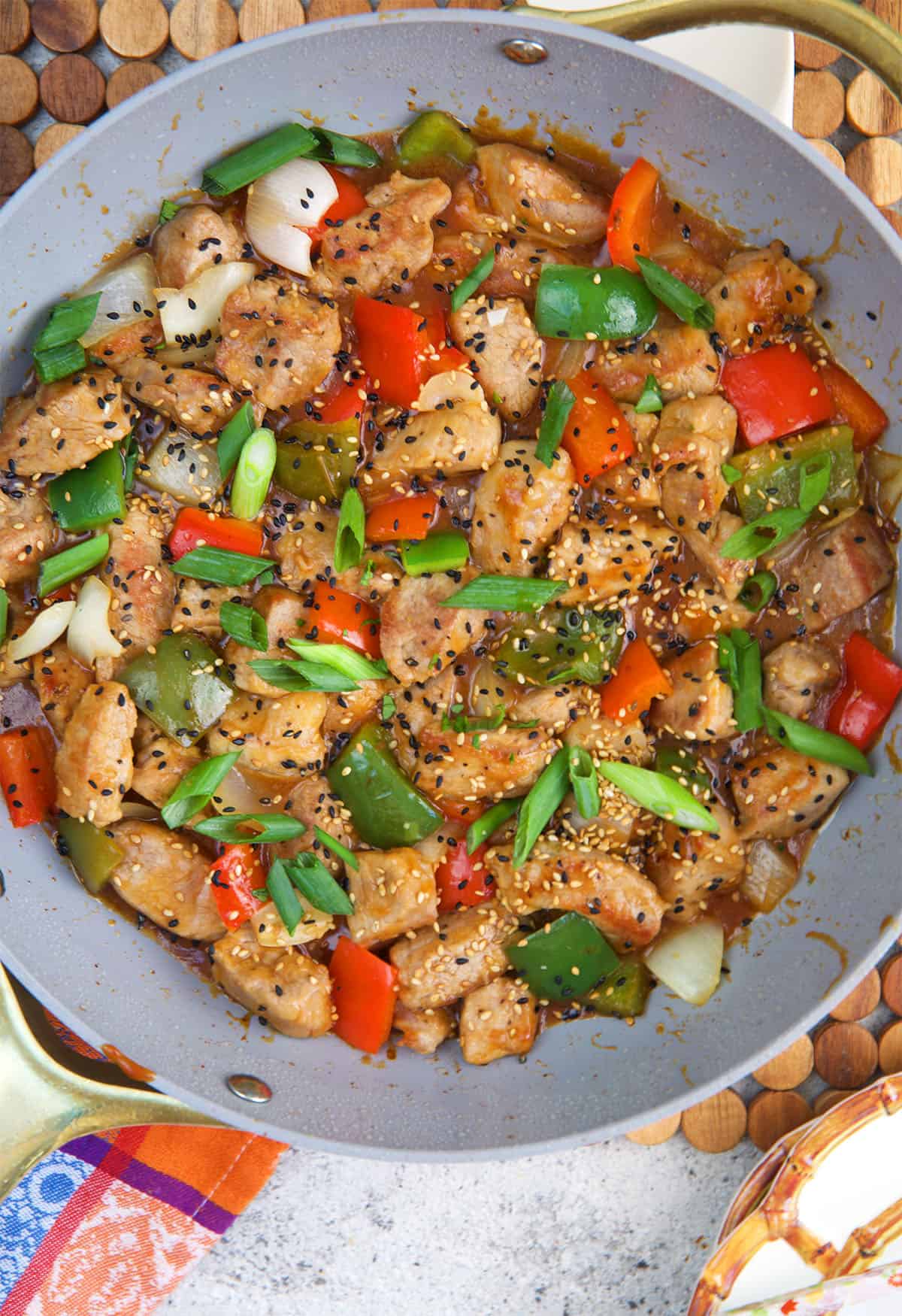
- Bring it all together. Add the pork and pineapple chunks back to the pan and toss everything together. The pork should be coated in that shiny sweet and sour sauce, the pineapple should be warmed through, and the vegetables should still look bright and fresh.
- Serve. Spoon everything over hot rice and finish with green onions or sesame seeds if you’re feeling fancy. Or hungry. Or both.
How to Store Sweet and Sour Pork
- Store leftover Sweet and Sour Pork in an airtight container in the refrigerator for up to 3 days. The sauce will thicken a bit as it chills, but it loosens back up when reheated.
- To reheat, warm it gently in a skillet over medium-low heat or in the microwave in short bursts. Add a splash of water or pineapple juice if the sauce needs a little help becoming glossy again.
- I like storing the pork mixture and rice separately if I know we’ll have leftovers. That keeps the rice from soaking up all the sauce and turning a little too soft.
- Freezing isn’t my first choice for this recipe because the peppers and pineapple can soften after thawing, but you can freeze it if needed. Store in a freezer-safe container for up to 2 months, thaw overnight in the refrigerator, and reheat gently.
Kellie’s Tips for the Best Sweet and Sour Pork
- Cut the pork uniformly. One-inch pieces cook quickly and evenly, which means no dry pieces and no undercooked surprises.
- Don’t crowd the skillet. If the pork is packed into the pan, it’ll steam instead of sear. Give it room so those edges can turn golden brown.
- Use medium-high heat. You want a hot pan for browning, but not so hot that the outside burns before the pork cooks through.
- Keep the veggies crisp-tender. Sweet and Sour Pork is best when the peppers still have a little bite. Mushy peppers are not the vibe.
- Stir the slurry before adding it. Cornstarch settles quickly, so give it a quick stir right before it goes into the sauce.
- Don’t overcook the pork at the end. Once the pork goes back into the skillet, it only needs a minute or two to warm through and get coated in sauce.
- Taste and adjust. Want it tangier? Add a little more vinegar. Want it sweeter? Add a pinch more brown sugar. Want more savory depth? Add a little bit more soy sauce.
- Serve right away. This dish is at its best when the sauce is hot, the pork is tender, and the vegetables are still crisp-tender.

My non-stick, ceramic coated stir fry pan is made designed with high, sloped walls and a concentrated heating zone, this wok-inspired pan is perfect for stir fry, curry, and one-pot recipes.

What to Serve With Sweet and Sour Pork
Sweet and Sour Pork is saucy enough to make a bowl of rice very happy, but you can turn it into a full takeout-at-home spread with a few easy sides.
- Hibachi Fried rice
- Chicken Lo mein noodles
- Stir fry vegetables
- Steamed broccoli
- Asian cucumber salad
- Egg drop soup
- Hot and sour soup
For a simple weeknight dinner, I usually keep it classic with steamed rice and maybe a quick green vegetable. For a weekend fakeout takeout night, add fried rice and soup and call it a party.
More Easy Take Out Inspired Recipes
If you love this Sweet and Sour Pork Recipe, you’ll want to add these easy takeout-inspired dinners to your meal plan next:
Sweet and Sour Pork Recipe
Equipment
- skillet or wok
- spatula or wooden spoon
- chef's knife
- cutting board
- measuring spoons
- measuring cup
Ingredients
For the Pork:
- 1 1/2 pounds pork tenderloin or boneless pork loin chops, cut into 1-inch pieces
- 1 tablespoon soy sauce
- 1 tablespoon cornstarch
- 1/2 teaspoon kosher salt
- 1/4 teaspoon black pepper
- 2 tablespoons olive oil, or other neutral oil, divided
For the Sauce:
- 1/2 cup pineapple juice
- 1/3 cup rice vinegar or apple cider vinegar
- 1/3 cup ketchup
- 3 tablespoons brown sugar
- 2 tablespoons soy sauce
- 1 tablespoon cornstarch
- 2 tablespoons water
For the Stir-Fry:
- 1 red bell pepper, cut into 1-inch pieces
- 1 green bell pepper, cut into 1-inch pieces
- 1 small yellow onion, cut into chunks
- 1 cup pineapple chunks
- Cooked rice, for serving
- Sliced green onions or sesame seeds, optional
Instructions
- Toss the pork with the soy sauce, cornstarch, salt, and pepper. Let it rest for 10 minutes while you prepare the sauce and vegetables.
- In a medium bowl, whisk together the pineapple juice, vinegar, ketchup, brown sugar, and soy sauce. In a separate small bowl, stir together the cornstarch and water to make a slurry.
- Heat 1 tablespoon of the oil in a large skillet over medium-high heat. Add the pork in a single layer, working in batches if needed so the pan isn’t crowded. Sear for 2 to 3 minutes per side, until browned and just cooked through. Transfer the pork to a plate.
- Add the remaining 1 tablespoon oil to the skillet. Add the bell peppers and onion. Cook for 4 to 5 minutes, stirring occasionally, until crisp-tender.
- Pour the sauce into the skillet and bring it to a simmer. Stir in the cornstarch slurry and cook for 1 to 2 minutes, until thickened and glossy.
- Add the pork and pineapple chunks to the skillet. Toss everything together and cook for 1 to 2 minutes, just until the pork is coated in the sauce and heated through.
- Serve over cooked rice and garnish with sliced green onions or sesame seeds, if desired.
Notes
- Don’t overcrowd the pan when searing the pork. Cook in batches if needed so the pork browns instead of steams.
- Avoid overcooking the pork after adding it back to the skillet. Since it’s pan-seared instead of fried, pork tenderloin stays juiciest when it’s cooked just through and briefly tossed in the sauce.
- Fresh or canned pineapple both work well. If using canned pineapple, save the juice for the sauce.
- Rice vinegar gives the sauce a bright, clean tang, but apple cider vinegar works well in a pinch.
- For a saucier dish, increase the sauce ingredients by half.
Nutrition
Nutrition information is automatically calculated, so should only be used as an approximation.