This post may contain affiliate links. Please read our disclosure policy.
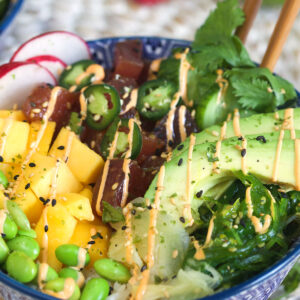
This tuna poke bowl is a fresh, easy dinner made with sushi-grade ahi tuna, rice, crisp vegetables, and a creamy spicy mayo drizzle. It comes together in about 25 minutes, tastes restaurant-quality, and is one of the easiest ways to make an ahi tuna poke recipe at home.
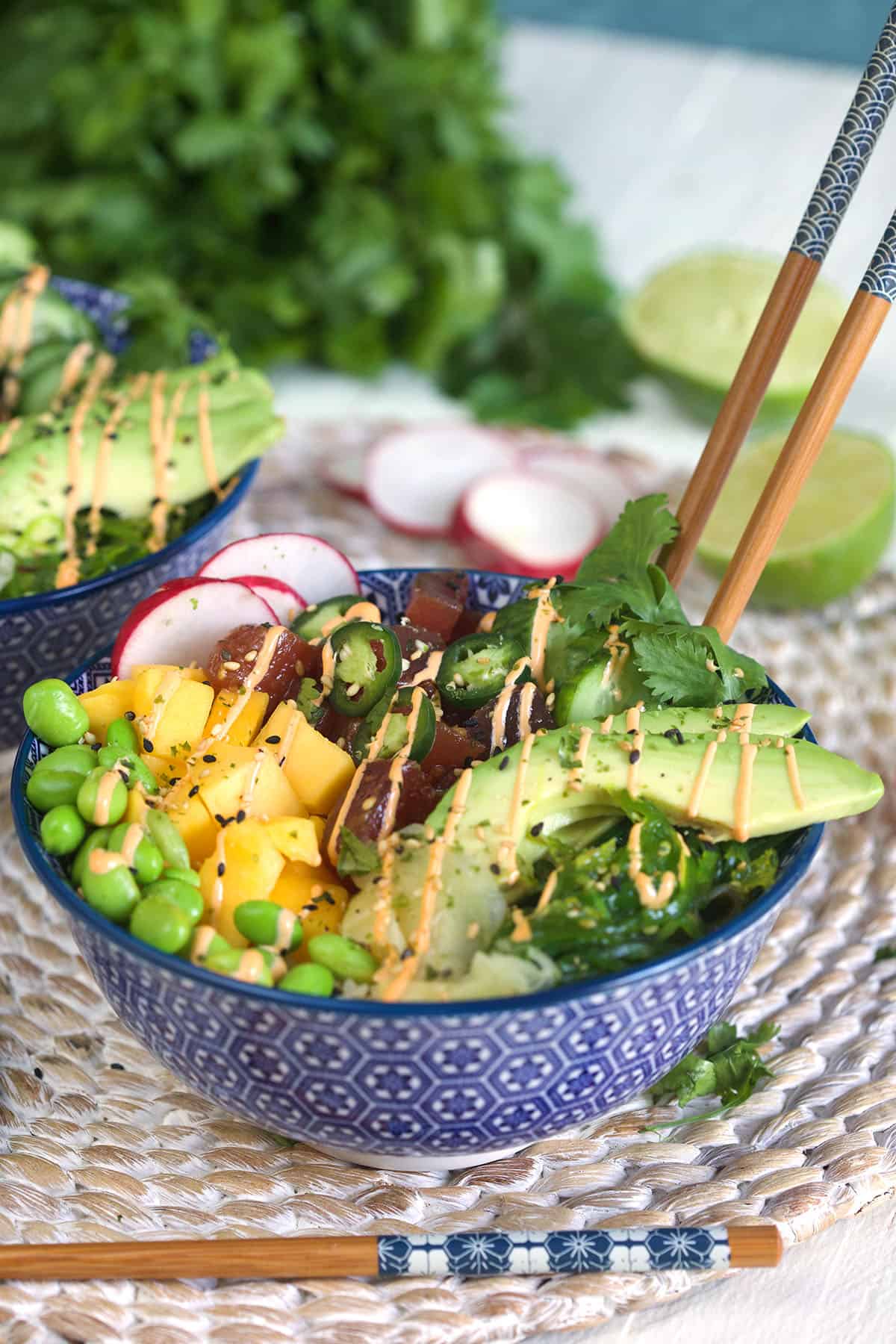
Kellie’s Note
Poke Bowl Made Easy

When I make poke bowls at home, I focus on three things: using high-quality sushi-grade tuna, keeping the toppings balanced so the fish stays the star, and assembling everything just before serving so the bowl stays cold, fresh, and vibrant. That simple approach gives you a homemade poke bowl that feels special without being complicated.
I also love how customizable this recipe is. You can keep it classic with cucumber, edamame, avocado, and seaweed salad, or build your own bowl with whatever fresh toppings you have on hand.
You’ll love this easy poke bowl recipe for those nights when it’s just too hot to cook.

Why This Tuna Poke Bowl Works
This recipe keeps the bold, fresh flavor of poke bowls front and center without overcomplicating the process. Here’s why it works so well:
- It’s easy to customize. You can switch up the base, toppings, or heat level depending on what you like.
- Sushi-grade ahi tuna stays the star. The dressing adds flavor without overpowering the fish.
- The toppings add contrast. Creamy avocado, crisp cucumber, edamame, radishes, and mango make every bite fresh and balanced.
- The spicy mayo adds a restaurant-style finish. It brings creamy heat and ties the whole bowl together.
Ingredients for Tuna Poke Bowl
A few ingredient details make a big difference in a poke bowl, especially when you’re working with raw fish.
- Sushi-grade ahi tuna – Use the freshest sushi-grade ahi tuna you can find from a trusted fish counter or market. If you’re planning to serve tuna raw, buy it the same day you plan to make the bowls and keep it cold until you’re ready to cut and serve it.
- Rice – Short-grain white rice gives you the most classic poke bowl texture, but jasmine rice, brown rice, sushi rice or even cauliflower rice can work depending on what you like. Just make sure the rice has cooled a bit before you build the bowls.
- Soy sauce – Low-sodium soy sauce works well here because it seasons the tuna without making the bowl too salty. For a gluten-free option, use tamari instead.
- Spicy mayonnaise – The spicy mayo adds creamy heat and makes the bowl feel more like a restaurant-style poke bowl. You can make it milder by using less sriracha or spicier by adding more to taste.
- Toppings – This recipe uses mango, radishes, edamame, cucumber, seaweed salad, avocado, pickled ginger, cilantro, and chili for a balanced mix of sweet, savory, creamy, and crunchy. You can mix and match depending on what you have.
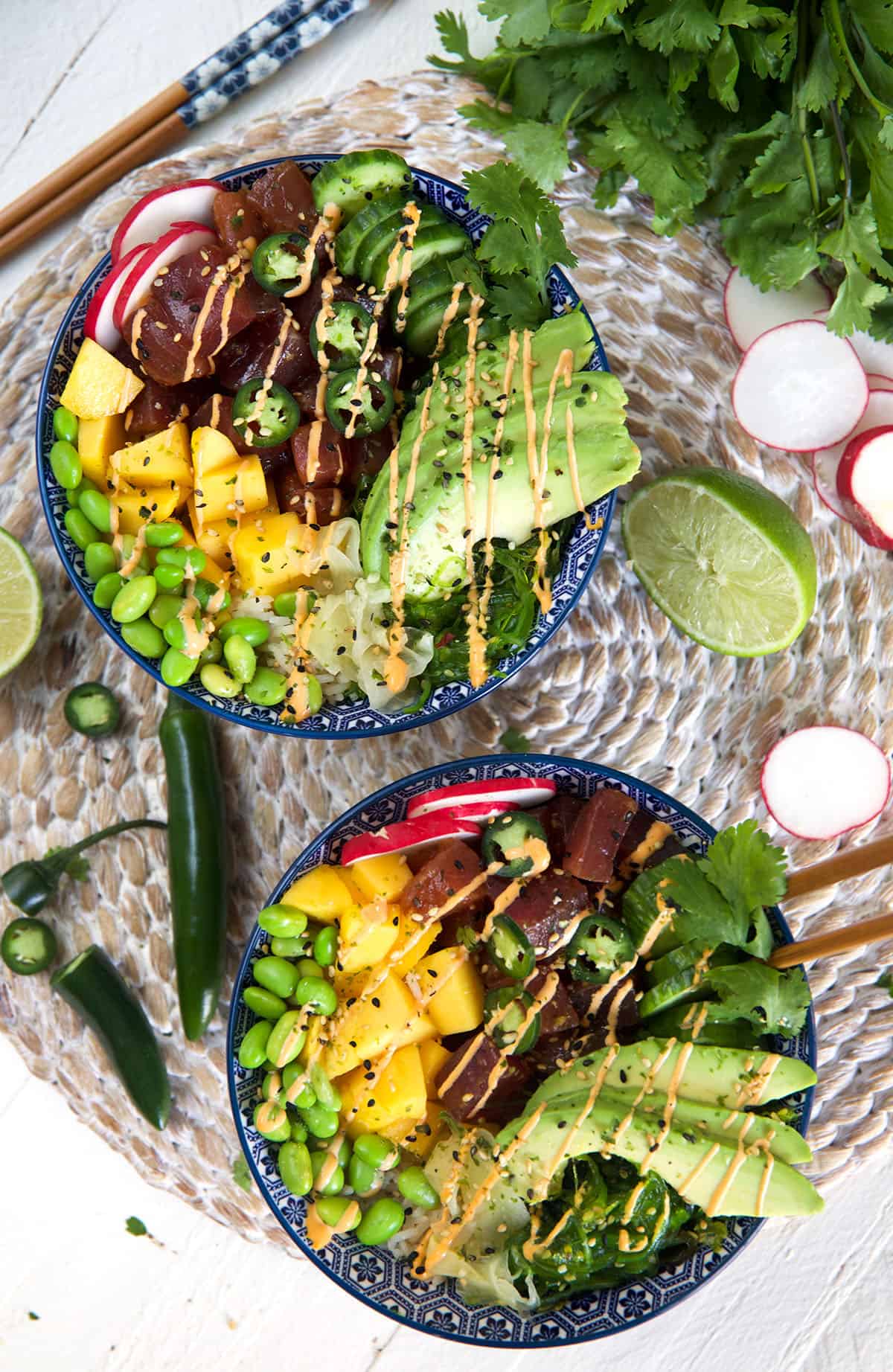
How to Make a Poke Bowl
- Cook and season the rice, prep the toppings, mix the dressing, and assemble just before serving so everything stays fresh and crisp.
- While the rice cools slightly, slice the vegetables, make the spicy mayo, and cut the sushi-grade ahi tuna into bite-sized cubes. Gently toss the tuna with the dressing just until coated.
- Divide the rice among bowls, add the toppings, and finish with spicy mayo, cilantro, and furikake or sesame seeds.
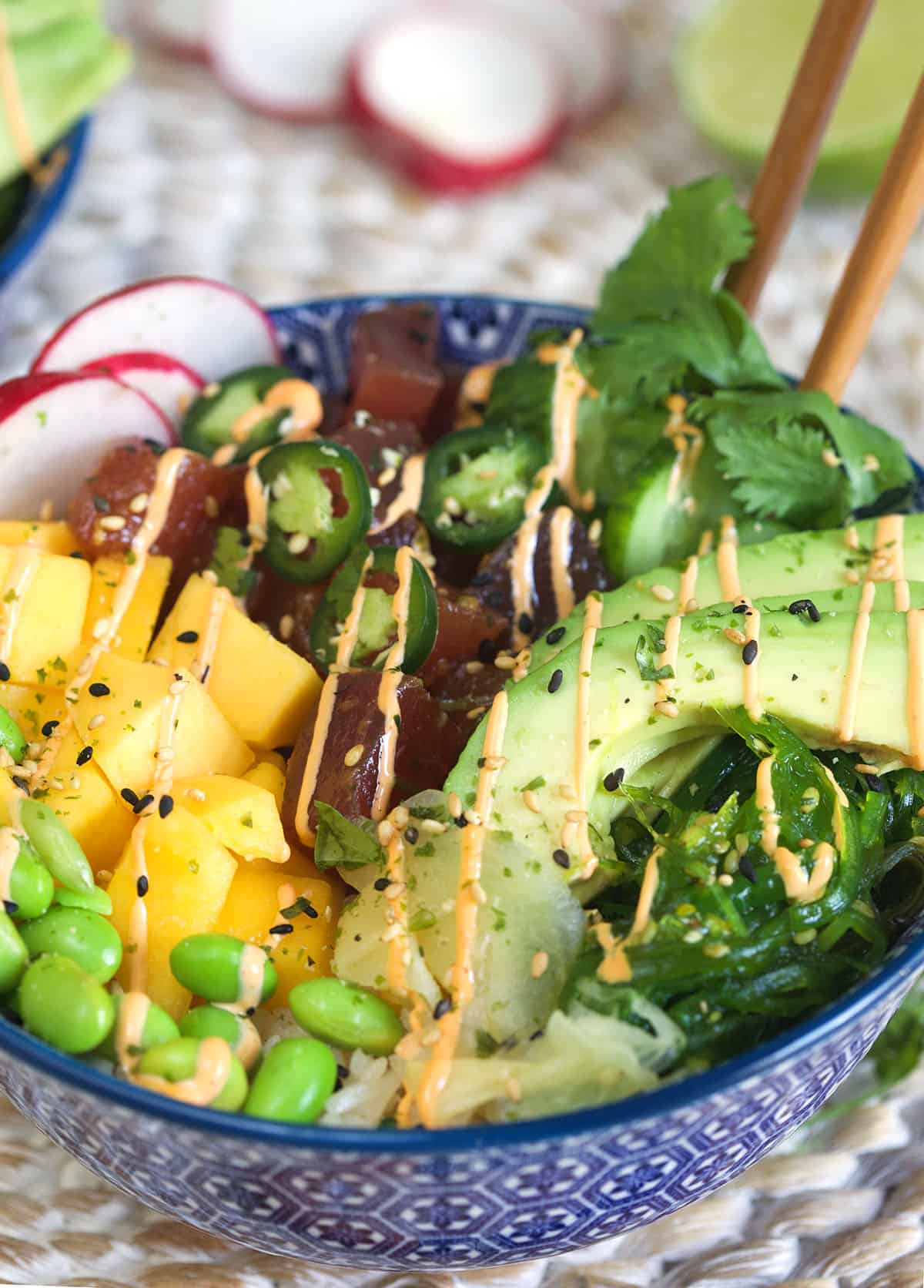
What is sushi grade ahi tuna?
“Sushi-grade” or “sashimi-grade” tuna usually refers to fish that a seller considers high quality and appropriate for raw preparation. While there isn’t one universal legal definition of the term, it’s still the best cue for home cooks shopping for tuna to use in poke bowls.
When buying ahi tuna for this recipe, look for a trusted fish market or a well-stocked seafood counter with knowledgeable staff. Ask whether the tuna is intended for raw preparation, whether it has been handled for sushi or sashimi use, and buy it as close to serving time as possible.
Here are a few quick tips to keep in mind:
Best substitutes: Sushi-grade salmon works well, and for a cooked option you can use shrimp or seared salmon.
Where to buy it: A reputable fish market, specialty grocery store, or seafood counter with high turnover.
What to ask: Whether the tuna is suitable for serving raw.
What to look for: Firm texture, fresh smell, and vibrant color.
How to store it: Keep it cold and refrigerated until just before cutting and serving.
Best Rice and Toppings for a Poke Bowl
One of the best things about poke bowls is how easy they are to customize. Start with a base you love, then build in a mix of creamy, crunchy, sweet, and savory toppings.
Best rice options
- Short-grain white rice for a classic poke bowl
- Brown rice for a heartier option
- Jasmine rice for a softer, fragrant base
- Cauliflower rice for a lighter bowl
Great topping combinations
Classic: cucumber, avocado, edamame, seaweed salad, sesame seeds
Spicy: serrano or jalapeño, spicy mayo, scallions, furikake
Fresh: mango, radishes, pickled ginger, cilantro
Try not to overload the bowl. A few well-balanced toppings usually taste better than adding everything at once.
Substitutions and Dietary Swaps
This poke bowl is easy to adapt based on your preferences or dietary needs.
- Gluten-free: Use tamari instead of soy sauce.
- Different protein: Swap the ahi tuna for sushi-grade salmon.
- Cooked seafood option: Use cooked shrimp or seared salmon if you prefer not to serve raw fish.
- Vegetarian option: Use tofu and toss it with the same sauce before assembling the bowls.
- Lower-carb base: Use cauliflower rice or greens instead of rice.
- Milder heat: Reduce the sriracha in the spicy mayo and skip the chili topping.
How long will my poke bowl stay fresh?
Poke bowls are best enjoyed the same day they’re made, ideally right after assembly. Once the dressed tuna, rice, and fresh toppings are combined, the texture starts to change and the bowl won’t hold up as well in the fridge.
For the freshest results:
- Store the tuna separately and keep it very cold until serving.
- Store the rice separately in an airtight container.
- Prep toppings ahead if you’d like, but add avocado, spicy mayo, and crunchy toppings just before serving.
- Assemble at the last minute so the fish stays cold and the vegetables stay crisp.
If you want to get ahead, prep the rice, sauce, and vegetables in advance, then cut and dress the tuna right before serving.
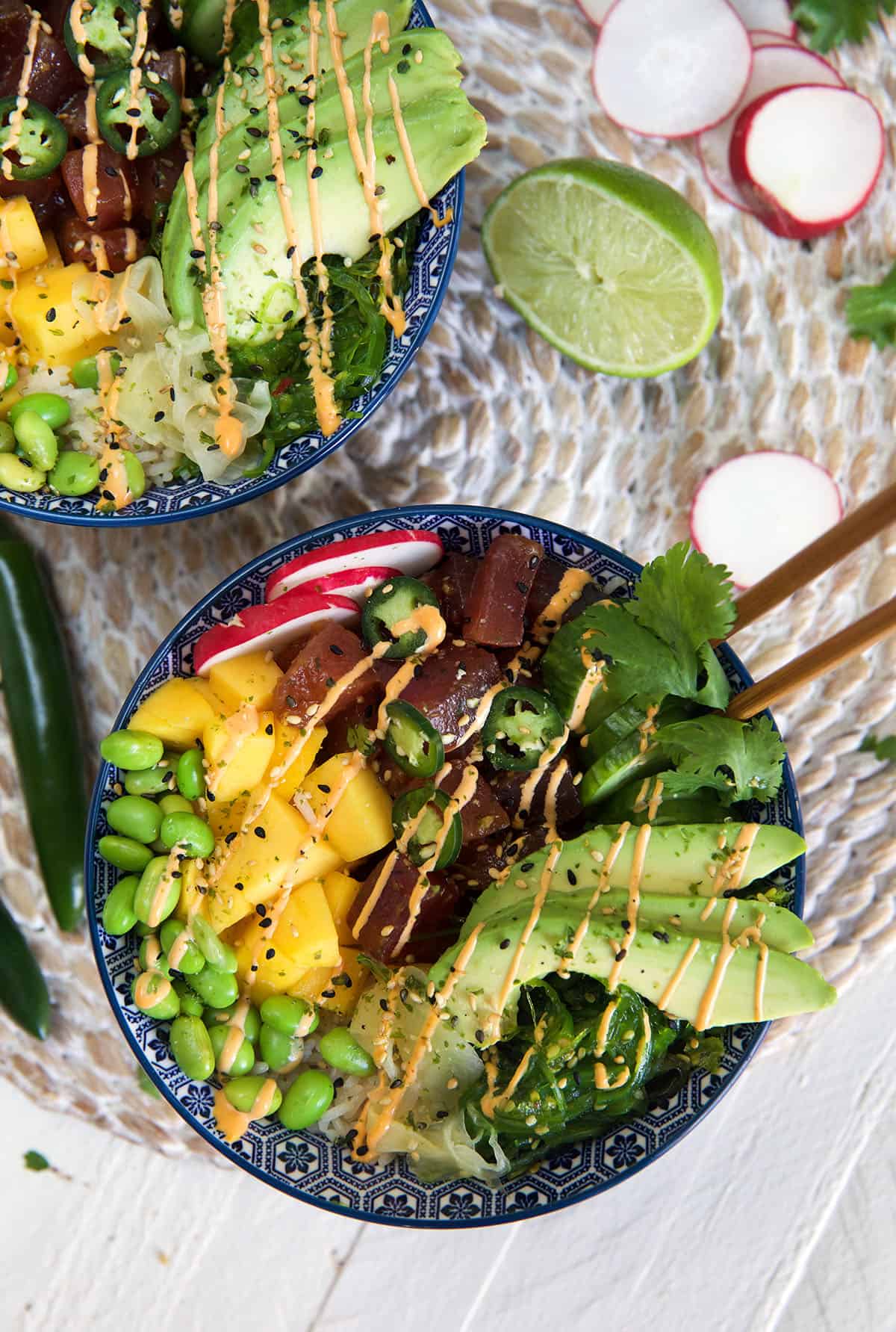
What to Serve with Tuna Poke Bowls
Tuna poke bowls are a full meal on their own, but they also pair well with a few simple sides if you want to round things out.
Keep the sides light and fresh so they complement the poke bowl instead of competing with it.
More recipes to try next
If you love fresh, easy dinners like this tuna poke bowl, here are a few more light recipes to make next.
- Beet Salad with Citrus Vinaigrette
- Chinese Chicken Salad
- Easy Shrimp Tempura Roll
- Veggie Pita Pockets
- Zucchini Pizza Boats
- Instant Pot Spaghetti Squash
For more easy, healthy dinner ideas, follow us on Instagram and Facebook.
Tuna Poke Bowl Recipe
Equipment
- saucepan
- chef's knife
- cutting board
- spatula or wooden spoon
- measuring spoon
- measuring cups
Ingredients
For the rice:
- 4 cups cooked white rice
- 1 tablespoon rice wine vinegar
- 1/2 tablespoon honey
- 1/4 teaspoon soy sauce
For the Poke Bowl:
- 12 ounces sushi grade ahi tuna
- 2 tablespoons orange juice
- 1 tablespoons lime juice
- 1 tablespoon low sodium soy sauce
- 1 teaspoon sesame oil
- 1 teaspoon minced ginger
- 1 cup diced mango
- 2 radishes, sliced
- 1 cup shelled edamame
- 1 cup sliced cucumber
- 1/2 cup seaweed salad
- 1 serrano chili, sliced, optional
- 2 tablespoons pickled ginger
- 4-6 cilantro sprigs
- 1 avocado, pitted and sliced
- 2 tablespoons Furikake or sesame seeds
For the spicy mayo:
- 2 tablespoons mayonnaise
- 3 tablespoons sriracha sauce
- 1/2 teaspoon rice wine vinegar
Instructions
- Place the rice in a medium bowl, set aside.
- In a small bowl, whisk together the vinegar, honey and soy sauce.
- Pour the vinegar mixture over the rice and toss to combine.
- Divide the rice between four bowls and set aside.
- Cut the tuna into bite sized cubes and place in a bowl.
- In a small bowl, whisk together the orange juice, soy sauce, sesame oil, and ginger.
- Pour the dressing over the tuna and toss to coat. Set aside.
- Assemble the bowls by dividing the tuna between each bowl and then topping with the mango, radishes, edamame, cucumber, seaweed salad, chili, avocado, pickled ginger and cilantro sprigs.
- In a small bowl, whisk together the mayonnaise, sriracha sauce and vinegar.
- Drizzle the sauce evenly over each bowl. Top with the Furikaka or sesame seeds, if using.
- Serve immediately.
Notes
- Use sushi-grade ahi tuna from a trusted fish counter and keep it refrigerated until just before serving.
- Let the rice cool slightly before assembling so it doesn’t warm the tuna.
- For a gluten-free version, use tamari in place of soy sauce.
- Sushi-grade salmon can be used instead of ahi tuna.
- Prep the rice, toppings, and spicy mayo ahead, but assemble the bowls just before serving for the best texture.
Nutrition
Nutrition information is automatically calculated, so should only be used as an approximation.
Sushi-grade salmon is the best substitute. If you want a cooked option, try shrimp or seared salmon.
It’s best slightly cooled or room temperature. Very hot rice can warm the tuna too much.
Yes. Use tamari instead of soy sauce and double-check any toppings or packaged ingredients like seaweed salad or furikake.
No. You can leave it off, make it milder, or swap it for extra soy sauce, ponzu, or a sesame-based sauce.