This post may contain affiliate links. Please read our disclosure policy.
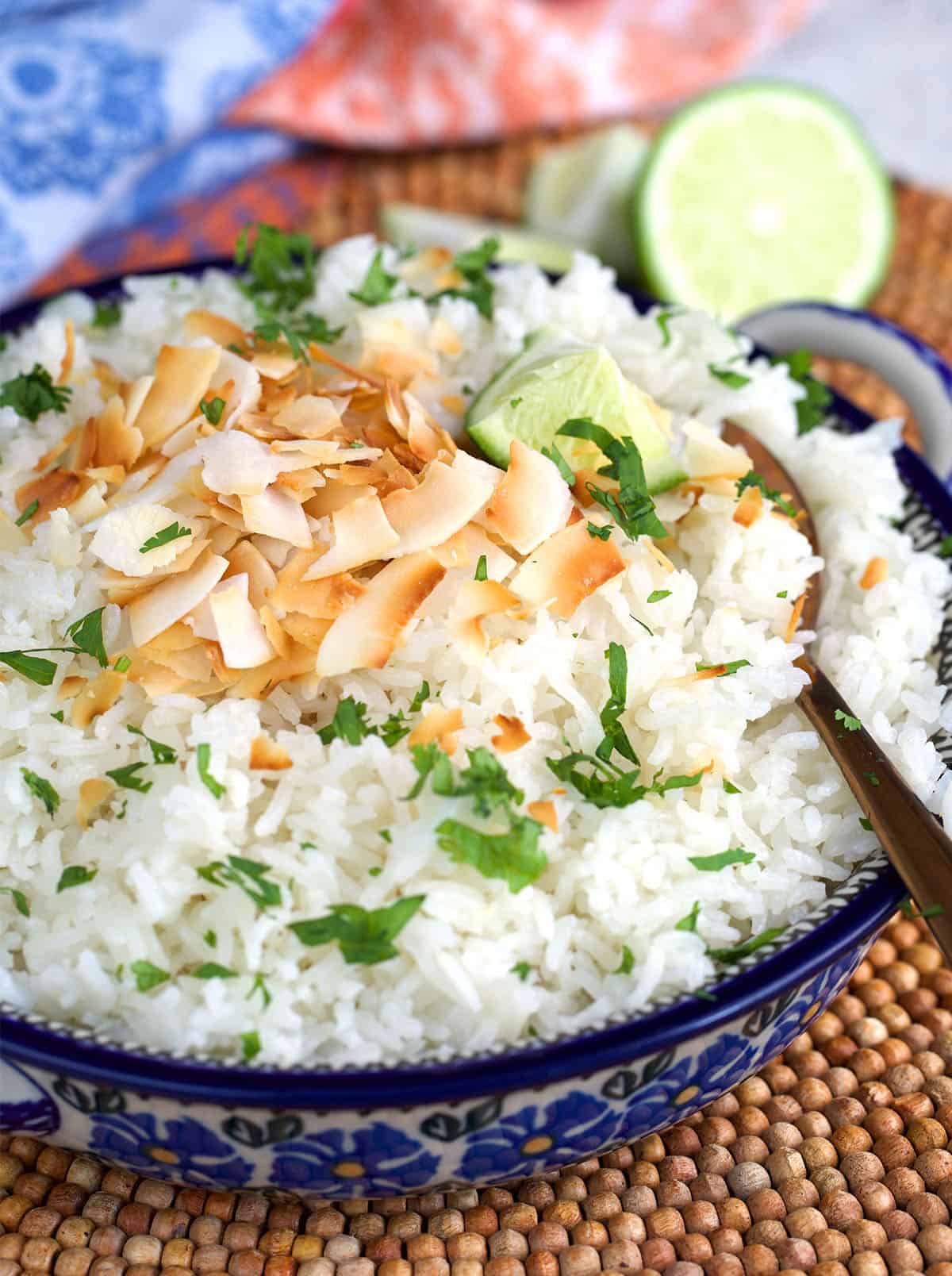
If there’s one side dish I never get tired of making, it’s this Coconut Rice Recipe. I’ve been cooking it for years, testing, tweaking, and perfecting it, until it turned into the absolute best version you can make at home. Light, fluffy, and infused with subtle coconut flavor, it’s the kind of dish that transforms even the simplest dinner into something special.
Why This Is the Coconut Rice Recipe You’ll Keep Forever
Whether I’m serving it with seared tuna, roasted chicken, shrimp skewers, or a spicy Thai curry, this rice is always the perfect supporting act. It’s easy enough for a weeknight but elegant enough for entertaining and it’s my go-to way to make meal time feel a little less boring.
There are plenty of coconut rice recipes out there, but this one stands out for a few reasons:
- Foolproof method: No gummy or clumpy rice here, just perfectly tender, fluffy grains every time.
- Balanced flavor: Just the right amount of creamy coconut richness without being heavy or sweet.
- Pairs with everything: From grilled meats to curries, seafood, and veggie stir-fries, this rice is the ultimate side dish.
- Restaurant-style upgrade: A pinch of sugar brings out the natural coconut sweetness, just like your favorite takeout spot.
- Great for meal prep: It stores beautifully and reheats like a dream.
Ingredients for Coconut Rice (and Easy Substitutions)
Here’s what goes into my coconut rice recipe and how you can swap things if needed. (Full measurements are in the recipe card below.)
- Jasmine Rice: My favorite for its light texture and fragrance. Basmati rice works, too, just bump the water up slightly and cook a few minutes longer.
- Coconut Milk: Use full-fat canned coconut milk for the best flavor and texture. Light coconut milk works, but the flavor will be more subtle. (Avoid a coconut milk beverage, it’s too thin and won’t have the signature coconut flavor)
- Water or Broth: Water allows the coconut flavor dominate, but chicken stock or vegetable broth adds extra depth and added protein.
- Kosher Salt: Don’t skip the salt, it brings out the coconut’s natural sweetness.
- Sugar (Optional): A tiny bit of sugar gives you that subtle restaurant-style flavor. Skip it if you want a purely savory rice.
- Coconut Oil or Butter (Optional): Added fat provides richness, a nice touch if you’re serving guests.
- Toppings: Lime zest, scallions, green onions, or toasted coconut flakes add freshness and texture.
How to Make Coconut Rice
This coconut rice recipe couldn’t be simpler, it’s a true one-pot wonder.
- Rinse the rice: This is key. Rinse until the water runs mostly clear to remove excess starch and keep the rice fluffy.
- Combine the liquids: In a saucepan, add the coconut milk, water (or broth), salt, sugar, and oil or butter. Bring just to a gentle simmer, stirring once to dissolve everything.
- Add the rice: Stir in the rinsed rice, reduce the heat to low, cover tightly, and let it cook, about 12 minutes for jasmine rice or 14 minutes for basmati rice.
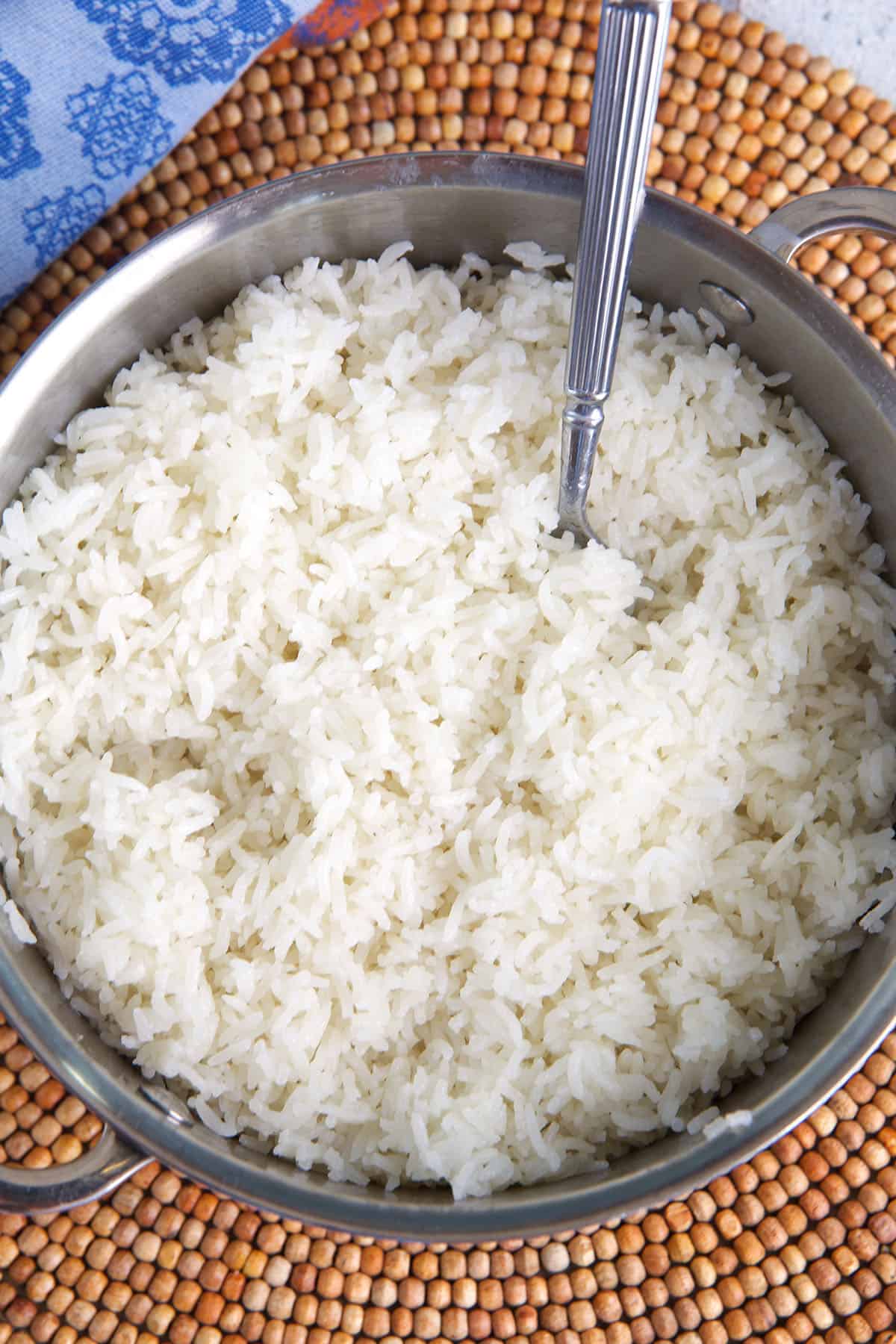
- Rest: Remove from heat and let the rice steam, covered, for 10 minutes.
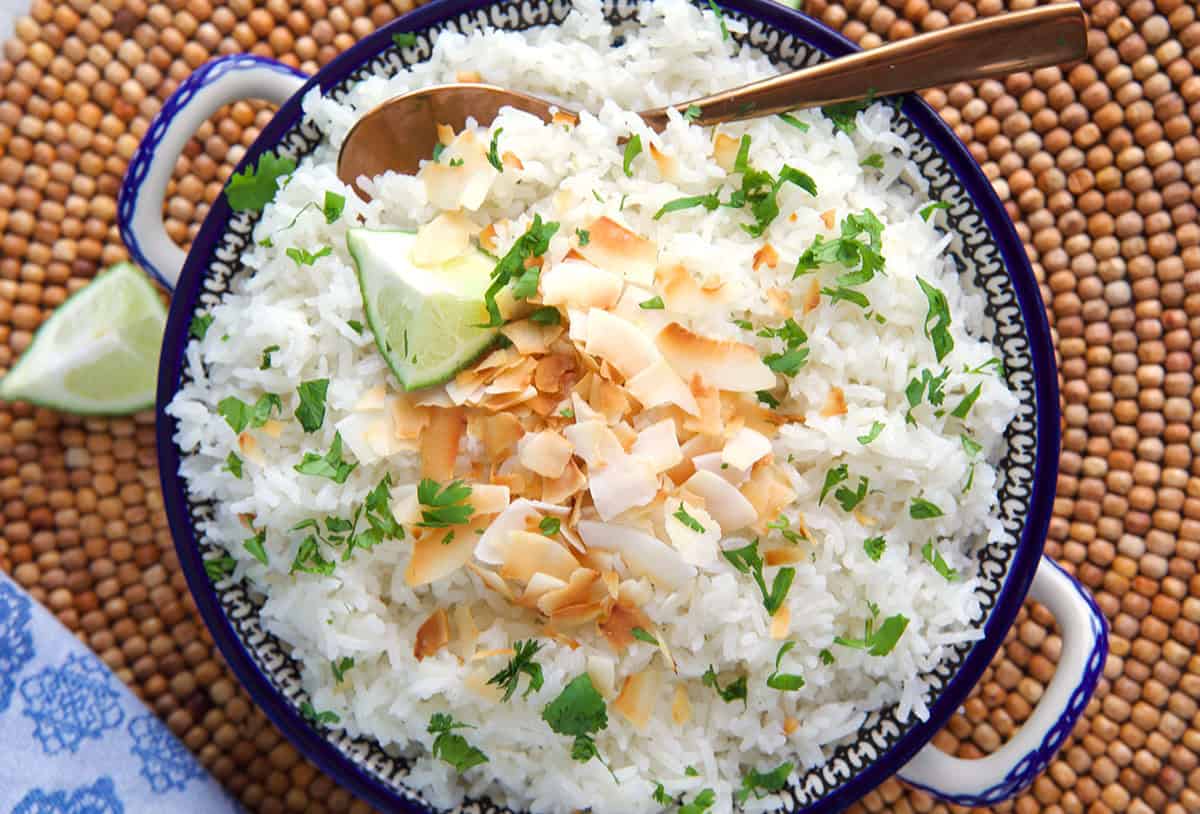
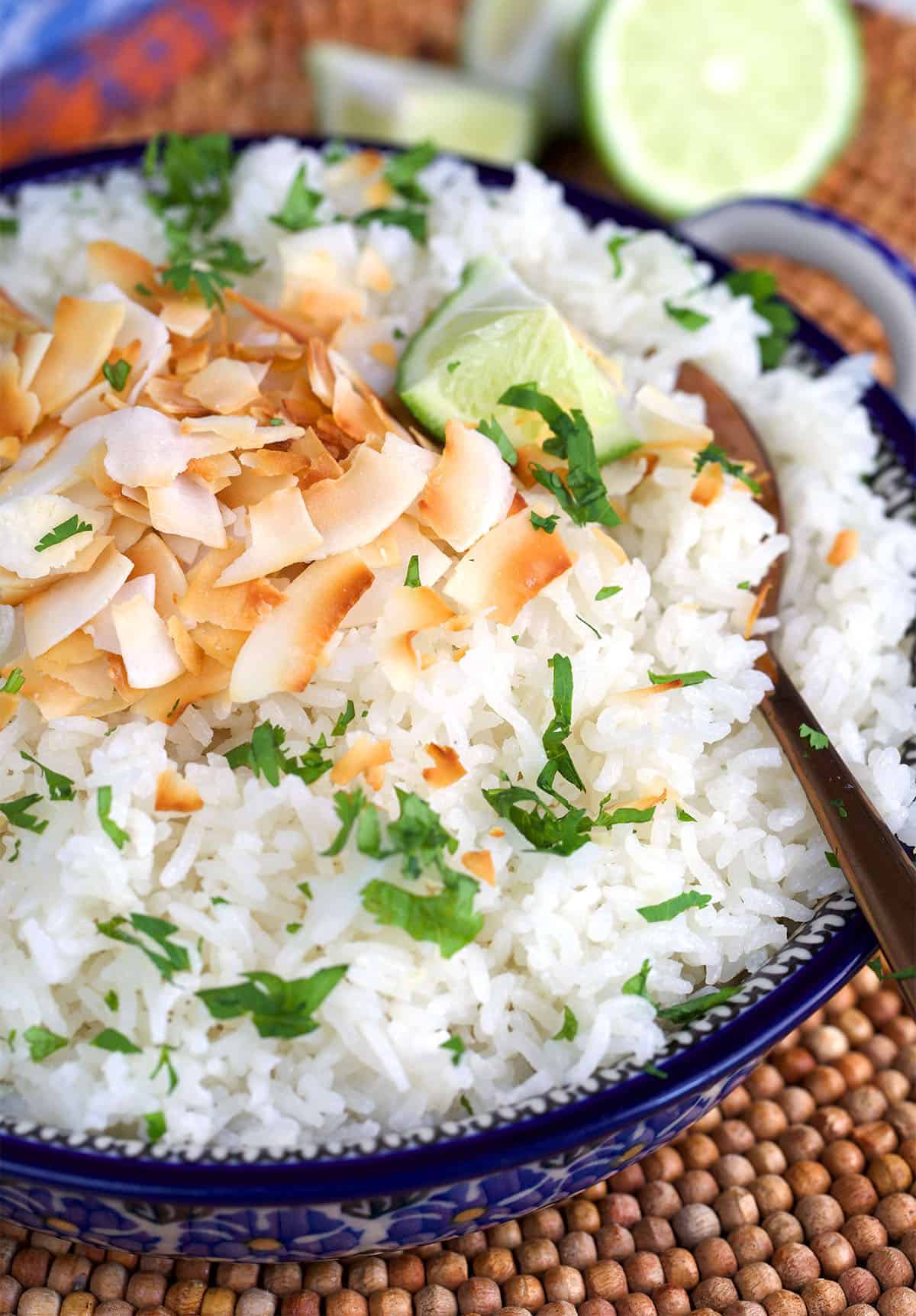
- Fluff and finish: Fluff with a fork and top with lime zest, toasted coconut, or herbs.
Pro Tip: Don’t lift the lid while it’s cooking. Steam is your secret weapon for perfectly tender, fluffy grains.
How to Store Leftovers
Coconut rice keeps beautifully, so don’t hesitate to make a double batch.
- Refrigerator: Store leftover coconut rice in an airtight container for up to 4 days.
- Freezer: Freeze coconut rice in portions for up to 2 months. Thaw in the fridge before reheating.
- Reheating: Add a tablespoon or two of water to the leftover rice and microwave in 30-second bursts, fluffing between each.
Kellie’s Tips for the Best Coconut Rice
Garnish smart. Fresh lime zest, cilantro, or scallions add brightness that balances the richness.
Rinse thoroughly. This one step makes all the difference in texture.
Use canned, full-fat coconut milk. It’s the secret to rich flavor.
Don’t peek! Steam is what makes the rice fluffy. If you lift the lid and release the steam, you will end up with sticky, gummy rice.
What to Serve with Coconut Rice
The beauty of this coconut rice recipe is how versatile it is. Try it with:
- Seared Ahi Tuna or Grilled Salmon
- Coconut Curry Shrimp or Thai Red Curry Beef
- Teriyaki Chicken, Lemongrass Pork, or Grilled Steak Kababs
- Sheet Pan Roasted Veggies for a meatless meal
More Easy Rice Recipes
If you love this recipe, here are a few more delicious rice dishes to try next:
- Easy Sushi Rice
- Easy Cilantro Lime Rice
- The Best Rice Pilaf
- Easy Spanish Rice
- How to Cook Jasmine Rice
Want more easy side dish recipes? Follow us on Facebook!
Coconut Rice Recipe
Equipment
- saucepan with tight fitting lid
- measuring cup
Ingredients
- 1 cup jasmine rice, rinsed until water is mostly clear
- 1 cup full-fat unsweetened coconut milk (well-shaken)
- ¾ cup water (use 1 cup/240 ml for basmati), (use 1 cup for basmati)
- ½ tsp kosher salt
- 1 tsp sugar, optional, restaurant-style sweetness that boosts coconut flavor
- 1 Tbsp coconut oil or unsalted butter
- For garnish: 1–2 Tbsp toasted coconut flakes, lime zest, scallions or cilantro
Instructions
- Rinse rice in a fine mesh sieve, swishing until the water runs mostly clear (30–45 sec). Drain very well.
- In a medium saucepan, combine coconut milk, water, salt, sugar, and fat (if using). Bring just to a gentle simmer over medium heat, stirring once to dissolve the sugar and disperse the coconut milk.
- Stir in rice, reduce heat to low, cover tightly, and cook 12 minutes (jasmine) or 14 minutes (basmati) without lifting the lid.
- Rest 10 minutes off heat, still covered. Fluff with a fork.
- Finish with lime zest and toasted coconut; garnish with herbs to taste.
Notes
- Always rinse your rice thoroughly to prevent stickiness.
- If using basmati rice, increase water to 1 cup and cook for 14 minutes.
- Light coconut milk works but will yield a lighter flavor.
- Garnish options like lime zest, toasted coconut, or scallions take this dish from good to great.
Nutrition
Nutrition information is automatically calculated, so should only be used as an approximation.