
This post may contain affiliate links. Please read our disclosure policy.
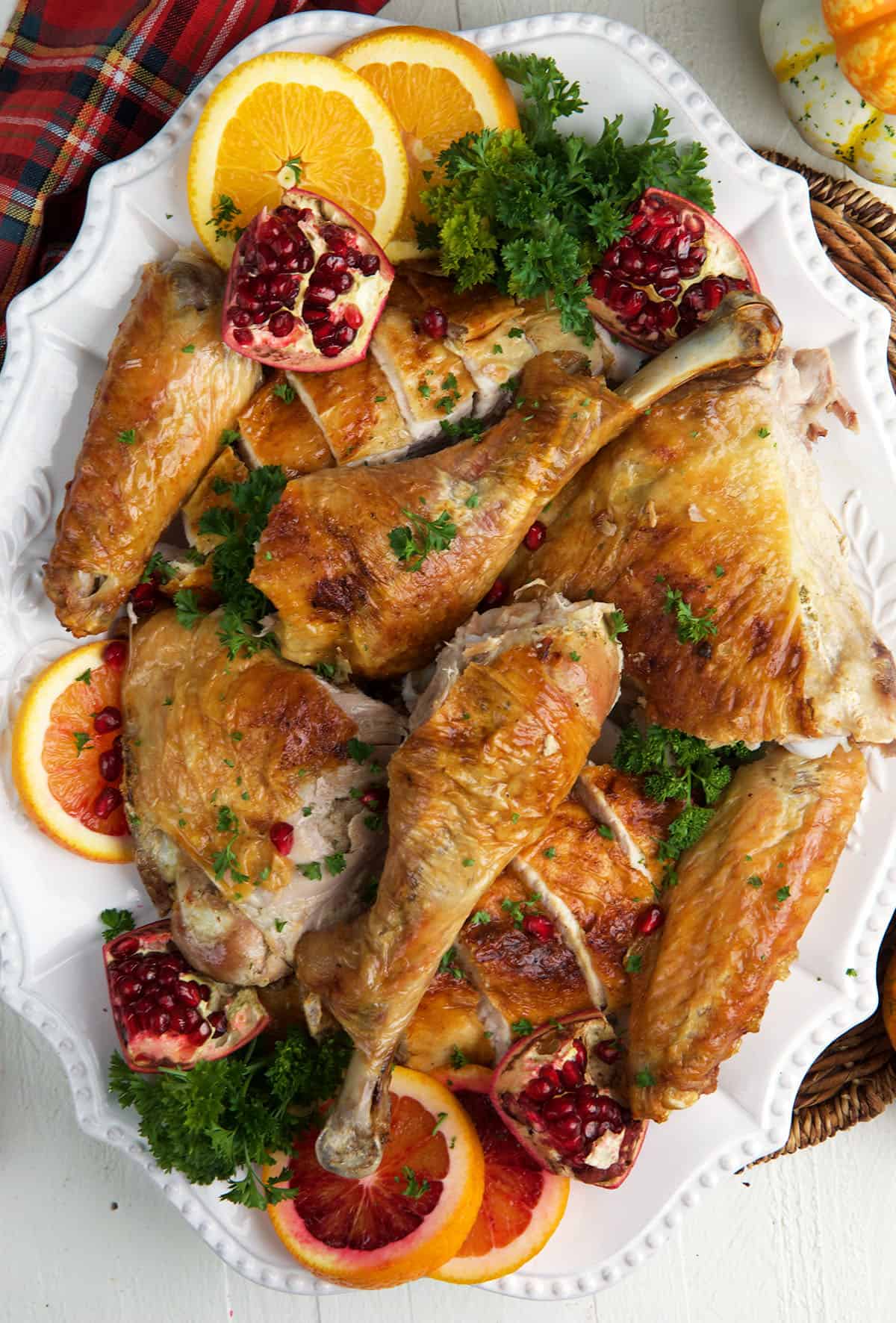
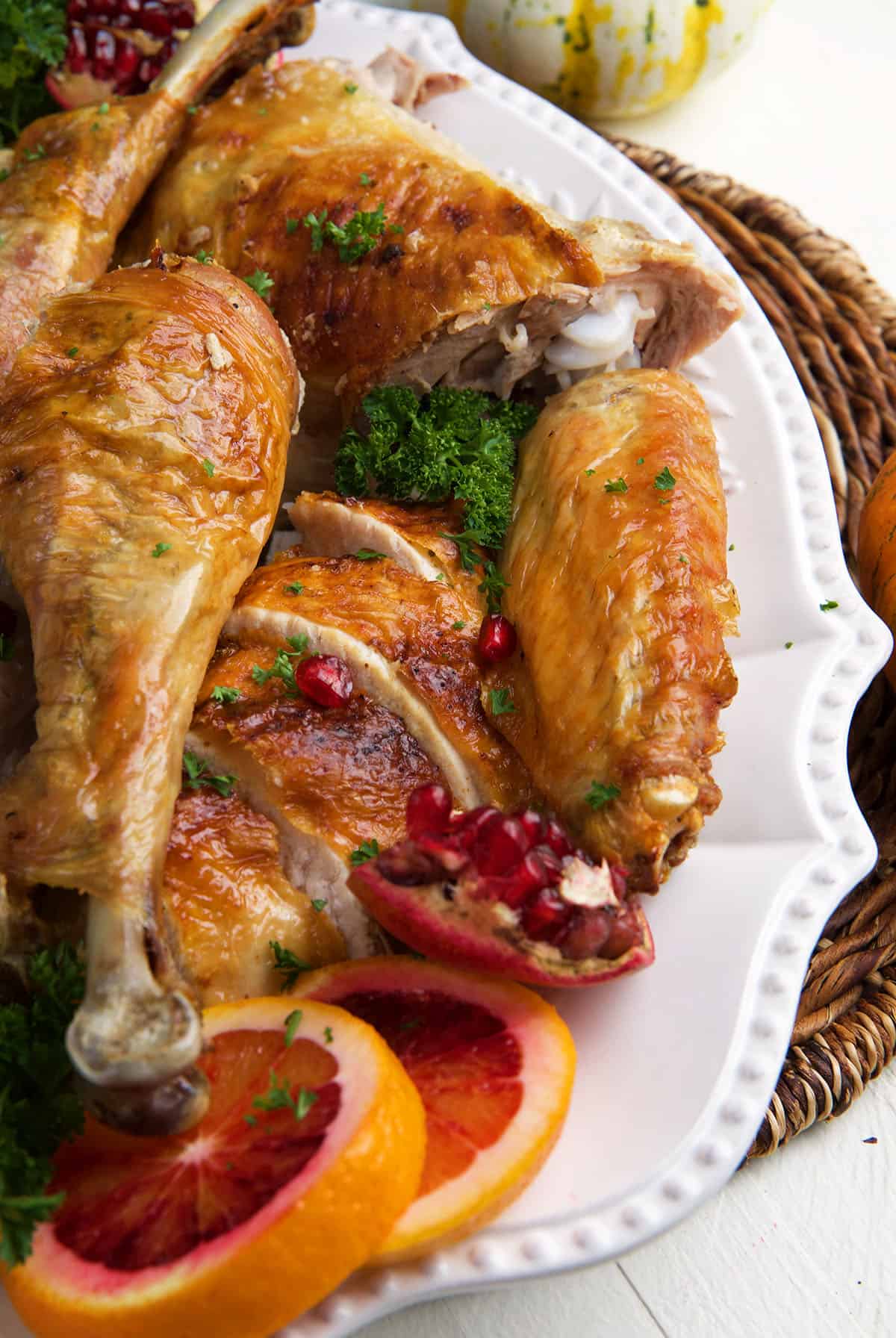
Spatchcock Turkey is one of my favorite ways to get a juicy Thanksgiving turkey with beautifully crispy skin without spending half the day waiting for it to roast. And if you’ve never learned how to spatchcock a turkey, it’s much easier than the name makes it sound. You simply remove the backbone, flatten the bird and roast it at high heat so the white and dark meat cook more evenly.
My version gets an extra layer of flavor from a citrus herb butter loaded with fresh orange, lemon, garlic, sage, rosemary and thyme. It’s bright, buttery and perfect for Thanksgiving when oven time is at a premium.
Kellie’s Note
Flatten The Bird

I’m a sucker for a classic roast Thanksgiving turkey. I’ve mastered cooking the whole bird, and last year I tried my first Dry Brined Turkey, which means every year it’s my responsibility to track that temperature and cook it to perfection for every thanksgiving dinner. Honestly, I’m happy to do it! However, I think this year I’m going to break tradition ever so slightly by preparing this insanely good spatchcock turkey.
To spatchcock a bird essentially means to split it in half before roasting. It’s a huge hit on days like Thanksgiving because it cuts the cooking time down tremendously! Gone are the hours upon hours of slow roasting the whole bird. This easy spatchcock recipe may take less time, but it doesn’t cut down on flavor and it ensures you have both tender dark meat and juicy breast meat! It’s tender, juicy, and loaded with buttery herbaceous flavors.
If you’ve ever made a spatchcock chicken, you already know what you’re in for here. If not, no worries! This is a great easy starter recipe. The step-by-step instructions are fairly simple and the ingredients are citrusy, herby, and inexpensive. Honestly, you might never prepare a whole turkey any other way once you’ve mastered the spatchcock technique!

What Is a Spatchcock Turkey?
Spatchcocking, also called butterflying, means removing the backbone of the turkey and pressing the breastbone until the bird lies flat. Flattening the turkey exposes more of it to the heat at once, helping the white and dark meat cook more evenly while giving you more golden, crispy skin.
It also cuts down the roasting time considerably, which is a very good thing when Thanksgiving oven space is prime real estate.
Ingredients for Spatchcock Turkey
- Turkey: I use a fully thawed 12–14 pound turkey. This size is easier to handle and fits well on a large roasting pan or rimmed baking sheet.
- Orange and lemon: Both the juice and zest add fresh citrus flavor to the herb butter.
- Garlic: Fresh minced garlic adds savory flavor.
- Fresh herbs: Sage, rosemary and thyme give the turkey that classic Thanksgiving flavor.
- Butter: Unsalted butter makes it easy to control the seasoning. You can use salted butter and reduce the added salt.
For the full ingredient list and instructions, see the recipe card below.
What Size Turkey Is Best for Spatchcocking?
I’ve had the best results with a 12–14 pound turkey. It’s large enough for a holiday dinner but still manageable when you’re removing the backbone and flattening the bird.
Make sure the turkey is completely thawed before you start. You’ll also want a sturdy pair of poultry shears, a large cutting board, a roasting pan or rimmed baking sheet with a rack, and a reliable instant-read or probe thermometer.
Shortcut: If removing the backbone is the part making you nervous, ask your butcher to do it for you.
How to Make a Spatchcock Turkey
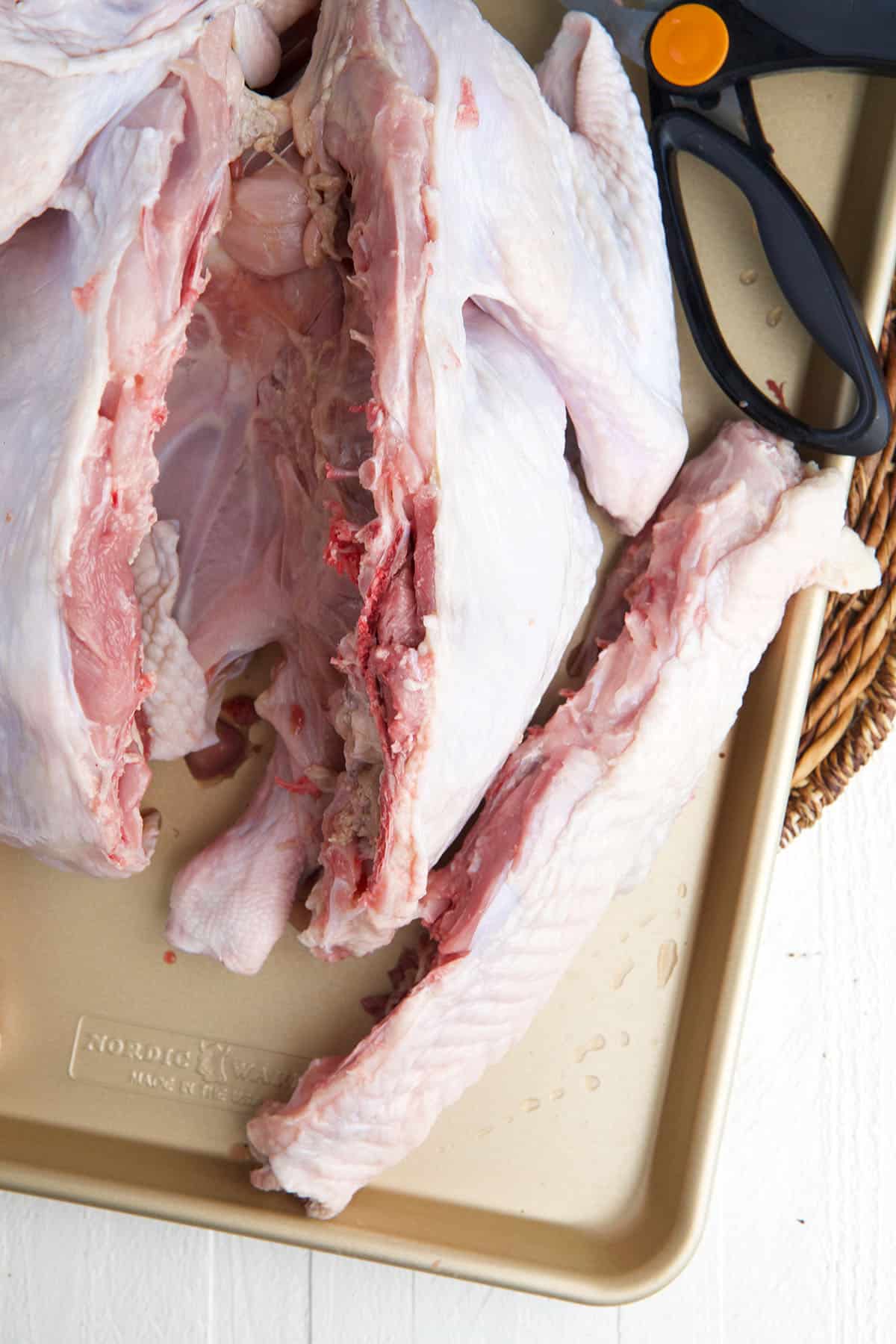
- Remove the backbone. Place the turkey breast-side down on a large cutting board. Using sharp poultry shears, cut along both sides of the backbone and remove it. Save it for stock or gravy.
- Flatten the turkey. Flip the turkey skin-side up and press firmly on the center of the breastbone until you hear it crack and the turkey lies flat. Remove the wing tips and save those for stock, too.
- Make the herb butter. Mix the softened butter with the orange and lemon juice and zest, garlic, sage, rosemary, thyme, salt and pepper.
- Season the turkey. Pat the turkey very dry. Rub half of the citrus herb butter underneath the skin and spread the remaining butter over the outside.
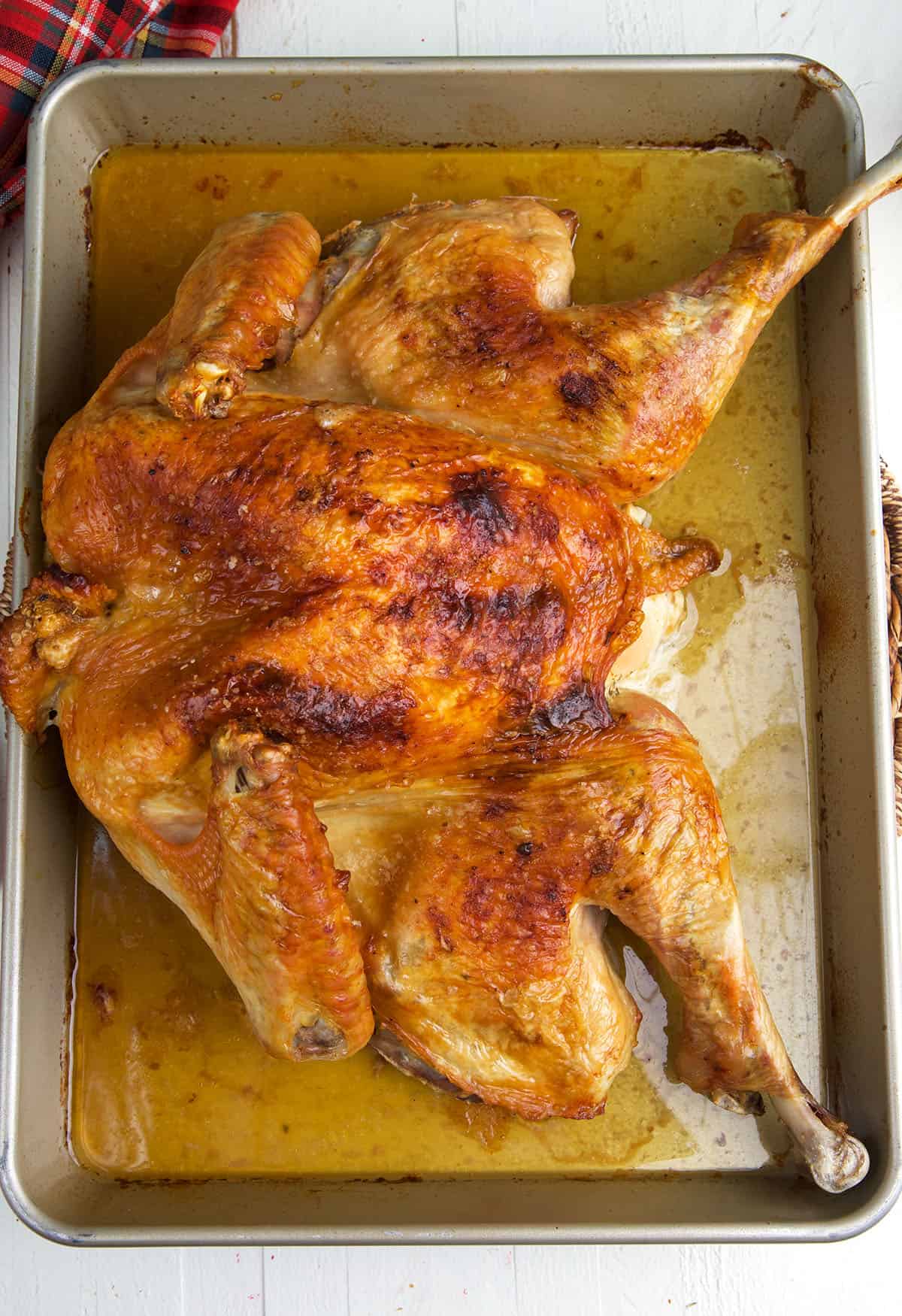
- Roast. Arrange the turkey skin-side up on the rack and roast according to the recipe card, checking the temperature toward the end rather than relying on time alone.
- Check for doneness. Use an instant-read thermometer to check the thickest part of the breast and the innermost part of the thigh and wing.
- Rest. Tent loosely with foil and rest before carving so the juices can redistribute.
Tips for the Best Spatchcock Turkey
- Use heavy-duty poultry shears. Turkey bones are much tougher than chicken bones, so sturdy shears make this job much easier.
- Get it as flat as possible. Once you flip the turkey over, really press down on the breastbone. A flatter bird cooks more evenly.
- Dry the skin well. Moisture works against crispy skin, so pat the turkey thoroughly dry before adding the butter.
- Don’t rely only on the clock. Turkey size and ovens vary. Start checking early and use your thermometer to determine doneness.
- Watch the browning. If the breast becomes too dark before the turkey is finished, loosely tent that area with foil while leaving the legs exposed.
- Save the backbone and wing tips. They’re fantastic for turkey stock or turkey gravy.
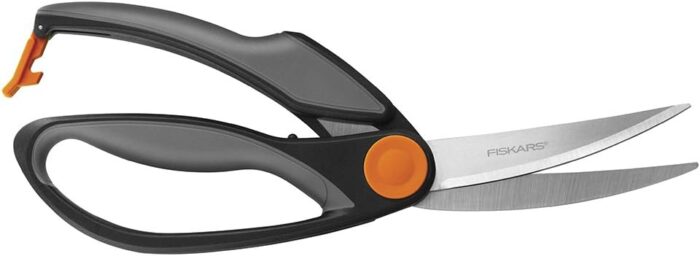
Every kitchen needs a pair of heavy duty Poultry Shears and I love this pair because of the locking mechanism, as well as, the fact that you can take them apart to clean them. It makes boning chickens, turkeys and more a breeze.
How do I know when spatchcock turkey is fully cooked?
Use an instant read thermometer! It’s the most certain way to check for doneness. When inserted into the thickest part of the thigh, a fully cooked turkey will reach 150°F. It will continue cooking once it’s removed from the oven and loosely tented with foil.
If your turkey has not yet reached temperature, continue cooking it for an additional 30 minutes or until the temperature is reached. Keep an eye on it – you don’t want it to overcook and dry out.
Why spatchcock a turkey?
There are a few reasons you may find this method of cooking a whole turkey beneficial. Here are just a few reasons I’m so obsessed:
- Helps the turkey cook more evenly due to the increased surface area.
- Cuts down on cook time.
- Results in crispier skin all over. That’s the best part.
Can I Spatchcock a Turkey Ahead of Time?
Yes. You can remove the backbone and flatten the turkey the day before cooking to save time on Thanksgiving morning. Place it on a rimmed baking sheet in the refrigerator so any raw juices are safely contained.
If you’re also dry brining the turkey, this is the perfect time to season it and refrigerate it according to your dry-brine instructions.
What to Serve With Spatchcock Turkey
I serve Spatchcock Turkey with all the Thanksgiving classics—creamy mashed potatoes, sausage stuffing, giblet gravy, cranberry sauce, roasted vegetables and a crisp Thanksgiving salad. And don’t throw away that backbone! Use it along with the drippings to add even more turkey flavor to your gravy.
Storage, Freezing and Reheating
- Refrigerate: Store leftover turkey in an airtight container in the refrigerator for up to 4 days.
- Freeze: Transfer cooled turkey to a freezer-safe container or bag and freeze for longer storage. I like to portion it first so I can thaw only what I need.
- Reheat: Reheat turkey gently with a splash of broth or gravy to help keep it moist. Leftovers should be reheated to 165°F.
- Make it another meal: Leftover turkey is perfect for sandwiches, turkey soup, casseroles or turkey pot pie.
USDA guidance supports up to four days refrigerated and reheating leftovers to 165°F.
Make more of the best easy turkey recipes!
- Crockpot Turkey Breast
- Cornbread Stuffed Turkey Roulade
- Maple Butter Roasted Turkey Legs
- Hot Open Faced Turkey Sandwich
For more easy turkey recipes, follow us on Instagram!
Spatchcock Turkey Recipe
Equipment
- large cutting board
- instant-read or probe thermometer
- wire roasting rack
- large rimmed baking sheet or tested roasting pan
Ingredients
- 12-14 pound turkey, fully thawed if frozen, patted dry, neck and giblets removed
For the Citrus Herb Butter
- 1 large navel orange, juiced and zested
- 1 large lemon, juiced and zested
- 3 cloves garlic, minced
- 4 tablespoons chopped fresh sage
- 3 tablespoons chopped fresh rosemary
- 3 tablespoons chopped fresh thyme
- 1 teaspoon salt
- 1/2 teaspoon pepper
- 1 stick of unsalted butter, room temperature
Instructions
- To spatchcock the turkey, place the turkey breast side down, on a cutting board.
- Using sharp kitchen shears, cut along both sides of the backbone to remove it. If needed, use a sharp knife to score the cartilage at the center of the breast to make flattening easier.
- Flip the turkey skin side up and press down on the center of the breastbone to flatten, you will hear it crack. Cut off the wing tips at the first joint and save for stock or gravy.
- Stir the softened butter, orange juice and zest, lemon juice and zest, garlic, herbs, salt and pepper together until combined.
- Place the turkey skin side up in a large roasting pan. Spread half underneath the turkey skin and the remaining mixture over the outside.
- Place the rack in the bottom third of the oven and preheat to 500˚F.
- Transfer the turkey to the oven and roast for 30 minutes. Turn the heat to 425˚F and continue roasting the turkey for 1 hour. Check the turkey with an instant-read thermometer in the thickest part of the breast and the innermost part of the thigh and wing. For the USDA home-cooking standard, the turkey is safely cooked when all three areas reach 165°F. If the turkey has not reached the proper temperature, continue roasting and check again at short intervals until it is done.
- Carve the turkey and serve.
Notes
- Turkey size: This recipe was tested with a 12–14 pound turkey. Cooking time can vary, so use a thermometer to determine doneness.
- Browning: If the breast becomes too dark before the turkey is finished cooking, loosely tent the breast with foil while leaving the legs exposed.
- Make ahead: The turkey can be spatchcocked the day before and refrigerated on a rimmed baking sheet until ready to season and roast.
- Storage: Refrigerate leftover cooked turkey in an airtight container for up to 4 days.
- Freezing: Freeze cooled leftover turkey in an airtight freezer-safe container for longer storage.
- Reheating: Reheat leftovers to 165°F, adding a splash of broth or gravy to help keep the turkey moist.
Nutrition
Nutrition information is automatically calculated, so should only be used as an approximation.
What size turkey is best for spatchcocking?
A 12–14 pound turkey is ideal for this recipe. It’s easier to handle and more likely to fit flat on a large baking sheet or roasting pan. For larger birds, cooking time will vary, so rely on internal temperature.
Can I spatchcock a turkey the night before?
Yes. Remove the backbone and flatten the turkey the day before, then refrigerate it on a rimmed baking sheet so raw juices are safely contained. This is a great way to cut down on Thanksgiving-day prep.
Can I use salted butter?
Yes. Use salted butter and reduce the additional salt so the turkey doesn’t become overly seasoned.
What if the turkey skin is getting too dark?
Loosely cover the darkest part of the breast with foil and leave the legs exposed so they can continue cooking.
How do I know when Spatchcock Turkey is done?
Use a food thermometer rather than relying on cooking time alone. For the straightforward USDA home-cooking standard, check that the thickest part of the breast and the innermost thigh and wing reach 165°F.
Question: How long does a spatchcock turkey take to cook?
Cooking time depends on the turkey’s weight, starting temperature and your oven. A spatchcocked turkey cooks much faster than a traditionally roasted bird, so begin checking the temperature before the estimated cooking time is complete.
Can I double the recipe?
For two turkeys, prepare each bird separately and avoid crowding them on one pan. Oven airflow and cooking time can change considerably with two birds, so monitor each one independently with a thermometer.
Can I cook Spatchcock Turkey on the grill or smoker?
The roasting temperatures and timing in this recipe are written for the oven. A grill or smoker can work beautifully for a spatchcocked turkey, but those methods require their own temperature and timing instructions rather than a direct one-for-one conversion.
Can I freeze leftover Spatchcock Turkey?
Yes. Cool the turkey promptly, remove the meat from the bones and store it in an airtight freezer-safe container. Thaw overnight in the refrigerator before reheating.
What’s the best way to reheat leftover turkey without drying it out?
Add a little broth or gravy, cover and heat gently until warmed through. USDA recommends reheating leftovers to 165°F.
Do I need to brine a spatchcock turkey?
No. Your citrus herb butter gives this recipe plenty of flavor without requiring an additional brining step. If you prefer to dry brine, you can do that separately before applying the butter.
What should I serve with Spatchcock Turkey?
Mashed potatoes, stuffing, cranberry sauce, turkey gravy, roasted vegetables and a Thanksgiving salad all pair beautifully with it.









Can I put some Granny Smith apple slices , onion and orange slices under the turkey when it’s ready to go in the oven?
You can absolutely do that. And bonus, if you use the drippings in the pan for your gravy they’ll have the best flavor notes. Enjoy and Happy Thanksgiving!
The recipe sounds great but it is not recommended to rinse any poultry before cooking. Just pat dry. As well, the final Temperature to be considered safe to consume should be 165 degrees in the thigh.
I will be using your recipe today,
Thank you but I don’t think I said to rinse the turkey. And the temperature is outlined in the notes above.
I don’t understand when to use the orange juice mixture…the directions only say what to do with the butter….do you baste the turkey periodically or apply it all at once ?
You add the orange juice to the butter mixture, you have to stir it all together and then you spread the butter over the turkey. There’s no basting as that can dry the turkey out from opening and closing the oven door which changes the temperature during the cooking process.