This post may contain affiliate links. Please read our disclosure policy.
Learning How to Reverse Sear Steak is a must for any home chef! Start with a thick steak (aim for 1½–2 inches), roast it low at 275°F on a wire rack, then give it a screaming-hot cast-iron sear, about 60–90 seconds per side, for that deep crust and perfectly medium rare pink. You just need a cast-iron skillet and a thermometer, and you’re looking at 45-60 minutes total, depending on thickness and preferred level of doneness.
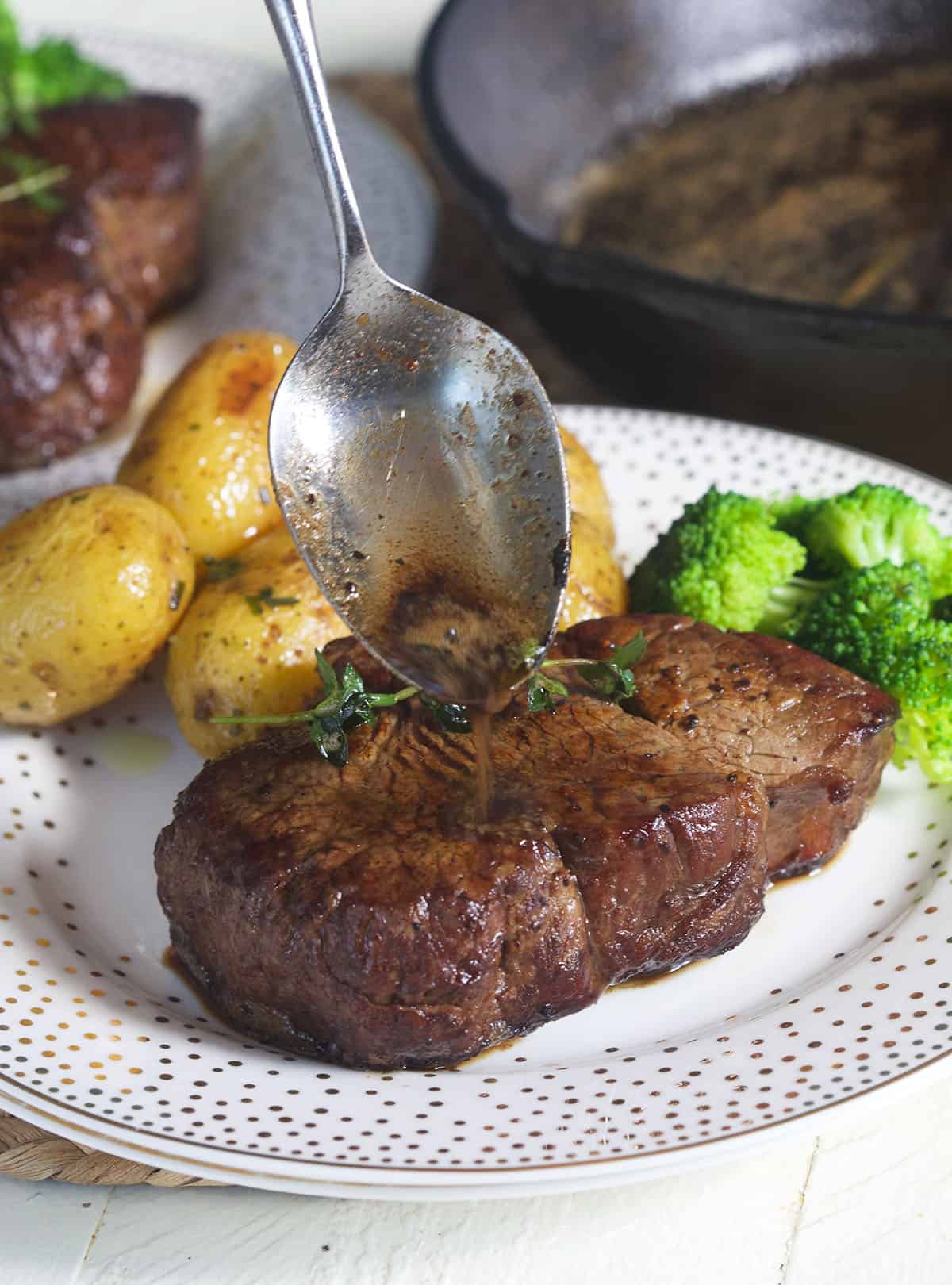
Table of Contents
- Why Reverse Searing Works (and Why You’ll Love This Version)
- Before You Start (Thickness & Cut)
- How to Reverse Sear a Steak
- Pro Tip: Manage Smoke Like a Pro
- Temperature and Doneness Guide
- Benefits of Reverse Searing
- Searing Details and Resting The sTeaks
- Reverse Sear on the Grill (Variation)
- Serving Suggestions
- More Easy Steak Recipes
- Reverse Sear Steak Recipe
- Storage and Reheating
Why Reverse Searing Works (and Why You’ll Love This Version)
- Even doneness: A low oven temperature brings the steak temperature up gently so the meat stays pink from edge to edge.
- Big crust, no overcooking: A quick, high-heat sear at the end creates that signature, flavorful crust without overcooking your steak.
- Consistent results: Using a thermometer and a wire rack removes guesswork and keeps air flowing for steady, even cooking.
Tested and perfected: I’ve used this method dozens of times; my biggest tip is to preheat the cast-iron skillet in the oven while the steak roasts so it’s sear-ready the second you need it.
If you’re a naysayer of the reverse searing method, it’s likely because you’ve been told that searing the steak before thoroughly cooking it really seals in the juices. I’ve got news for you, that’s just not true! Searing the steak either before or after cooking it all the way does nothing but add flavor and texture to the meat. While you should never skip searing your steak, I highly recommend trying this method and doing so as the final step – not the first!
Still wondering what reverse searing a steak even means? Well, it’s just like it sounds. Instead of searing your steak first, then allowing it to thoroughly cook at a lower temperature, you do the opposite!
There are real scientific reasons to reverse sear your steak! According to The Food Lab, The gradual and low heating temperature in the oven below 300°F not only gives a gentle and consistent heat treatment but also activates enzymes that tenderize the meat.
Cathepsins are natural enzymes that help to break down muscle proteins. Gradual heating increases enzyme activity, working to make the meat more tender over time. At about 122°F (50°C) the activity reduces, but the 15 to 25 minutes of slow heating allows the enzymes to work their magic.
Before You Start (Thickness & Cut)
For best results, choose 1½–2 inch-thick steaks like ribeye, New York strip, or filet mignon. Thinner steaks cook too quickly in the oven and won’t benefit as much from the method.
How to Reverse Sear a Steak
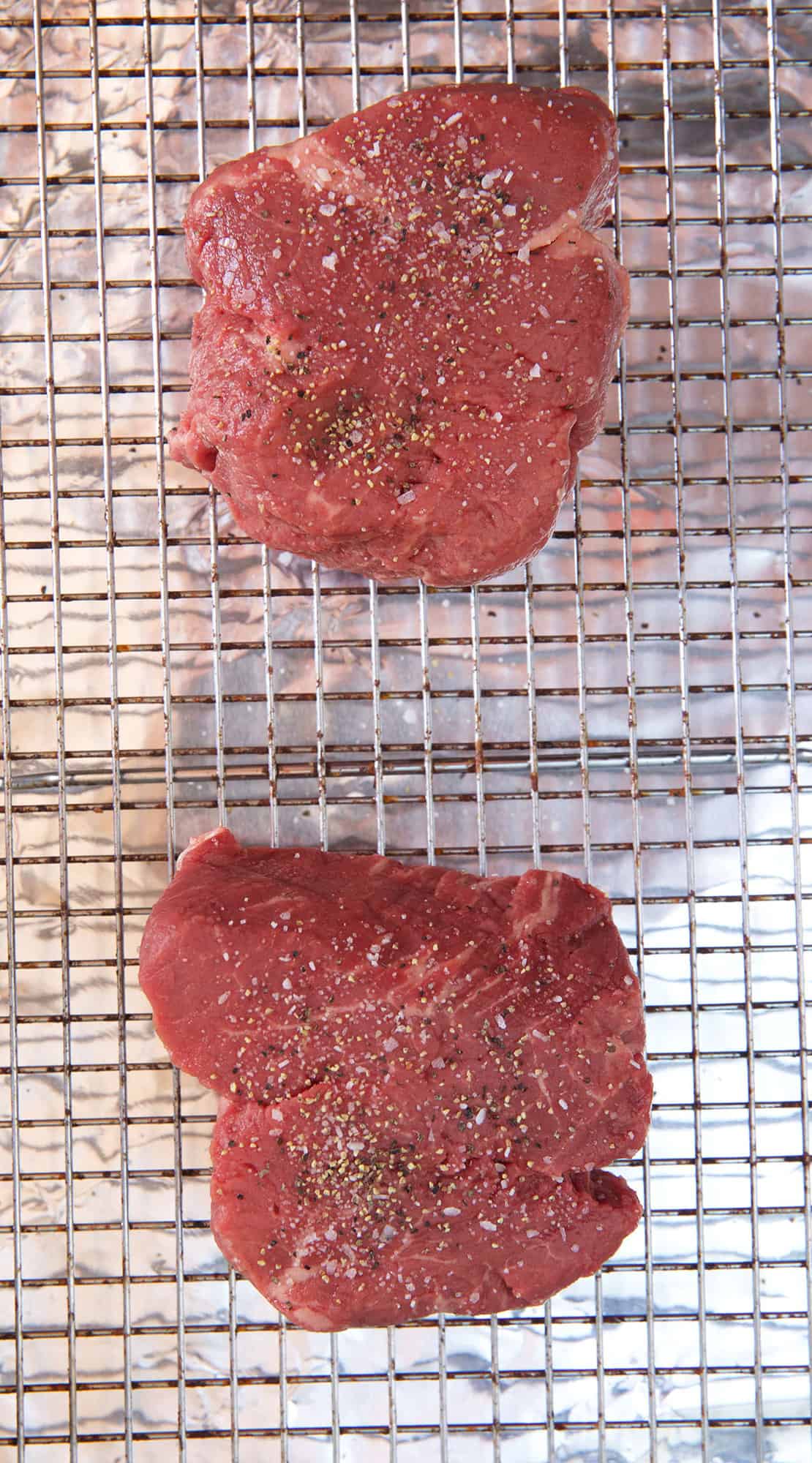
- Prepare your oven. Preheat oven to 275˚F (135˚C) and place the oven rack in the center of the oven. Line a sheet pan with foil and arrange a wire rack on top. Place a large, oven safe skillet, preferably cast iron, on the bottom rack of the oven.
- Prepare the steaks. Pat the steaks dry with a paper towel and arrange on the wire rack. Season the steaks with salt and pepper on both sides. Sometimes we even like to use our “famous” steak seasoning.
- Cook the steaks. Place the sheet pan on the oven and cook for 15-20 minutes, depending on the thickness of the steak. (An internal temperature on an instant read thermometer should read 120 to 125˚F for medium-rare (49-52˚C) or 130˚F (50˚C) for medium.) Remove the steaks from the oven and keep warm.
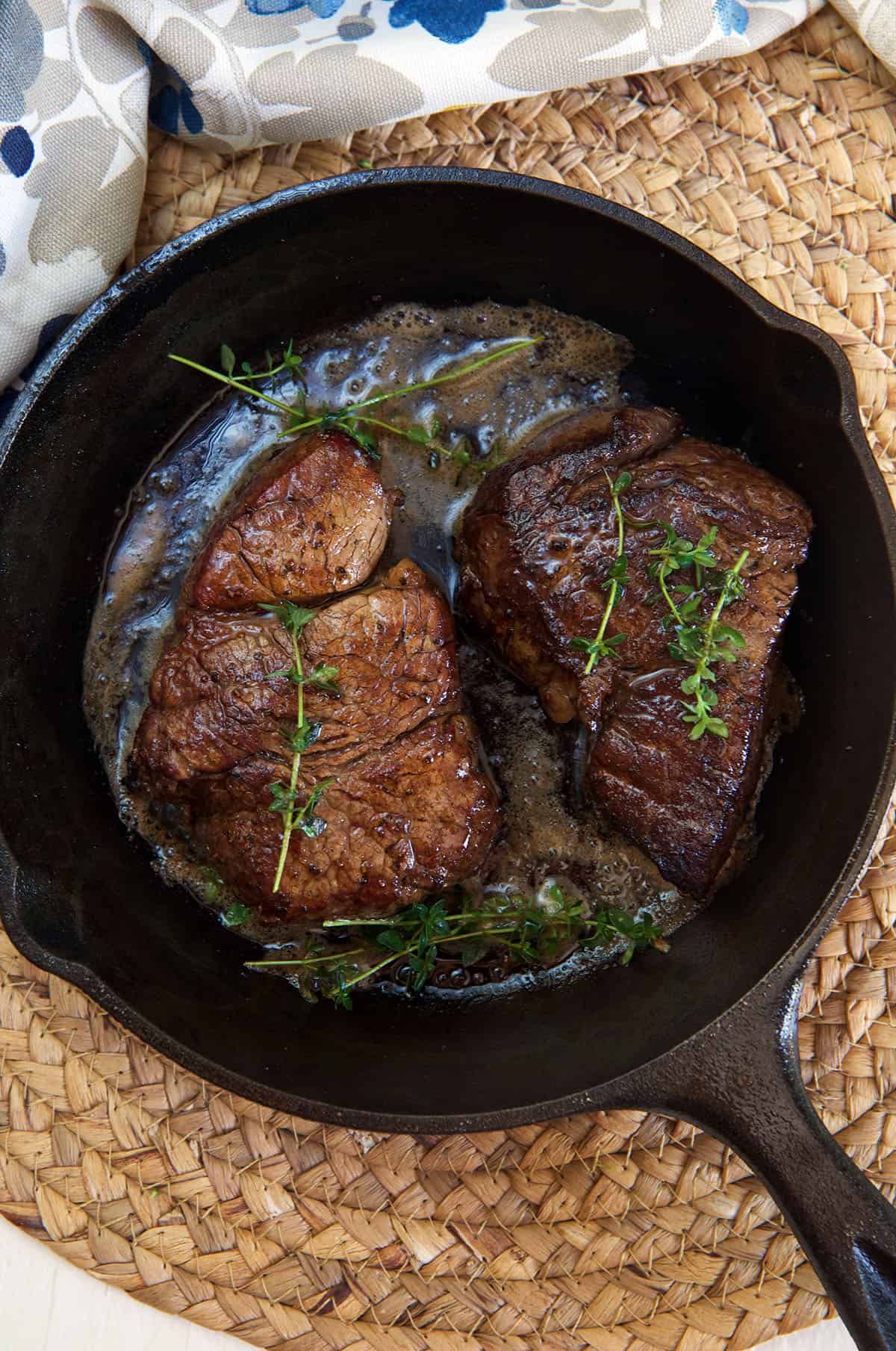
- Sear the steaks. Place the skillet on the stove top over high heat and add the oil to the pan. Once the oil is hot and simmering, add the steaks to the pan. Sear the steaks until a deep golden brown crust has formed, approximately 2-3 minutes. Flip the steaks and sear on the opposite side for an additional 2 minutes. Turn the steaks on their side and continue to sear until a crust has formed all around.
- Baste the steaks. Add the butter to the pan and melt. Using a spoon, baste the tops of the steaks. You can add garlic and herbs with the butter for added flavor, if you’d like.
- Rest, then serve. Transfer the steaks to a platter and allow to rest for 5-10 minutes. Serve immediately with the remaining melted butter/pan juices for drizzling.
Pro Tip: Manage Smoke Like a Pro
Turn on ventilation, keep windows open if you can, and wait to add butter until the last 30-45 seconds of searing. Wipe out any excess oil with a paper towel between steaks, and pre-salt early (or dry-brine overnight) for better browning with less splatter.
Temperature and Doneness Guide
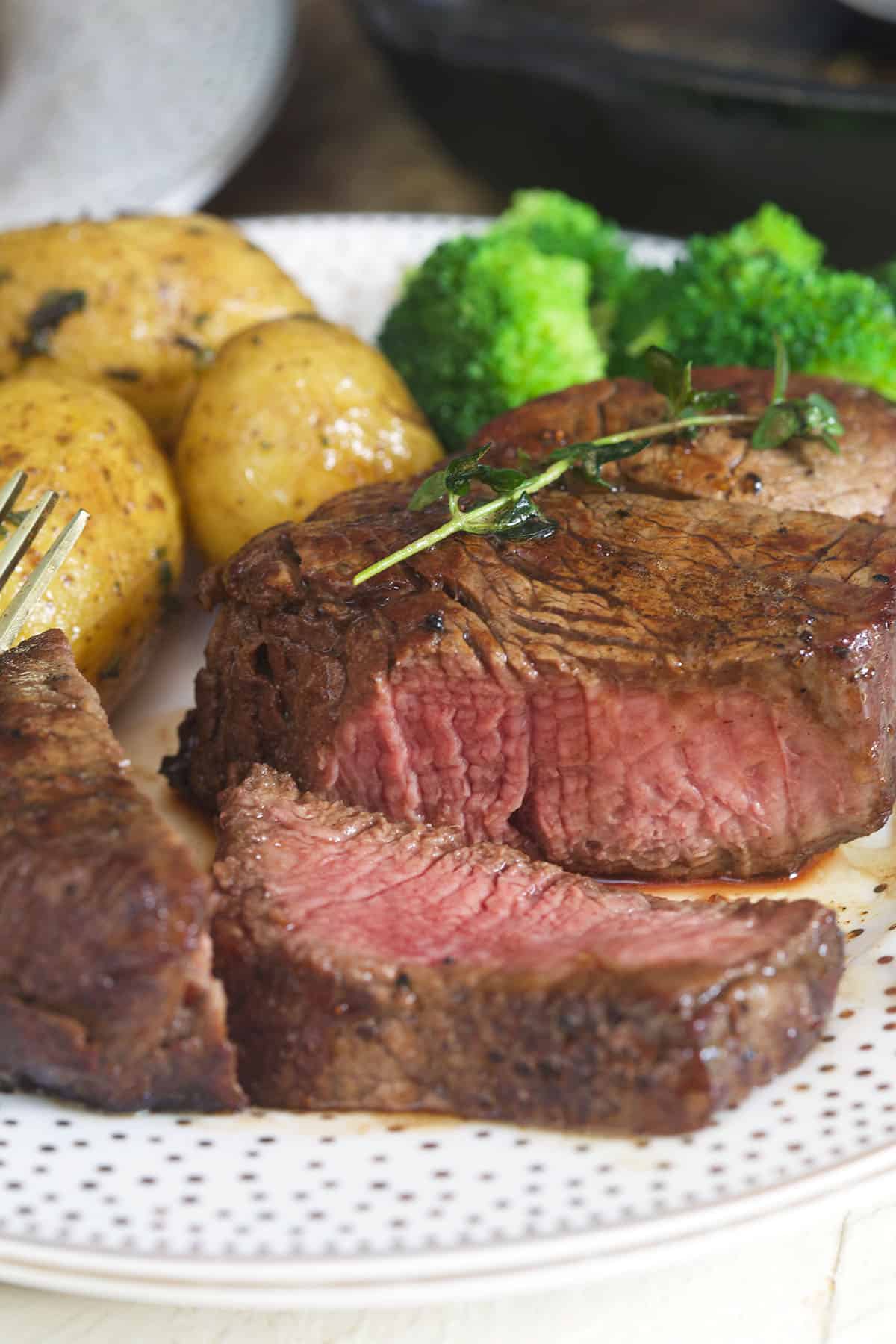
Use this chart to know when to remove from the oven, then where you’ll finish after the sear. (Carryover and sear will raise temp by 10-15°F.)
| Doneness | Pull from Oven | After Sear Target |
|---|---|---|
| Rare | 105–110°F | 120–125°F |
| Medium-Rare | 115–120°F | 130–135°F |
| Medium | 125–130°F | 140–145°F |
| Medium-Well | 135–140°F | 150–155°F |
Tip: If your steak is on the thinner side, use the lower pull temps.
Benefits of Reverse Searing
There are plenty of advantages to reverse searing, but here are just a few of the biggest reasons why you should use this method!
- You can control how “done” the steak is. When you reverse sear a steak, you have a lot more control over how cooked your steak is to your liking. When done correctly, a reverse seared steak is typically cooked more evenly throughout.
- It’s much more tender. Scroll back up in this post to read the scientific reason as to why reverse seared steaks are so much more tender than traditionally seared steaks!
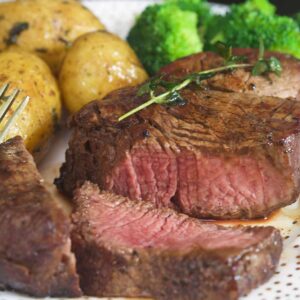
- The crust is beautifully brown. The real magic of perfectly reverse searing a steak is that delicious brown crust. Don’t forget to baste for the best flavor in that crust!
Searing Details and Resting The sTeaks
- Resting: With reverse sear, a short rest (2-5 minutes) is plenty, slice when the juices settle and the surface looks glossy.
- Preheat the pan: Keep your cast iron in the 275°F oven during the roast so it’s ripping hot. Move it to high heat on the stovetop just before searing.
- Sear time: Add a thin film of high-smoke-point oil. Sear 60-90 seconds per side, then roll the edges for 20-30 seconds where the fat cap needs color.
- Butter and aromatics (optional): Add butter, garlic, and herbs after you’ve built the initial crust to avoid burning.
Reverse Sear on the Grill (Variation)
Love cooking outside? Here’s the 2-zone approach.
- Finish and serve: Rest briefly (2–5 minutes), slice, and serve.
- Set up 2 zones: One indirect/low zone at 250-275°F, one direct/high zone for searing.
- Roast: Place steak on the cool side with a probe if you have one. Cook until it hits the Pull from Oven temp in the chart above.
- Preheat cast iron (optional): Place a cast-iron skillet over the hot side while the steak finishes its low cook.
- Sear: Move steak over direct high heat (or into the hot skillet). Sear 60-90 seconds per side, rolling edges to finish.
Serving Suggestions
- Easy Bearnaise Sauce Recipe
- Cowboy Butter Recipe
- Easy Garlic Butter Sauce
- Sautéed Mushrooms
- The Best Creamy Horseradish Sauce
- Scalloped Potatoes
More Easy Steak Recipes
- Five Spice Teriyaki Grilled Flank Steak
- The Very Best Filet Mignon
- Cast Iron Skillet Steak
- Grilled Ribeye Steak with Garlic Butter Sauce
For more of our favorite steak recipes, follow us on Instagram and Facebook!
Reverse Sear Steak Recipe
Equipment
- cast iron skillet
Ingredients
- 2 Beef Tenderloin Steaks, approximately 1 1/2 to 2 inches thick
- 1 tablespoon kosher salt
- 1 tablespoon black pepper
- 1 tablespoon olive oil
- 2 tablespoons butter
- Garlic cloves, optional
- Fresh herbs, optional
Instructions
- Preheat oven to 275˚F (135˚C) and place the oven rack in the center of the oven.
- Line a sheet pan with foil and arrange a wire rack on top.
- Place a large, oven safe skillet, preferably cast iron, on the bottom rack of the oven.
- Pat the steaks dry with a paper towel and arrange on the wire rack.
- Season the steaks with salt and pepper on both sides.
- Place the sheet pan on the oven and cook for 15-20 minutes, depending on the thickness of the steak. (An internal temperature on an instant read thermometer should read 120 to 125˚F for medium-rare (49-52˚C) or 130˚F (50˚C) for medium.)
- Remove the steaks from the oven and keep warm.
- Place the skillet on the stovetop over high heat and add the oil to the pan.
- Once the oil is hot and shimmering, add the steaks to the pan.
- Sear the steaks until a deep golden brown crust has formed, approximately 2-3 minutes.
- Flip the steaks and sear on the opposite side for an additional 2 minutes.
- Turn the steaks on their side and continue to sear until a crust has formed all around.
- Add the butter to the pan and melt.
- Using a spoon, baste the tops of the steaks. (Optional, add garlic and herbs with the butter for added flavor.)
- Transfer the steaks to a platter and allow to rest for 5-10 minutes.
- Serve immediately with the remaining melted butter/pan juices for drizzling.
Notes
Nutrition
Nutrition information is automatically calculated, so should only be used as an approximation.
Storage and Reheating
Storage: Cool completely, then refrigerate in an airtight container for 3-4 days. For cleaner slices, chill first, then slice.
Reheat (gentle): Warm in a 250°F oven to 100-105°F internal, then give a 15-30 second quick sear per side to refresh the crust without overcooking.
You can, but it benefits most at 1½–2 inches. For 1-inch steaks, watch temps closely and expect a shorter oven time.
A probe makes the oven step hands-off; an instant-read is perfect for quick checks and for confirming the final target after searing. Either works—use what you have.
The rack elevates the steak for 360° airflow, preventing soggy bottoms and helping it cook evenly.
Ventilation on high, neutral oil (not butter) for the first contact, bone-dry steak surface, and a preheated pan. Add butter only at the end.
Yes, see the Grill Variation above. Aim for 250–275°F indirect until pull temp, then sear over high heat.