
This post may contain affiliate links. Please read our disclosure policy.
Skip the steakhouse and make this pan-seared, oven-finished filet mignon at home. This easy method uses a screaming hot cast iron skillet, plenty of butter, and a simple time-and-temperature guide so your steak turns out perfectly cooked and incredibly tender every single time, even if you’re nervous about ruining an expensive cut of meat.
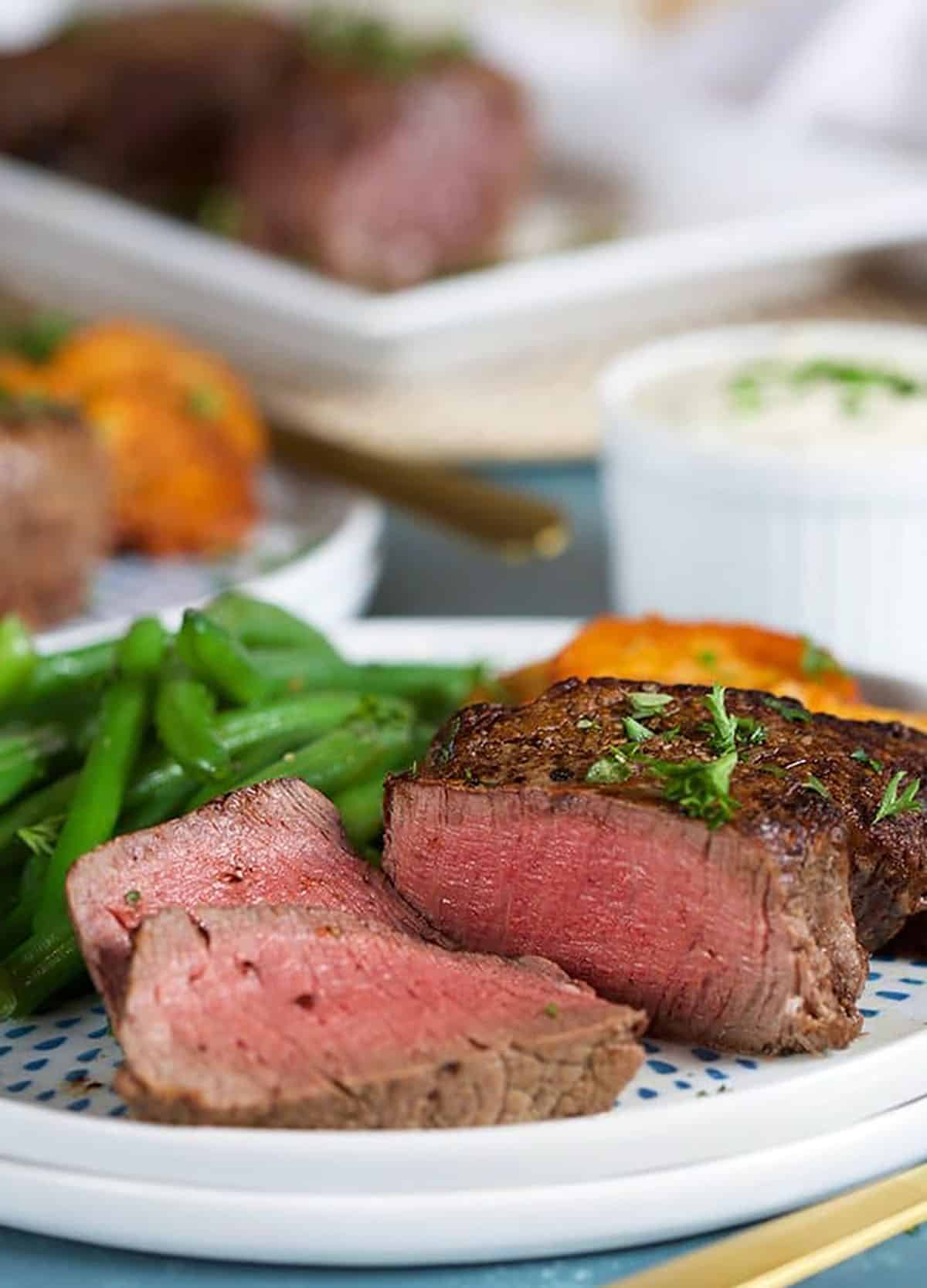
Table of Contents
- Why You’ll Love My Filet Mignon Recipe
- How To Cook Filet Mignon
- Common Filet Mignon Mistakes (and How to Avoid Them)
- What is the difference between Beef Tenderloin and Filet Mignon?
- Why is Filet Mignon so expensive?
- Is it Best to Cook Filet Mignon in Butter or Oil?
- What To Serve With Filet Mignon
- How To Store Leftover Filet Mignon
- More Reader Favorite Recipes
- The Best Filet Mignon Recipe
Why You’ll Love My Filet Mignon Recipe
- Tested and Perfected – I’ve made this recipe over and over for holidays, date nights, and “just because” steak dinners at home, so the method is truly tested.
- Hot Start – A screaming-hot cast iron skillet gives the steaks a deep, flavorful crust without needing a restaurant grill.
- Key to Perfection – Finishing in the oven cooks the center gently and evenly, so you don’t end up with overdone edges and a raw middle.
- Doneness Chart – The time-and-temperature chart takes all the guesswork out of doneness, especially for 1-inch vs. 2-inch steaks.
- Butter makes it Better – A simple steakhouse butter on top at the end melts into every bite and makes it feel like a steakhouse meal at home – with no fancy equipment required.
When I’m first started cooking meals for other people, I always go for the filet mignon. It’s tender, melt-in-your-mouth buttery and so forgiving to make. Generally, it’s a thicker cut of beef with less marbling than a ribeye or porterhouse steak but it’s absolutely flavorful with less calories and fat.
This tender steak is a bit on the pricier side so you do want to make sure you don’t overcook it. But, even if you do, it still tends to be more tender than other cuts that you may have accidentally demolished during the cooking process. Nothing a little bearnaise sauce or Horseradish Sauce can’t fix, right?
Filet Mignon is a cut of beef from the smaller end of the tenderloin. It can refer to many types of animals but most often is referring to beef or pork. It costs more because it is the most tender cut of beef and of the highest quality. The availability of the meat is, also, quite limited.
For parties larger than 4 people (yes, I consider 4 people a party so there’s always a bash going on in my house!), my go to is a beef tenderloin roast or a larger prime rib roast that can feed a crowd without breaking a sweat. But for more intimate dinners, I love to make my Filet Mignon in cast iron skillet. It’s simple, quick, easy to clean up and perfect with a side of this scalloped potatoes recipe.
How To Cook Filet Mignon
If you’ve ever wondered how to cook Filet Mignon, this steak is so easy to make and you don’t even need to use fussy ingredients. Everything is already in your pantry, I swear. And if you don’t have a cast iron pan, no worries….it works fabulously in a stainless steel skillet, too. Just don’t use a non-stick skillet because you won’t be able to get the dark, crusty sear on your steaks that makes it so amazing.
If you’re looking for a great cast iron skillet that will last forever, this one is my FAVORITE!
- Preheat oven to 400 degrees.
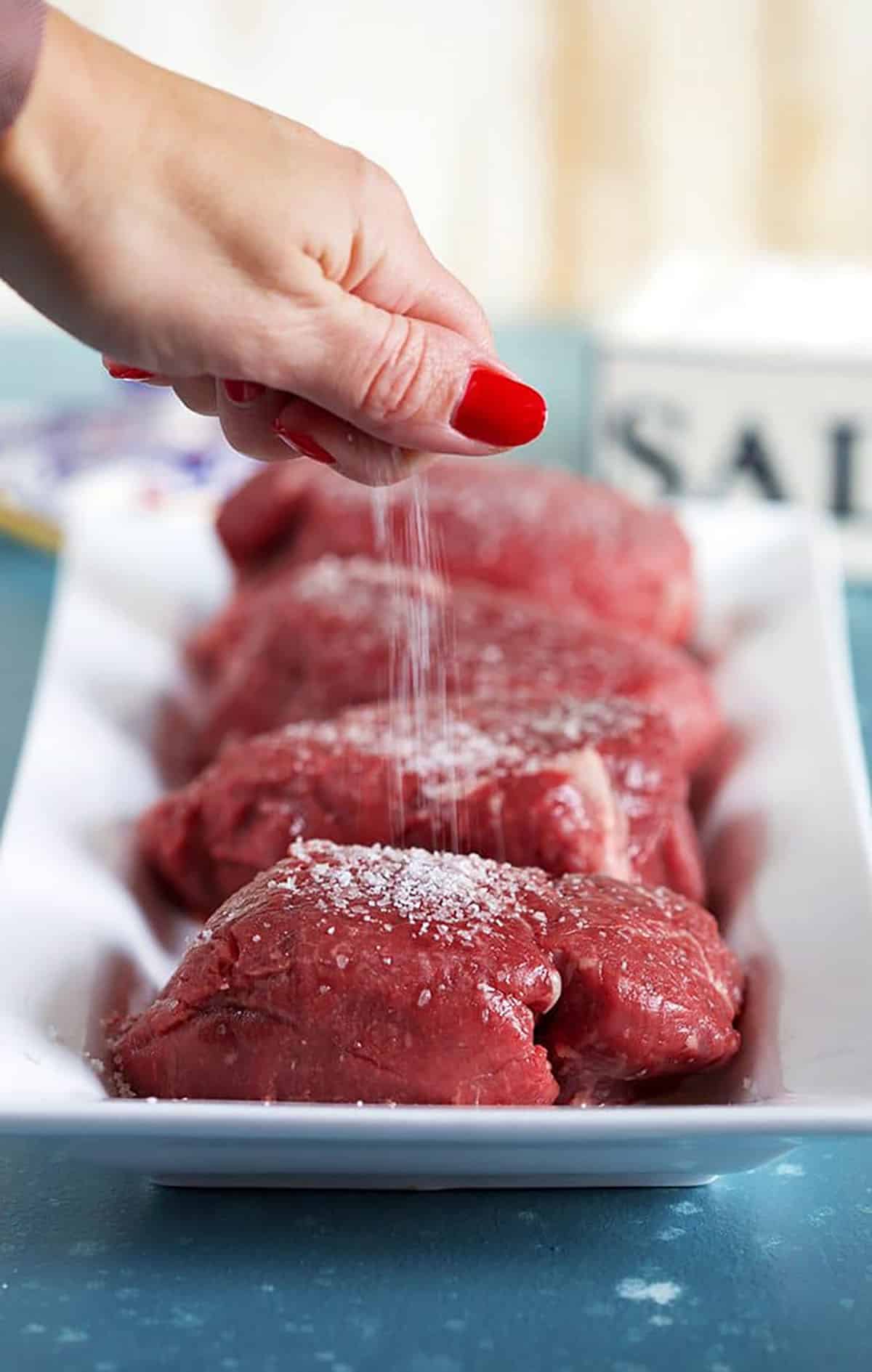
- Season the steaks liberally with salt and pepper on both sides.
- Melt the butter in a medium heavy bottom skillet or cast iron skillet over high heat.
- Add the steaks to the pan. Cook until a crust has formed and golden brown, approximately 3-4 minutes.
- Flip the steaks and transfer the entire skillet to the oven.
- Roast for 10-15 minutes or until cooked to the desired degree of doneness. (Remove when the temperature reaches 125 degrees for medium rare).
- Transfer the steaks to a platter and cover with foil.
- Allow the steaks to rest for 10 minutes before serving.
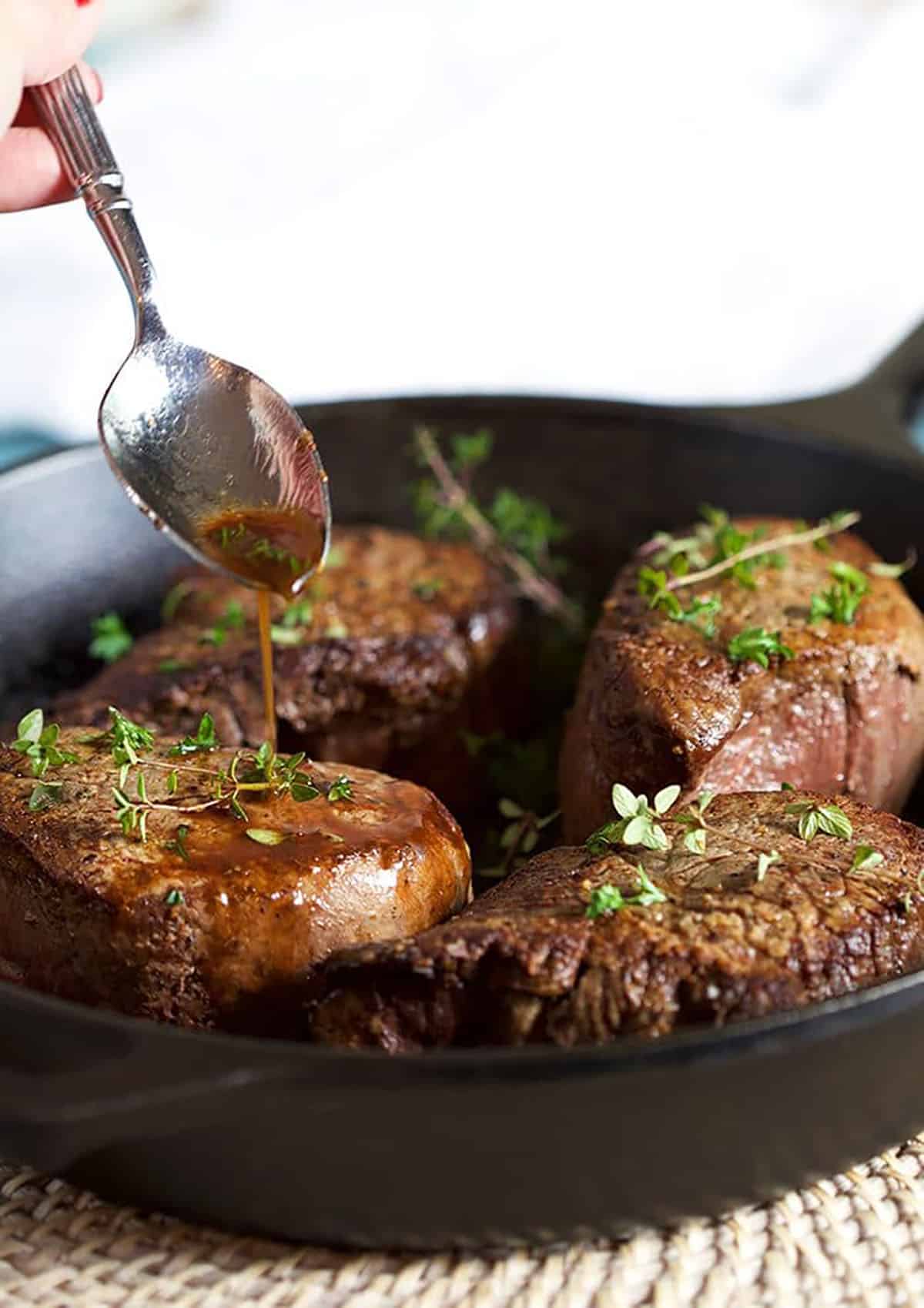
I really love how the pan juices get all caramelized and insanely delish! Spoon those juices all over the Filet Mignon steaks right before serving for a little extra flavor power! This pan seared filet mignon recipe is the ONLY way I’ll make it.
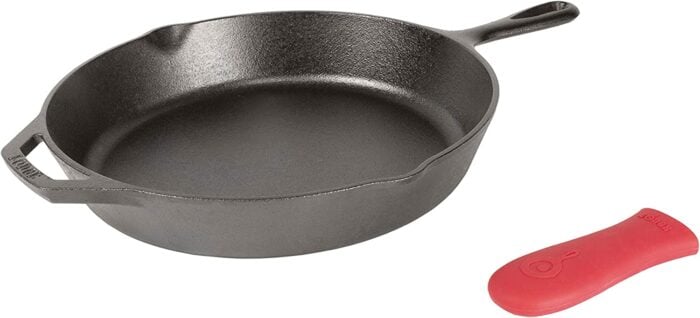
This Cast Iron Skillet from Lodge is my favorite cookware. A true workhorse in the kitchen, this pan is priced under $30. A must have in your cooking arsenal.
This post may contain affiliate links which won’t change your price but will share some commission.
Filet Mignon Time & Temperature Chart (After Searing, at 400°F)
| Thickness | Doneness | Final Temperature | Pull from Oven At | Approx. Oven Time |
|---|---|---|---|---|
| 1 inch | Rare (cool red center) | 120°F–125°F | 115°F–120°F | 3–4 minutes |
| 1 inch | Medium-rare (warm red center) | 130°F–135°F | 125°F–130°F | 4–6 minutes |
| 1 inch | Medium (warm pink center) | 140°F–145°F | 135°F–140°F | 6–8 minutes |
| 2 inches | Rare (cool red center) | 120°F–125°F | 115°F–120°F | 6–8 minutes |
| 2 inches | Medium-rare (warm red center) | 130°F–135°F | 125°F–130°F | 8–10 minutes |
| 2 inches | Medium (warm pink center) | 140°F–145°F | 135°F–140°F | 10–12 minutes |
- The steak will continue to cook and rise about 5°F while it rests.
- Always insert the thermometer into the center of the thickest part of the steak.
- Use time as a guideline, but temperature is the best way to know exactly when your filet mignon is done.
Common Filet Mignon Mistakes (and How to Avoid Them)
- Cooking straight from the fridge – If you go straight from refrigerator to hot pan, the outside can burn before the center has a chance to warm up. Let your steaks sit at room temperature for about 30 minutes before cooking so they cook evenly from edge to center.
- Not drying the steaks well – Moisture is the enemy of a good sear. If the surface of the meat is wet, it will steam instead of brown. Pat the filet mignon very dry with paper towels on all sides before you season and sear. This simple step makes a huge difference in getting that deep, flavorful crust.
- Using the wrong pan – A thin skillet or non-stick pan just can’t hold high heat the way cast iron or heavy stainless steel pan does. For the best sear, use a heavy-bottomed oven-safe skillet (cast iron is my favorite) and give it time to preheat until it’s very hot before the steaks ever hit the pan.
- Skipping the thermometer – Filet mignon is too expensive to leave to guesswork. Oven times can vary, and steak thickness isn’t always perfect. An instant-read thermometer takes the stress out of cooking steak at home and helps you nail your ideal doneness every single time.
- Overcrowding the pan – If you cram too many steaks into the pan, they’ll steam instead of sear. Make sure there is a little space between each steak so the hot air can circulate. If you’re cooking for a crowd, sear in batches and finish them together in the oven.
- Not resting the steak – As tempting as it is to cut into that steak right away, resting is non-negotiable. Let the filet mignon rest for about 10 minutes after cooking so the juices can redistribute through the meat. If you cut into it too soon, all that juiciness will run right onto the plate.
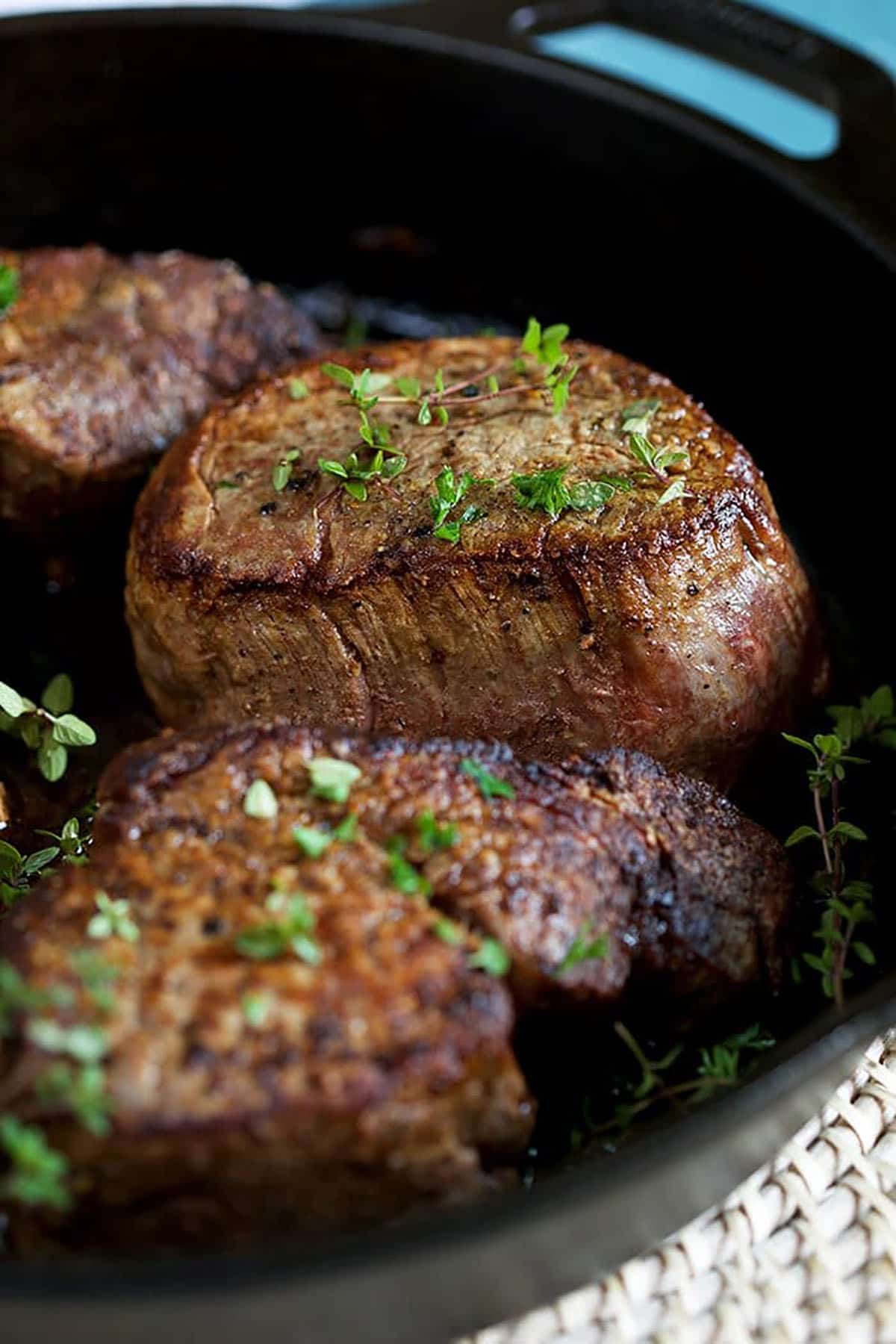
What is the difference between Beef Tenderloin and Filet Mignon?
I used to think beef tenderloin and filet mignon were the same thing so I’d use the terms interchangeably. It turns out, Beef Tenderloin is the name of the large cut of beef before it’s cut into steaks. Once the tenderloin is portioned out into steaks then the steaks are called by the French name “Filet Mignon.”
Some grocery stores may label filet mignon as beef tenderloin steaks….and that is exactly the same thing.
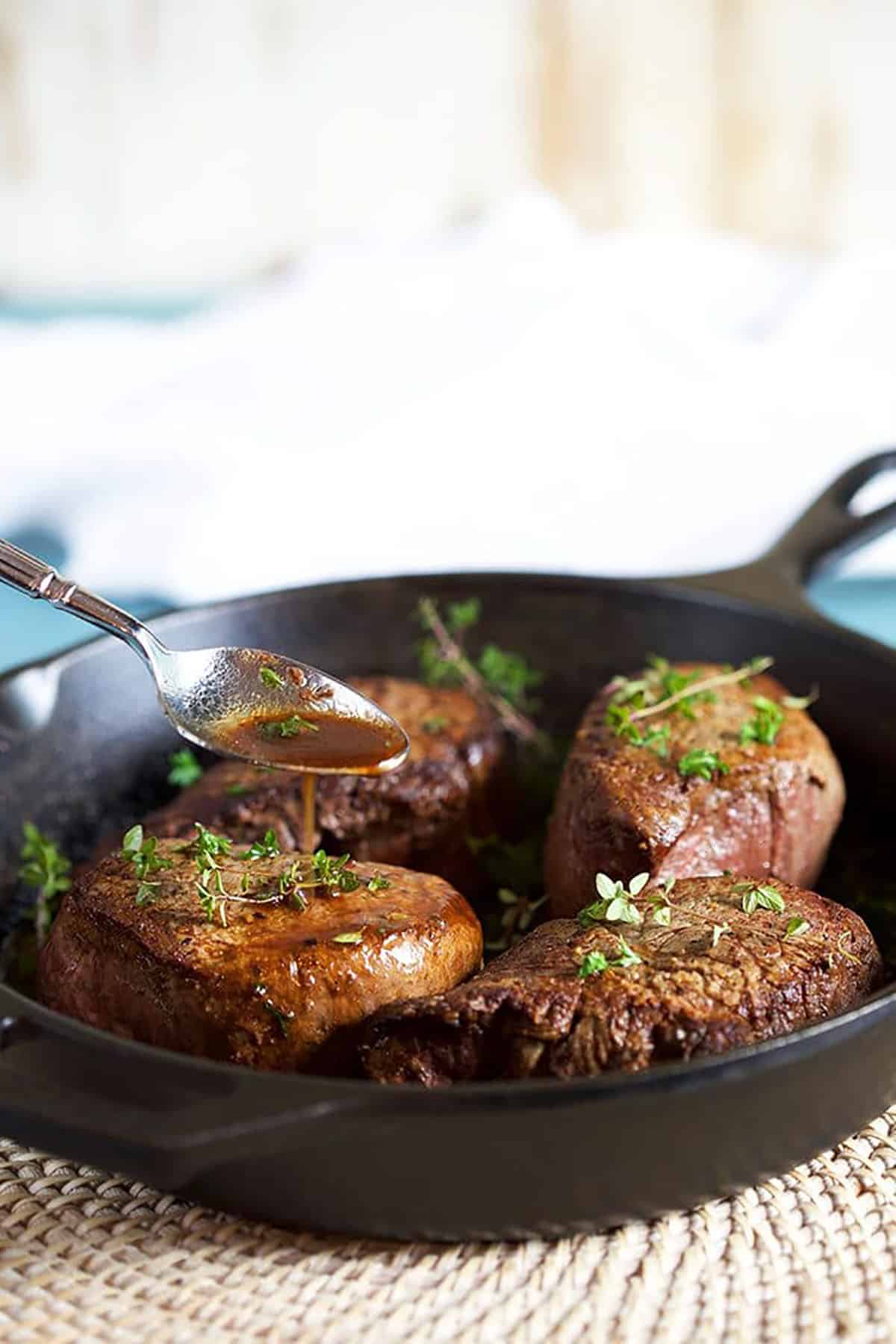
Why is Filet Mignon so expensive?
Since Beef Tenderloin is the most tender cut of beef and the most desirable, that drives up the price. I do believe that it is more labor intensive to retrieve that part of beef, as well.
The average cow only provides a small amount of beef tenderloin so that accounts for the hefty price tag, too.
So, if you’re looking for an easy special occasion dinner, this easy cast iron Filet Mignon recipe is the one for you. It’s what I serve almost every holiday, New Year, Valentine’s Day, Christmas, Birthdays, it’s so perfect, easy and quick!
Is it Best to Cook Filet Mignon in Butter or Oil?
While some people will say it’s better to cook Filet Mignon in oil, we like to use butter. Butter adds more fat and flavor to this otherwise lean steak. Oil has a higher smoke point than butter making it less likely to burn but the steaks cook quickly enough that butter will only brown slightly giving your steaks an added nutty flavor.
If you prefer to go with oil, use olive oil for the best flavor and results but add a little butter at the end to spoon over your steaks when they’re done. You’ll thank me later.
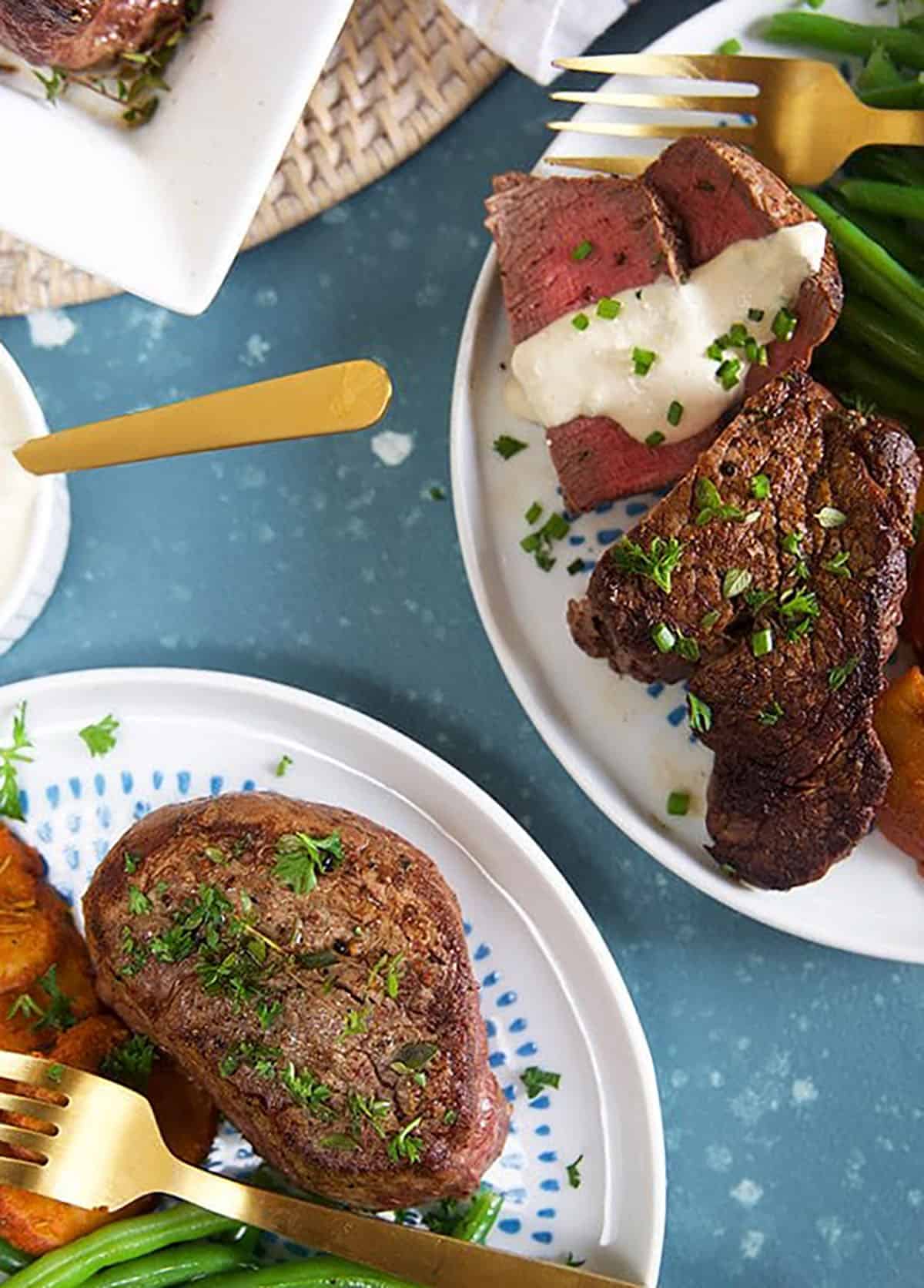
What To Serve With Filet Mignon
These easy side dishes are perfect for serving alongside this filet mignon recipe:
How To Store Leftover Filet Mignon
Filet Mignon can be stored in an airtight container, refrigerated, for up to 3 days. Leftovers can be reheated on the stovetop in a covered skillet over medium heat or in the oven until heated through.
More Reader Favorite Recipes
- Herb Crusted Prime Rib with Horseradish Sauce (We love this sauce for this filet mignon recipe, too!)
- Easy Beef Tenderloin with Horseradish Sauce (Ditto, here, too.)
- The BEST EVER Corned Beef and Cabbage
- Honey Chipotle Braised Beef Short Ribs
- Heading outside? This Grilled Filet Mignon is THE BEST!
- How to Reverse Sear a Steak
I also love this easy Filet Mignon from the Barefoot Contessa because she adds a flavorful sauce of mustard and mushrooms!
I love to serve up some fresh steamed veggies like asparagus with this easy Blender Hollandaise….yes, blender hollandaise. It’s so easy to make in about 2 minutes and it’s fabulous on just about everything. Or you can just sop it up with a spoon.
If you’re looking for something even more super fancy pants, try this Oscar Style Cast Iron Filet Mignon!
Want even more easy family friendly or friend friendly recipe? Be sure to follow us over on Instagram or FACEBOOK!
The Best Filet Mignon Recipe
Equipment
- heavy bottom skillet
- tongs
- serving platter
Ingredients
- 4 6-8 ounce Filet Mignon Steaks
- 2 tbsp butter
- 2 tbsp kosher salt
- 2 tbsp fresh ground pepper
Steakhouse butter (optional)
- 4 tbsp unsalted butter
- 1 garlic clove, finely minced
- 1 tsp fresh parsley, finely minced
- 1/2 tsp fresh thyme, finely minced
- 1/4 tsp kosher salt
- 1/8 tsp freshly ground pepper
Instructions
- Preheat oven to 400 degrees.
- Season the steaks liberally with kosher salt and black pepper on both sides.
- Melt the butter in a medium heavy bottom skillet over high heat.
- Add the steaks to the pan. Cook until a crust has formed and golden brown, approximately 3-4 minutes.
- Flip the steaks and transfer the entire skillet to the oven.
- Roast for 10-15 minutes or until cooked to the desired degree of doneness. (Remove when the temperature reaches 125 degrees for medium rare).
- Transfer the steaks to a platter and cover with foil. Allow the steaks to rest for 10 minutes.
For the Steak Butter
- In a small bowl, stir together the softened butter, garlic, parsley, thyme, salt, and pepper until well combined.
- Spoon the mixture onto a piece of plastic wrap or parchment paper and shape it into a small log. Wrap tightly and refrigerate until firm.
- When the steaks come out of the oven, transfer them to a plate to rest and immediately top each one with a slice of steakhouse butter so it melts into all the nooks and crannies.
Video
Notes
Nutrition
Nutrition information is automatically calculated, so should only be used as an approximation.









Fabulous! Our Christmas dinner tonight! Bacon wrapped fillets, Omaha Steaks! Has with a baked sweet potato!
Thank you!
Excellent method for cooking filet! Will make again for sure!
Thank you!
This was the most amazing filet. Tasted like Ruth’s Chris! We followed the directions exactly. Roasted for 14 minutes for a perfect medium. Thank you for this recipe.
Thank you so much for your comment! I’m so glad you enjoyed it. It’s one of my favorite things to cook because it’s so, sooo easy!
I wanted to love this recipe as it seems to have potential. I followed the timing exactly and ended up with well done steaks after leaving them 10 minutes in the oven. I was shooting for medium rare. Lesson learned to follow the thermometer rather than the time in the recipe next time. Not all ovens are created equal …
I’m sorry your steaks didn’t turn out the way you wanted but it is imperative to always use a thermometer for doneness. I hope you do try them again in the future and thank you for your comment!