
This post may contain affiliate links. Please read our disclosure policy.
These easy charcuterie board ideas will help you build a beautiful meat and cheese board in about 15 minutes with cured meats, hard and soft cheeses, fresh fruit, nuts, crackers, olives, and simple spreads. I’ll show you what to buy, how much to serve, and how to arrange everything so your board looks full, colorful, and party-ready.

Table of Contents
- Kellie’s Note Say Cheese!
- What Is a Charcuterie Board?
- Ingredients for a Charcuterie Board
- Charcuterie Board Ideas
- What to Put on a Charcuterie Board
- Best Charcuterie Board Pairings
- How To Build a Charcuterie Board
- How Much Meat and Cheese Per Person?
- Make-Ahead Charcuterie Board Tips
- How Long Can a Charcuterie Board Sit Out?
- Easy Charcuterie Board Recipe
- More Easy Appetizer Ideas
Your guide to a complete Charcuterie Board and photos is the best! Thank you so much for sharing!
– Tom S.
Kellie’s Note
Say Cheese!

Holiday parties and potlucks are not complete without an overflowing Charcuterie Board. Loaded with meats, cheeses, fruit, nuts and spreads, it’s my go-to way to start a gathering. I love them to help tame hungry appetites while I pull together the rest of the feast.
This is one of my favorite no-stress appetizers for holidays, potlucks, game day, and last-minute guests because it looks impressive without requiring any cooking. After making countless boards for parties, I’ve learned that a few seasonal touches, budget-friendly swaps, and smart placement tricks can make even a simple board feel extra special.
My simple tutorial will ensure you have a beautiful board to serve at your next party.

What Is a Charcuterie Board?
Charcuterie is pronounced shahr-koo-tuh-ree and traditionally refers to cured meats like salami, prosciutto, ham, pâté, and terrines.
Today, when most people say “charcuterie board,” they mean a generous snack board filled with cured meats, cheeses, crackers, fruit, nuts, olives, pickles, and spreads. It’s an easy, customizable appetizer for parties, holidays, potlucks, and casual entertaining.
There are no strict rules, but the best boards include a mix of flavors and textures: salty, creamy, crunchy, sweet, briny, and fresh.
Ingredients for a Charcuterie Board
The best charcuterie boards have variety. Choose a few items from each category so every bite feels a little different.
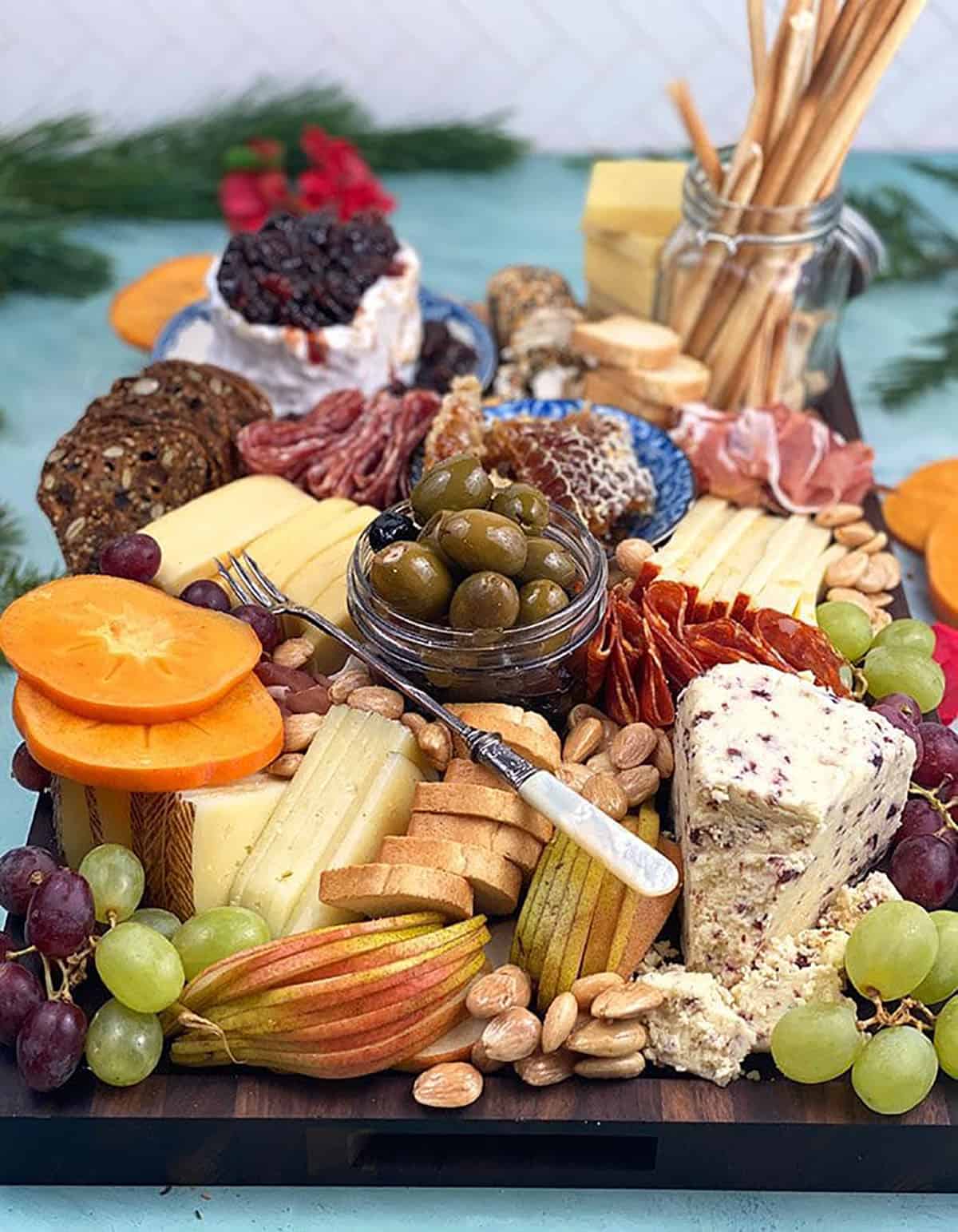
- Hard cheeses: Manchego, smoked gouda, parmesan, cheddar, havarti, or gruyere.
- Soft cheeses: Brie, goat cheese, blue cheese, camembert, taleggio, or Boursin.
- Cured meats: Prosciutto, Genoa salami, capicola, cured ham, soppressata, chorizo, or even bologna for a fun retro option.
- Fresh fruit: Grapes, apple slices, pear slices, berries, figs, orange slices, or seasonal persimmons.
- Dried fruit: Apricots, figs, dates, cranberries, or dried cherries.
- Nuts: Marcona almonds, regular almonds, walnuts, pistachios, candied pecans, or candied walnuts.
- Briny extras: Olives, cornichons, pickles, marinated vegetables, or pepperoncini.
- Spreads: Honey, honeycomb, fig jam, orange marmalade, mustard, balsamic glaze, or fruit preserves.
- Crackers and bread: Crackers, breadsticks, baguette slices, parmesan crisps, crostini, or gluten-free crackers.
Budget tip: Use grapes instead of pricier seasonal fruit, regular almonds instead of Marcona almonds, and familiar cheeses like cheddar, gouda, or havarti to keep the board affordable without making it feel sparse.
Seasonal tip: Persimmons, cranberries, candied walnuts, and rosemary make a beautiful holiday board. Berries, grapes, figs, and fresh herbs are perfect for a summer board.
Charcuterie Board Ideas
Once you know the basic formula, you can change your charcuterie board for any occasion, season, or budget. Here are some of my favorite ways to switch things up.
- Classic Charcuterie Board: Use a mix of cured meats, hard and soft cheeses, grapes, nuts, olives, crackers, and honey or jam.
- Christmas Charcuterie Board: Add sliced persimmons, candied walnuts, cranberry goat cheese, rosemary sprigs, orange slices, and fig jam.
- Summer Charcuterie Board: Use berries, grapes, melon, prosciutto, soft cheese, fresh herbs, and lighter crackers.
- Budget Charcuterie Board: Choose cheddar, gouda, salami, grapes, regular almonds, olives, crackers, and one simple spread like honey or mustard.
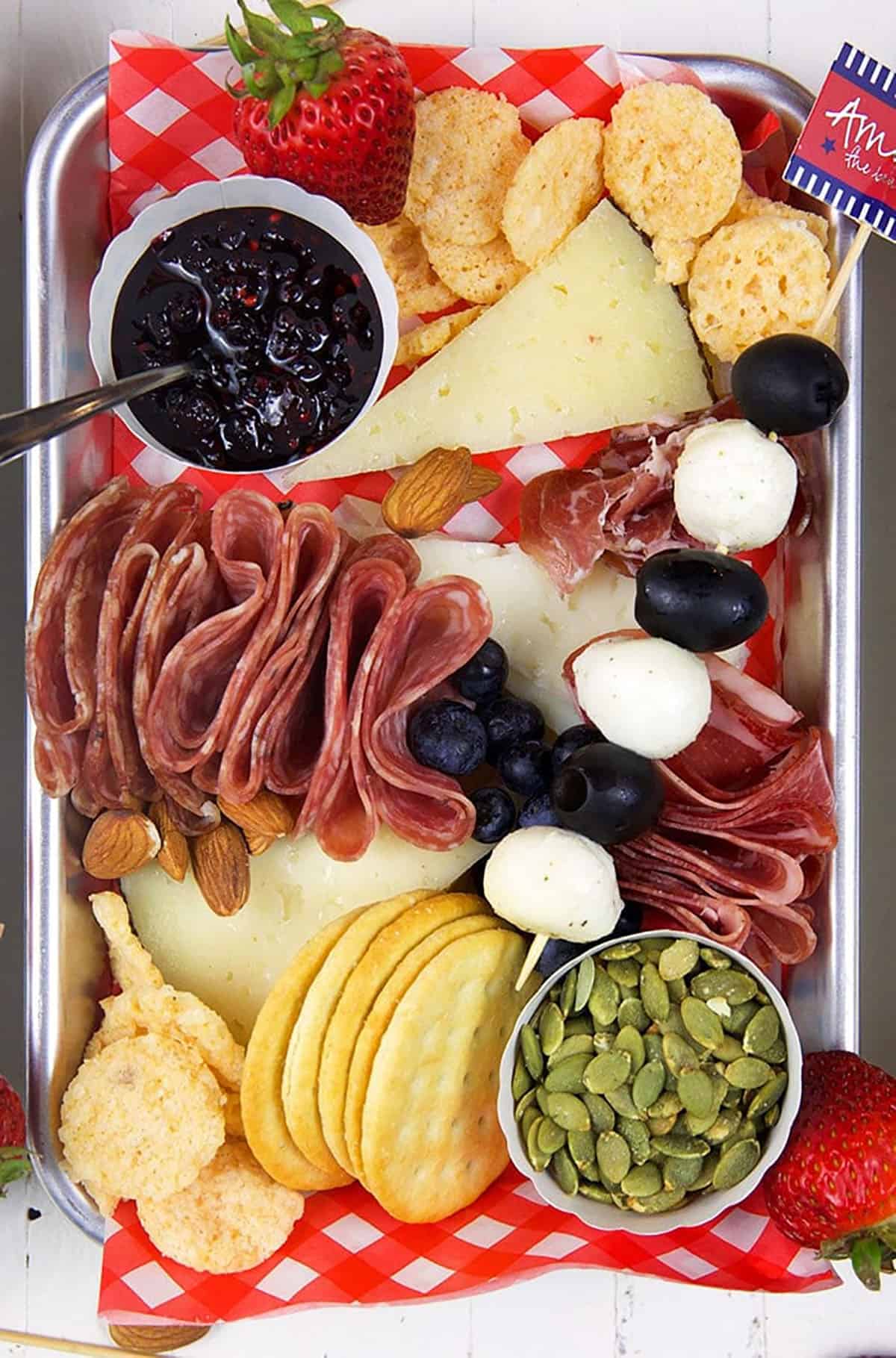
- Personal Cheese Boards: Make mini boards for each guest with a few slices of cheese, cured meat, fruit, crackers, and olives. These are great for parties because everyone gets their own.
- Dessert Board: Skip the cured meats and use cookies, chocolate, fruit, marshmallows, sweet dips, and seasonal treats.
- Game Day Board: Add salami, cheddar, spicy mustard, pickles, crackers, pretzels, grapes, and a few hearty dips.
- No-Cook Dinner Board: Make the board more filling with extra cheese, meats, bread, fruit, nuts, olives, and a few dips.
You can really add just about anything you love to your cheese platter. The goal is to create a board that feels abundant, colorful, and easy for guests to graze from.

What to Put on a Charcuterie Board
A great charcuterie board has a little bit of everything. Aim for a mix of salty, sweet, creamy, crunchy, fresh, and briny.
- Start with cheese: Choose 1–2 hard cheeses and 1–2 soft cheeses.
- Add cured meats: Prosciutto, salami, capicola, and cured ham are easy crowd-pleasers.
- Bring in fruit: Grapes, apples, pears, berries, figs, or persimmons add color and freshness.
- Add something briny: Olives, cornichons, pickles, or marinated vegetables balance the richness.
- Include spreads: Honey, fig jam, mustard, orange marmalade, or balsamic glaze add flavor. Add a little bowl of my homemade Pepper Relish for something sweet, tangy and colorful.
- Add crunch: Nuts, candied pecans, crackers, breadsticks, or parmesan crisps fill in the board.
- Finish with extras: Fresh herbs, dried fruit, chocolate, or seasonal decorations make the board feel special.
The easiest way to make your board look full is to place the big items first, then fill every little gap with fruit, nuts, crackers, herbs, or small piles of meat.
Best Charcuterie Board Pairings
Place foods that taste good together near each other so guests can build the perfect bite.
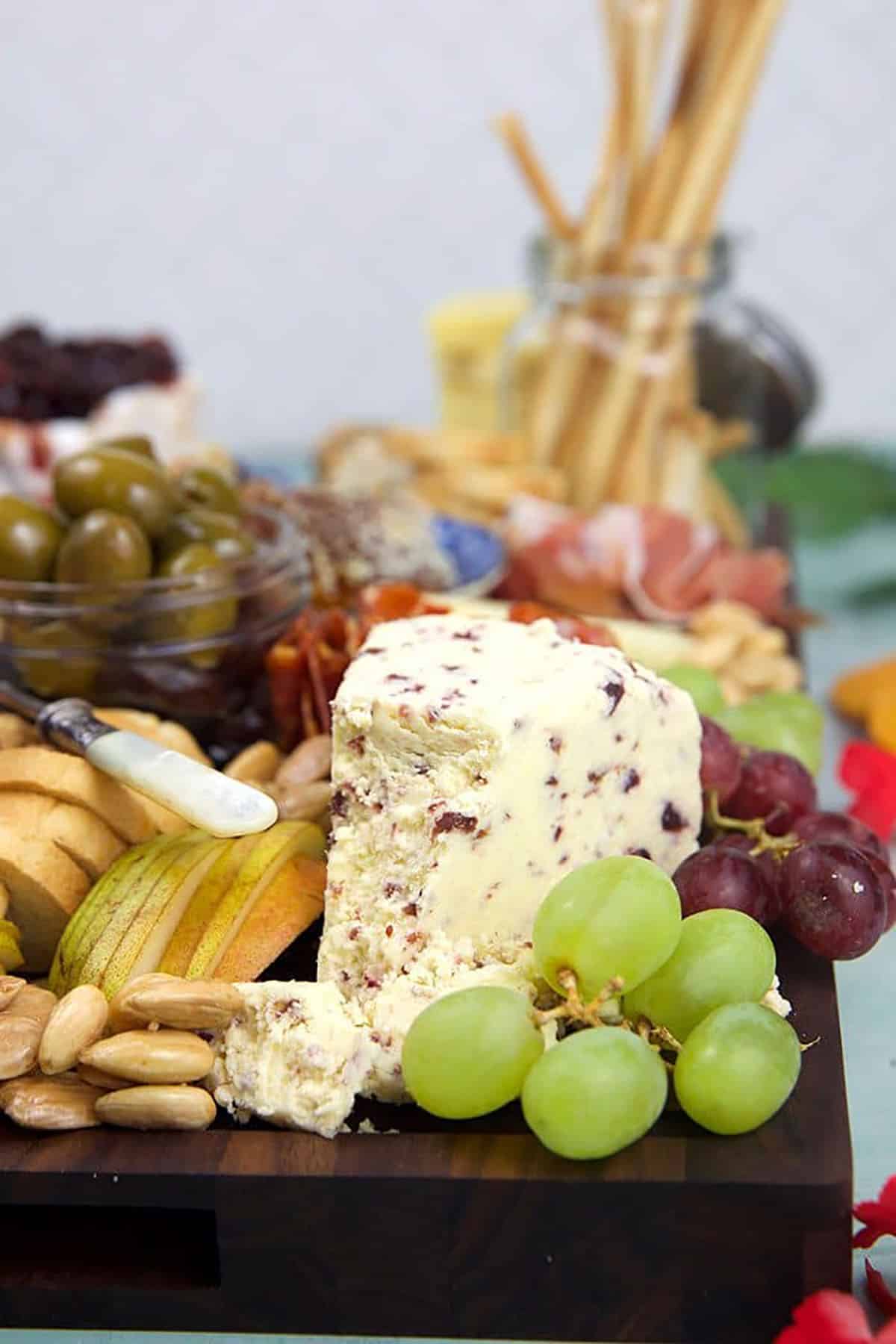
- Brie – honey – walnuts – crackers
- Manchego – prosciutto – grapes
- Goat cheese – fig jam – pear slices
- Cheddar – salami – apple slices
- Parmesan – cured meats – balsamic glaze
- Blue cheese – honey – dried apricots
- Gouda – mustard – cornichons
- Creamy cheese – berries – crostini
- Prosciutto – melon or figs
- Salami – olives – sharp cheddar
For the best flavor, let the cheese sit at room temperature for about 30 minutes before serving.
How To Build a Charcuterie Board
Building a charcuterie board is easy when you add the ingredients in layers.
- Choose your board. Use a large cutting board, platter, pizza peel, sheet pan, or tray lined with parchment paper.
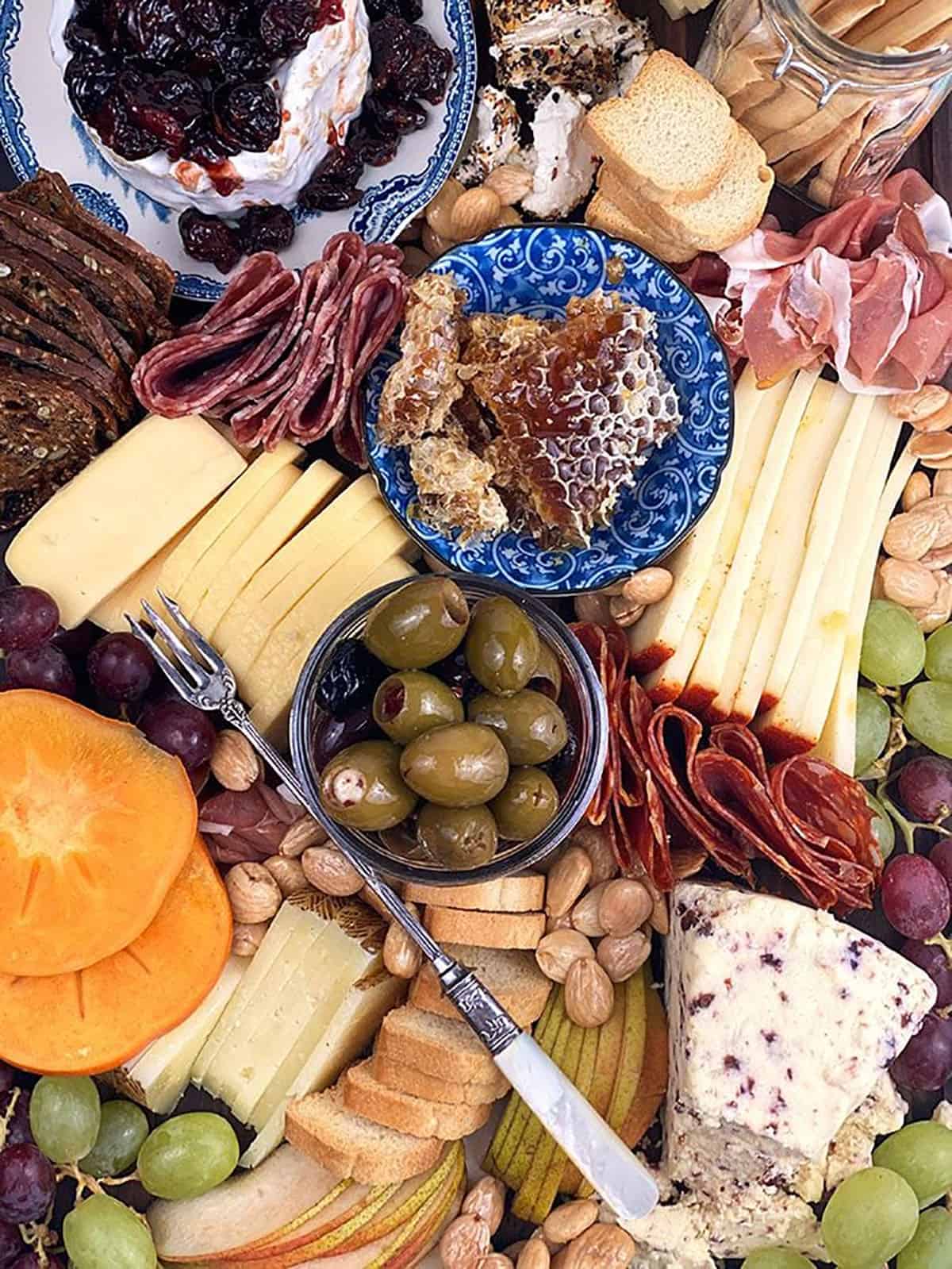
- Place bowls first. Add small bowls for olives, nuts, honey, jam, mustard, dips, or anything messy.
- Add the cheeses. Space cheeses around the board so they anchor the layout. Slice hard cheeses for easy serving and leave soft cheeses whole.
- Arrange the meats. Fold salami into quarters, fan slices around the cheese, and pile prosciutto into loose ribbons.
- Add fruit. Use grapes, pear slices, apple slices, berries, figs, or persimmons to add freshness and color.
- Fill in with crackers and bread. Tuck crackers, breadsticks, crostini, or parmesan crisps into open spaces.
- Add nuts and extras. Sprinkle almonds, walnuts, dried fruit, or chocolate around the board.
- Finish with garnish. Add rosemary, sage, thyme, or seasonal fruit to fill tiny gaps and make the board look polished.
Styling tip: Separate similar colors, use different cheese shapes, keep grapes in small clusters, and fill every empty spot so the board looks abundant.
How Much Meat and Cheese Per Person?
The amount you need depends on whether the charcuterie board is an appetizer or the main event.
- For an appetizer: Plan for about 2 ounces of cheese and 3–4 slices of meat per person.
- For a heartier grazing board: Increase the cheese and meat and add more crackers, bread, fruit, nuts, and spreads.
- For cheese: Offer a mix of hard, soft, and mild cheeses so there is something for everyone.
- For meats: Include a few textures and flavors, like prosciutto, salami, and capicola.
- For crackers and bread: Always have extra. Crackers, breadsticks, and crisps usually disappear quickly.
- For fruit: Use fresh fruit for color and dried fruit for sweetness and texture.
- For nuts: Sprinkle them around the board or serve them in a separate bowl if allergies are a concern.
- For olives, dips, and spreads: Use small bowls to keep the board tidy and make refilling easy.
If you are serving a larger crowd, it is better to keep extra ingredients in the refrigerator and refill the board as needed.
Make-Ahead Charcuterie Board Tips
You can prep most of your charcuterie board a few hours before your guests arrive.
- A few hours ahead: Arrange the cheeses, meats, olives, nuts, spreads, and sturdy fruit on the board.
- Cover and chill: Wrap the board tightly with plastic wrap and refrigerate until ready to serve.
- Wait on crackers: Add crackers, breadsticks, crostini, and parmesan crisps right before serving so they stay crisp.
- Bring cheese to room temperature: Take the board out about 30 minutes before serving for the best flavor and texture.
- Refill as needed: Keep extra meat, cheese, fruit, and crackers nearby so you can refresh the board during the party.
Avoid adding delicate fruit, crackers, or anything that can get soggy too far in advance.
How Long Can a Charcuterie Board Sit Out?
A charcuterie board should not sit out for more than about 2 hours, especially if it includes meats, cheeses, dips, or cut fruit.
For longer parties, set out a smaller board first and keep extra ingredients refrigerated. Refill the board in batches so everything stays fresh and safe for guests.
Want even more easy entertaining ideas? Follow us over on Instagram!
Easy Charcuterie Board Recipe
Equipment
- chef's knife
- cutting board or platter
Ingredients
- 1 lb Cheddar Cheese
- 1/2 lb Prosciutto
- 4 oz Goat Cheese
- 1/2 lb Manchego
- 1/2 lb Butterkase
- 1 Persimmon , sliced
- 1 lb Grapes
- 1/4 cup Almonds
- 1/2 cup Walnuts
- 1 cup Dried Apricots
- 1 cup Olives
- 1 Honeycomb
- Assorted Crackers
Instructions
- Use a food-safe board, platter, pizza peel, sheet pan, or parchment-lined tray.
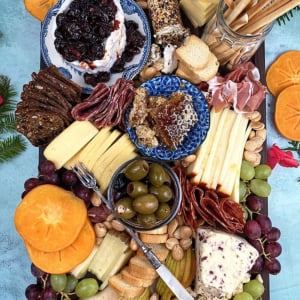
- Arrange the cheeses around the board first, spacing them apart to anchor the layout. Slice hard cheeses into cubes, wedges, or thin pieces for easy serving.
- Fold or fan the cured meats and arrange them around the cheeses. Pile prosciutto into loose ribbons and tuck salami into open spaces.
- Wash and pat dry the fruit. Slice larger fruit into bite-sized pieces, then arrange fruit in small clusters around the board.
- Add olives, nuts, honey, dips, and spreads in small bowls to keep the board tidy.
- Place crackers, breadsticks, parmesan crisps, or crostini around the board just before serving.
- Fill any open spots with extra fruit, nuts, dried fruit, herbs, or small pieces of prosciutto.
Video
Notes
- You can use a board made specifically for cheese and charcuterie, or you can use something you already have in the kitchen. Pizza peels, baking sheets, large serving platters, and parchment-lined trays all work well.
- To make the board ahead, arrange the meats, cheeses, olives, nuts, spreads, and sturdy fruit a few hours in advance. Cover and refrigerate, then add crackers and breadsticks right before serving.
- For best flavor, let the board sit at room temperature for about 30 minutes before serving. Do not leave meats, cheeses, or cut fruit out for more than about 2 hours.
Nutrition
Nutrition information is automatically calculated, so should only be used as an approximation.
More Easy Appetizer Ideas
Round out your party spread with a few easy appetizers that pair perfectly with a charcuterie board.
Yes. Arrange the meats, cheeses, olives, nuts, spreads, and sturdy fruit a few hours ahead, then cover and refrigerate. Add crackers and bread just before serving.
Use a cutting board, sheet pan, pizza peel, large platter, serving tray, or parchment-lined countertop.
For an appetizer, plan for about 2 ounces of cheese and 3–4 slices of meat per person. Add more if the board is serving as the main meal.
Use familiar cheeses like cheddar, gouda, or havarti, plus salami, grapes, regular almonds, crackers, olives, and one simple spread like honey or mustard.
Wine, beer, sparkling water, cider, cocktails, sangria, and festive punches all pair well with a charcuterie board.
If the board has been out for less than 2 hours, store leftover meats, cheeses, fruit, olives, and spreads in separate airtight containers in the refrigerator. Discard anything that has been sitting out too long.










Hello,
What is the thinly slided brown bread with nuts/fruit on left next to the white cheese and salami?
Thanks,
I place things randomly to start and then add items to complement their neighbors, al the while paying attention to placement of color and texture.
My boards have four groups of items: fruits, pickled items, meats and cheeses. My favorite fruits are dried such as apricots, pears and dates. The pickled items are, of course, dill and sweet pickles, onions, olives and sometimes Japanese pickled vegs to include carrots, daikon and radishes. For the meats, I love to make my own salamis, pepperonis and smoked fish such as salmon. For the cheeses, I like to have both hard and soft such as brie, Irish Cheddar and Swiss especially!
Great tips! Thank you so much for sharing!
I love making these kinds of boards. Looks yummy!!
Thank you!
It’s one of my go to appy hour foods. I have to work on my pretty though. Pinning your’s for reference. A board as pretty as the Mevell would help UP my game in time for New Year’s Eve.
Merry Christmas!
Thanks for the step-by-step, pictures and ingredient suggestions! This will be my first time attempting a cheese board. It’s a feast for the eyes as well! Beautiful job!
Your guide to a complete Charcuterie Board and photos is the best! Thank you so much for sharing!
I have yet to make a charcuterie board yet, but after this post I am determined to give it a go! Looks tasty and beautiful at the same time.
Ever made a cheeseboard, but’s would to try yours!
I have only made one charcuterie board so far and I had alot of fun trying to be creative with it! I didn’t have a wood board -so I used a tray. I utilized decorative bowls and cups to make different levels for the meats, cheeses, fruits and nuts. It was a big hit that I plan on repeating on Christmas!