
This post may contain affiliate links. Please read our disclosure policy.
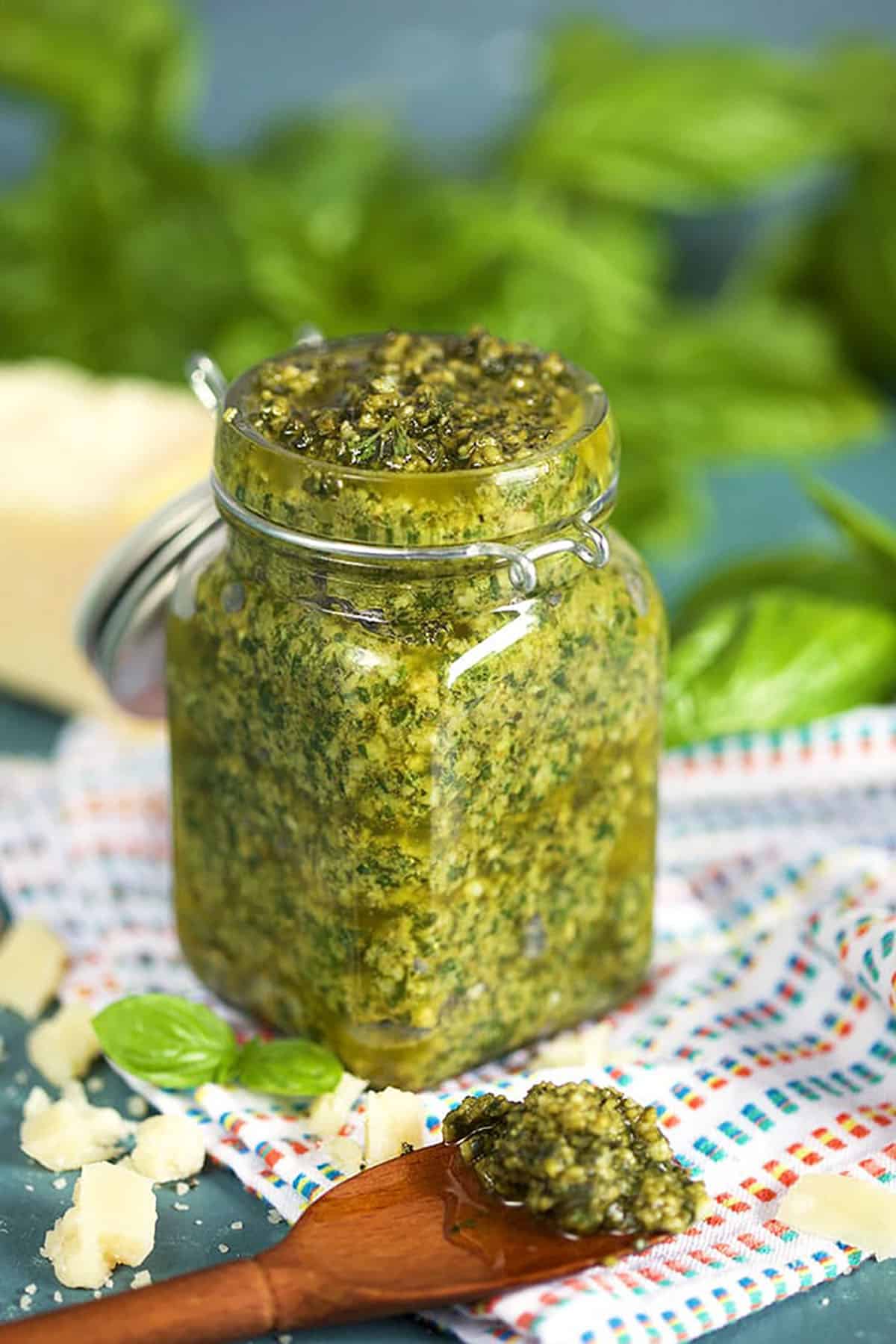
Basil pesto recipe is one of the easiest ways to turn fresh basil into something bright, flavorful, and incredibly useful. Made with basil, pine nuts, parmesan, garlic, lemon, and olive oil, this quick homemade pesto comes together in about 5 minutes and is perfect for pasta, sandwiches, chicken, and freezing for later.
Easily one of the best Pesto recipes I’ve found.
– Chris
Your proportions are perfect.
I served it last night over fettuccine with warm, crusty Italian bread with fresh mozzarella all accompanied by an ice cold Sauvignon Blanc. I think I found my new desert Island food! Thank you!
Kellie’s Note
The Only Pesto You Need

Every summer, basil is the one thing in my garden that really thrives, so I make this basil pesto recipe on repeat. After making and freezing batch after batch over the years, I’ve found that a few small tricks – like toasting the pine nuts, adding a little lemon, and processing the ingredients in stages – make the pesto taste brighter, stay greener, and have a better texture than a one-note blended paste.
If you’ve only had jarred pesto before, this homemade version is a game changer. It’s fresher, more vibrant, and easy to keep on hand in the fridge or freezer for quick meals anytime.

What Is Pesto?
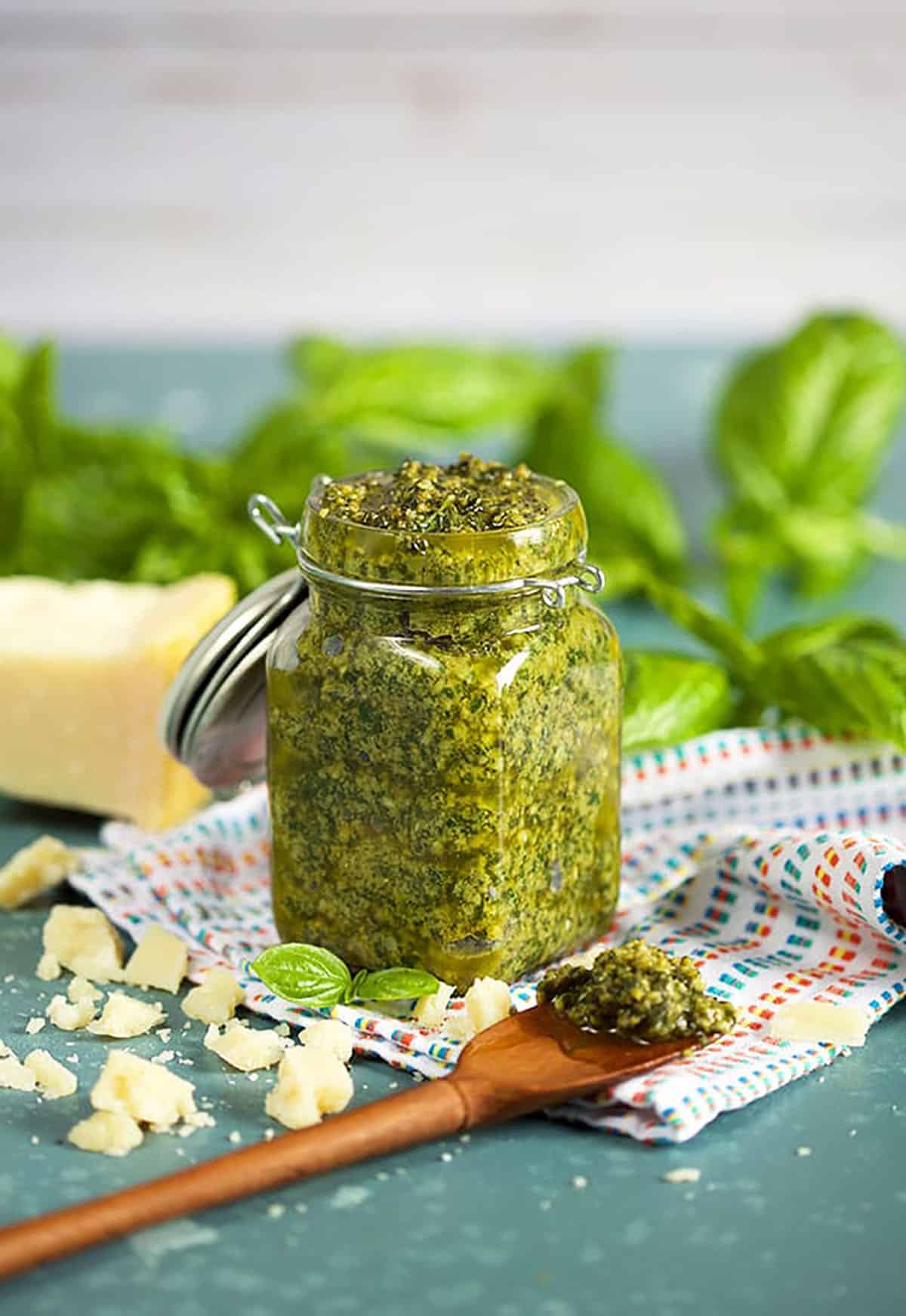
Basil pesto, also called pesto Genovese, is a classic Italian sauce made with fresh basil, garlic, pine nuts, olive oil, and parmesan cheese. This version stays close to the classic but uses a few simple tricks, like toasted pine nuts and a little lemon, for brighter flavor, better texture, and a more vibrant green color.
There are plenty of store-bought pesto sauces out there, but once you make basil pesto from scratch, the fresh flavor is hard to beat. It’s quick, freezer-friendly, and one of the best ways to use up extra basil before it goes to waste.
How To Make Basil Pesto
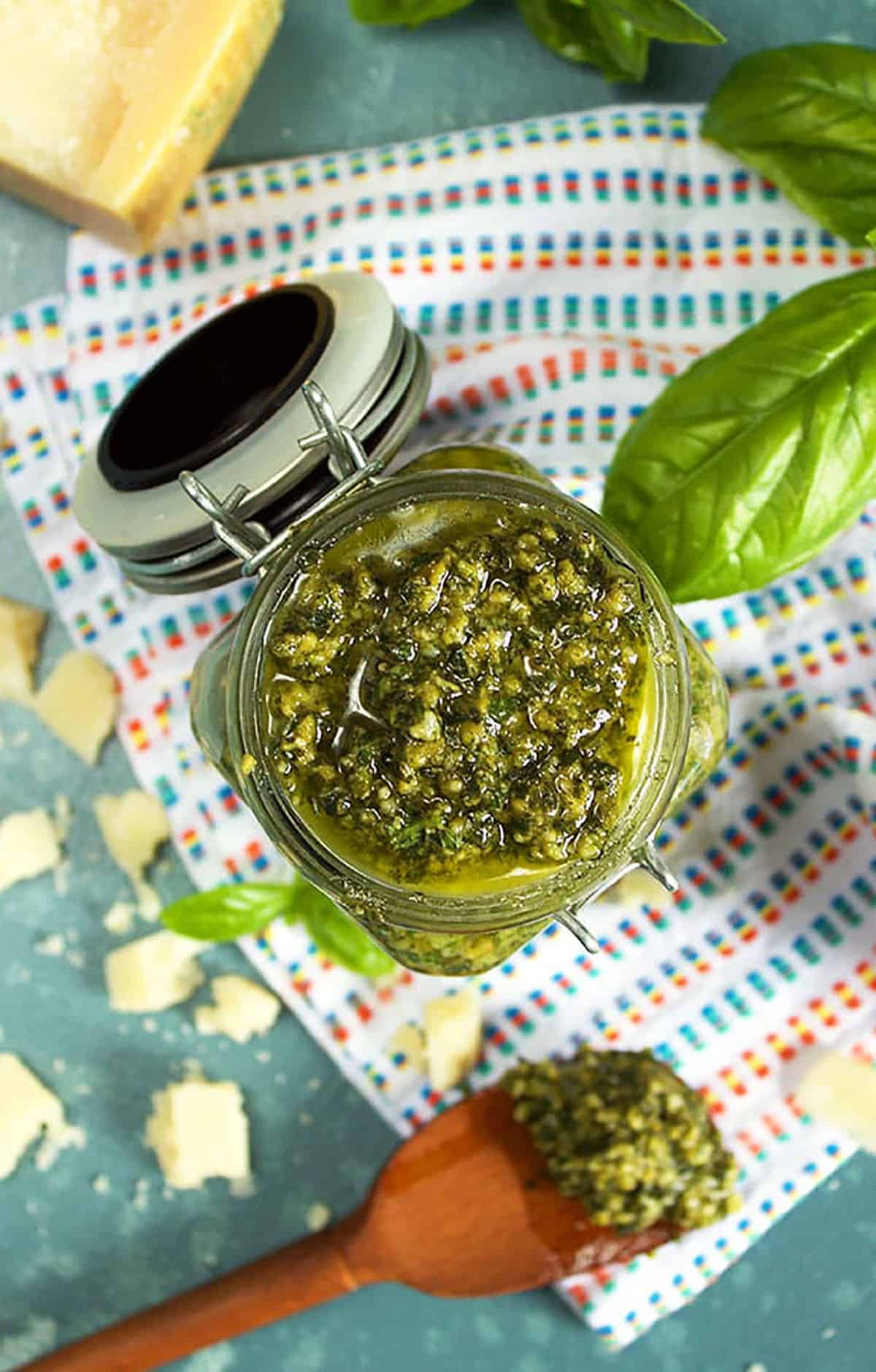
This is the method I use for a basil pesto that’s flavorful, bright, and slightly textured instead of completely smooth and paste-like.
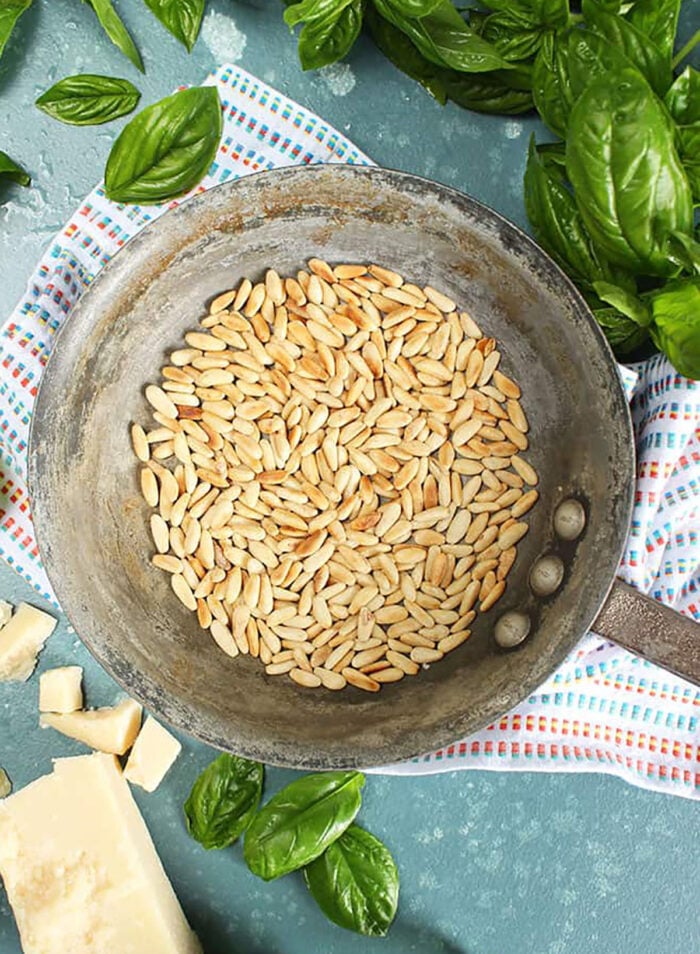
- Toast the pine nuts in a dry skillet over medium heat until lightly golden and fragrant. Keep a close eye on them—they can go from perfect to burnt quickly.
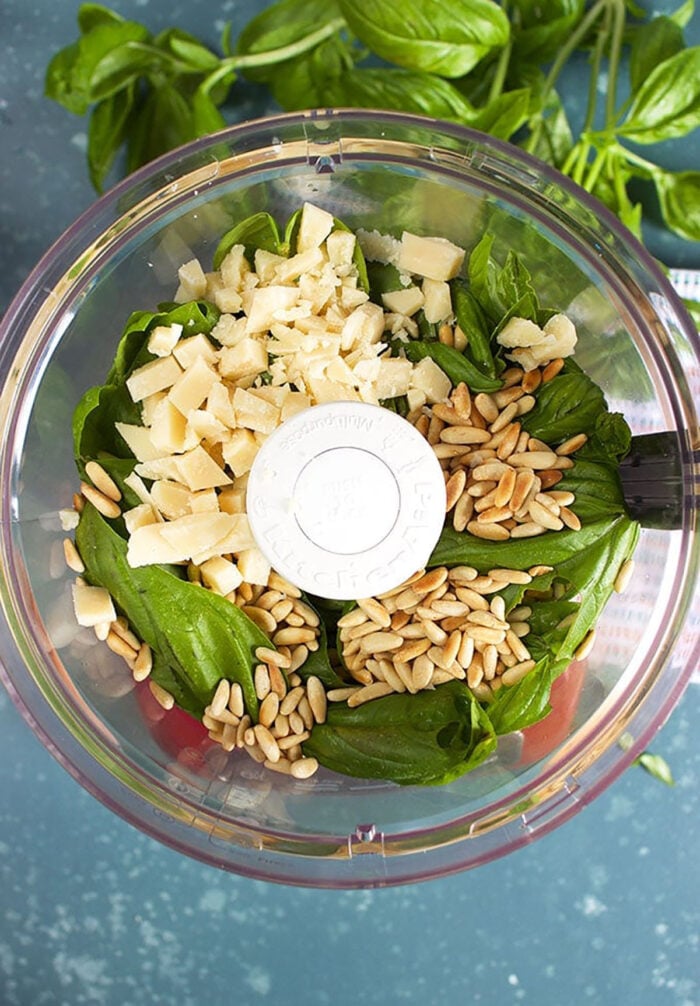
- Add half of the basil, pine nuts, garlic, cheese, and lemon zest to a food processor or blender and process until finely chopped. Starting with only part of the ingredients helps build flavor and keeps the pesto from turning into one flat puree.
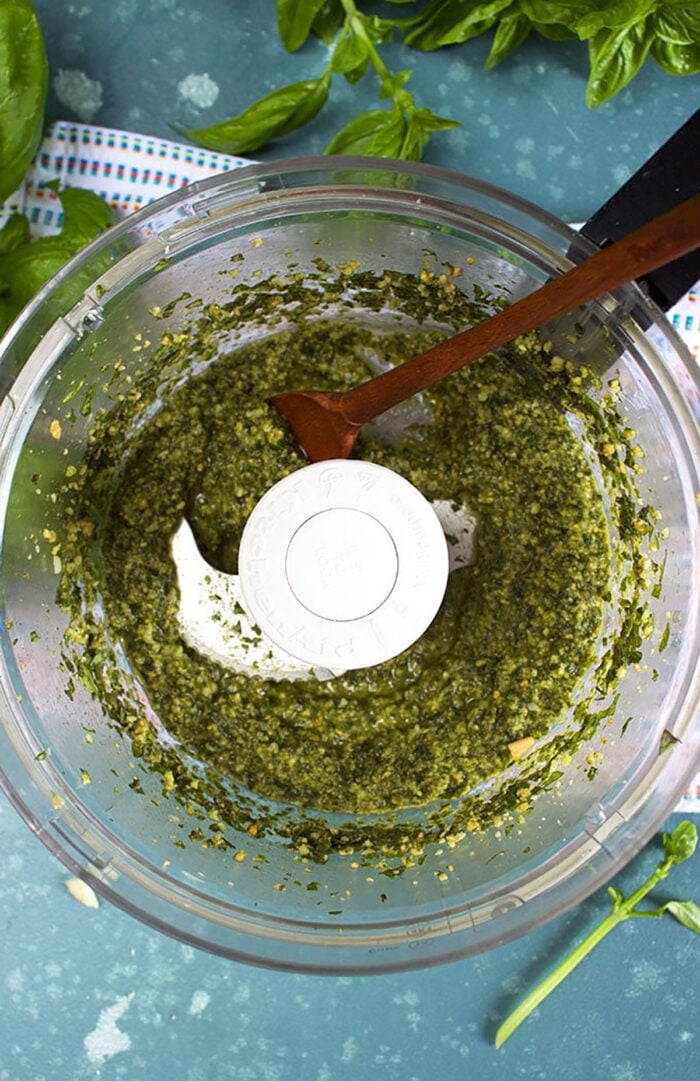
- Slowly drizzle in some of the olive oil while the processor is running until a loose paste begins to form.
- Add the remaining basil, pine nuts, garlic, and cheese and pulse just until combined. This keeps the texture a little chunkier, with more visible bits of basil, cheese, and nuts throughout the pesto.
- Transfer to a bowl and stir in the remaining olive oil. Season with kosher salt and black pepper to taste, then use right away or store in an airtight container.
How to Freeze Basil Pesto
Yes, basil pesto freezes beautifully, which is one of my favorite reasons to make a big batch. If I know I’m freezing it, I like to portion the pesto into ice cube trays so I can thaw only what I need later. Once the cubes are frozen solid, transfer them to a freezer bag or airtight container and keep them in the freezer for up to 3 months for the best flavor.
You can freeze pesto with the cheese already mixed in, but for the very best texture, some people prefer to leave the cheese out and stir it in after thawing. Either way works well, especially if the pesto is sealed tightly.
To thaw, let the pesto sit in the refrigerator overnight or on the counter while still sealed so it doesn’t oxidize too quickly. You can also warm it gently in a saucepan over low heat or stir it straight into hot pasta, soups, or sauces.

Kellie’s Tips for the Best Basil Pesto
- Toast the pine nuts first. This simple step gives the pesto a deeper, nuttier flavor and makes it taste more homemade than anything from a jar.
- Add a little lemon zest and lemon juice. It’s not the most traditional addition, but it brightens the flavor and helps keep the pesto greener longer.
- Process the ingredients in stages. I like to blend half of the ingredients until smooth, then pulse in the rest so the pesto has more texture and bigger bites of flavor.
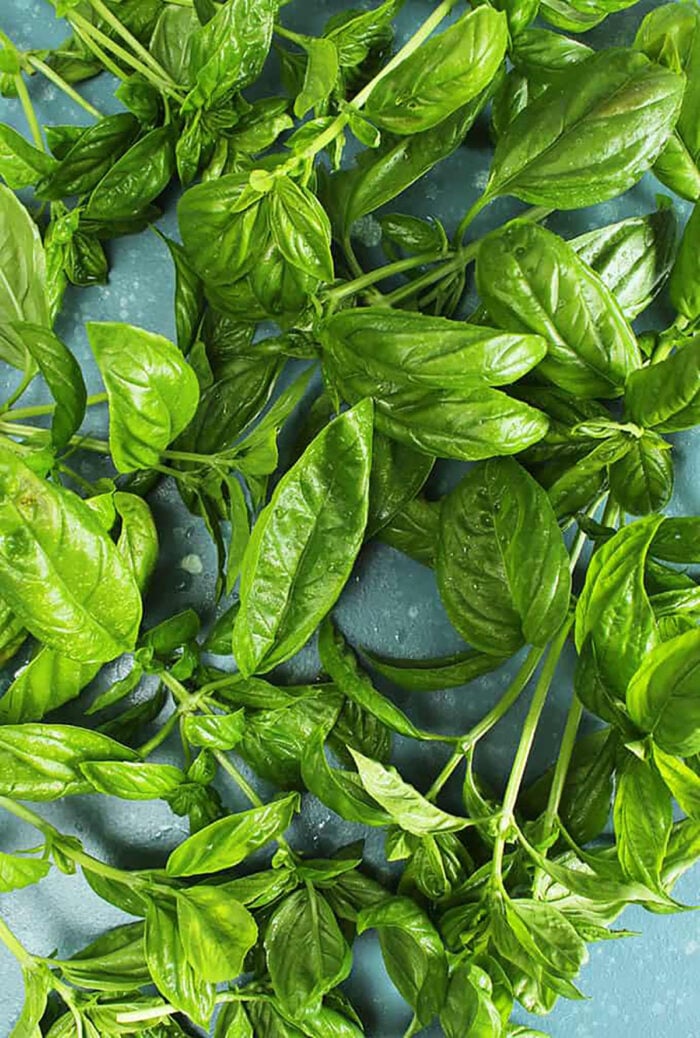
- Use fresh, bright green basil leaves. Avoid wilted or blackened leaves, which can dull both the flavor and the color.
- Store it with a thin layer of olive oil on top. This helps protect the surface from air and slows browning in the fridge.
- Don’t over-process it. Pesto should be blended enough to come together, but not so much that it turns into a completely uniform paste.
Basil Pesto Variations
One of the best things about homemade pesto is how easy it is to adjust based on what you have on hand. Here are a few simple ways to change it up:
- Swap the pine nuts: Walnuts are one of the easiest substitutes and still make a delicious pesto.
- Make it nut-free: Try sunflower seeds or pepitas for a similar texture.
- Use a mix of greens: Replace part of the basil with arugula, spinach, or kale for a slightly different flavor.
- Make it dairy-free: Leave out the parmesan or use a spoonful of nutritional yeast for a more cheese-like flavor.
- Add a little heat: A pinch of crushed red pepper flakes adds a subtle kick.
No matter which variation you use, keep the same basic method and adjust the olive oil as needed until the pesto reaches the consistency you like.
How to Use Homemade Pesto
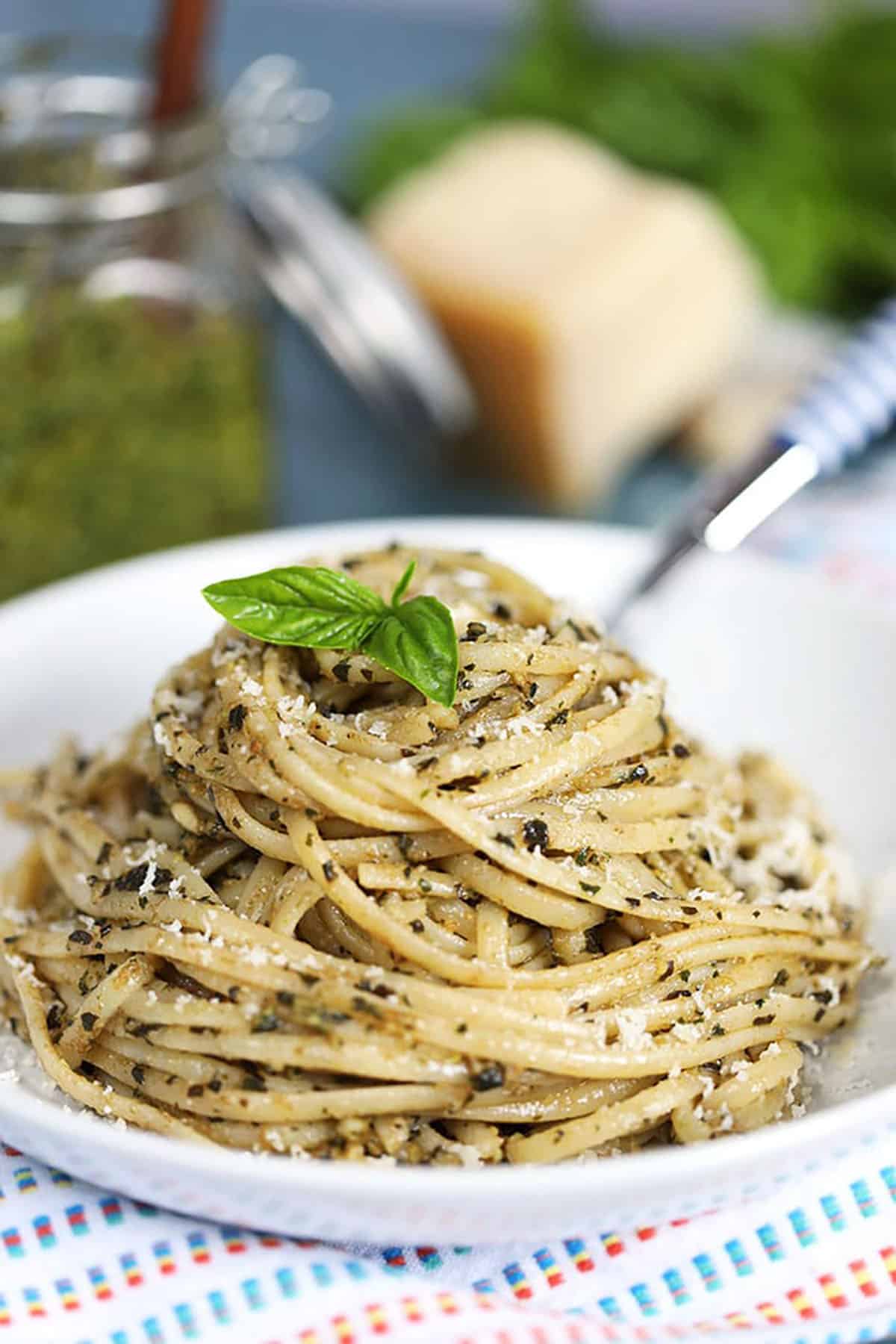
Beyond pasta, this basil pesto recipe is one of the handiest sauces to keep in the fridge. It’s great for tossing with pasta, spreading on sandwiches, spooning over grilled chicken or salmon, stirring into soups, or using as a quick flavor boost for roasted vegetables and grain bowls.
I love to use the Basil Pesto sauce in many recipes like this super easy Caprese Tortellini Salad and this Grilled Chicken recipe. It’s so totally easy and extra cheesy, a big hit with the kids!
- Basil Pesto Grilled Chicken Thighs
- Pesto Artichoke Stuffed Manicotti
- Grilled Chicken Pesto Sandwich
- Grilled Pesto Salmon with Strawberry Cucumber Salsa
It’s also fantastic as a sandwich spread like in this Chicken Cutlet Sandwich or these super simple Meatball Sliders….both great recipes for game day!
More Pesto Variations to Try
- Walnut Arugula Pesto – a peppery, slightly more robust pesto with a different nutty flavor
- Sun-Dried Tomato Pesto – richer, deeper, and more savory than classic basil pesto
- Easy Radish Green Pesto – a smart way to reduce food waste and use up extra greens
Want to see what else we have NOT growing in our garden…..check us out on Facebook!
Homemade Basil Pesto Recipe
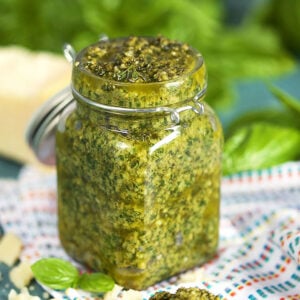
Equipment
- 1 food processor
- spatula
- measuring spoons
- measuring cups
Ingredients
- 4 ounces pine nuts
- 4 cups fresh basil , lightly packed
- 3 garlic cloves
- 1 cup coarsely grated parmesan cheese
- 1 tbsp lemon zest
- 1 cup olive oil
- kosher salt and fresh ground pepper, to taste
Instructions
- Add the pine nuts to a small skillet over medium heat and toast until lightly golden brown and fragrant, about 2 to 3 minutes. Set aside to cool slightly.
- In the bowl of a food processor, add half of the pine nuts, 3 cups of basil, 2 garlic cloves, 1/2 cup of parmesan, and the lemon zest. Process for about 30 seconds, or until finely chopped.
- With the food processor running on low speed, slowly drizzle in 3/4 cup of olive oil and continue processing until a loose, mostly smooth paste begins to form. Stop and scrape down the sides of the bowl as needed.
- Add the remaining pine nuts, basil, garlic, and parmesan to the bowl. Pulse until combined but still slightly textured.
- Transfer the pesto to a bowl with a rubber spatula and stir in the remaining olive oil. Season with kosher salt and black pepper to taste.
- Store the basil pesto in an airtight container in the refrigerator for up to 5 days, or freeze for longer storage.
Video
Notes
- Walnuts can be used instead of pine nuts.
- For a brighter flavor, don’t skip the lemon zest.
- Use fresh, vibrant basil leaves for the best color and flavor.
- To help prevent the pesto from oxidizing, smooth the surface and add a thin layer of olive oil before storing.
- To freeze, spoon the pesto into ice cube trays and freeze until firm. Transfer the cubes to a freezer bag or airtight container.
- Freeze for up to 3 months for the best flavor.
- Walnuts work well as a substitute for pine nuts.
- For the best texture, avoid over-processing the pesto into a completely smooth paste.
Nutrition
Nutrition information is automatically calculated, so should only be used as an approximation.
To help prevent browning, store pesto in an airtight container and smooth a thin layer of olive oil over the top before refrigerating. Lemon also helps keep the color bright.
Yes. Walnuts are one of the easiest and best substitutes for pine nuts in pesto.
Homemade basil pesto will keep in the refrigerator for about 5 days if stored in an airtight container.
It should be lightly packed, enough to fill the measuring cup without smashing the leaves down tightly.










Had lots of fresh basil growing in abundance in my garden. Love this pesto recipe. So fresh and full of flavors.
Thank you so much for your comment! I’m so happy you enjoyed it!
Delicious recipe! The added lemon zest was brilliant. Froze the entire recipe in mini muffin pans. Will then transfer into several freezer bags—to share. Thanks Kellie!
Thank you for your comment and tip on freezing the pesto! So handy!
My first time making pesto. Over Angel hair pasta it was quite delicious! I did have trouble using blender to get everything finely chopped and think I need to invest in a food processor so I can add to menu regularly.
Thank you so much! It is a little tougher to use a blender but it does work.
Loved this recipe!!! I froze the leftovers and now I can’t get them out of the ice cube tray. In freezer for 6 hours. Perhaps not long enough?
If you dip the bottom of the ice cube tray in hot water for a few seconds, the pesto will loosen up enough to remove.
THIS PESTO IS SIMPLY PERFECT!
It is the perfect combination of oil/garlic/basil, and the lemon zest gives it such a delightful freshness. Thank you, I will definitely share.
Thank you so much!!!
Excellent recipe … it was as easy as stated and, has a fabulous taste /flavour and colouring. Definitely going to make this again. I’ve never added lemon zest or juice in previous recipe but did as recipe asked and that really intensified the flavour
Thank you so much for your comment! The lemon really does take it to another level and helps the basil from turning brown.
Absolutely delicious recipe! Made as written plus a little lemon juice in addition to the lemon zest!! Super yummy!
I’m so happy you loved it! Thank you for your comment!
Can you freeze this recipe?
Hi Laura! Yes, you can absolutely freeze the pesto in an airtight container for up to 6 months. Thaw at room temperature.
Excellent recipe! Might be the best yet.
Thank you so much! I have to agree. 🙂 Have a great weekend!
Love this recipe! I toss in some fresh lemon balm instead of the zest just because I have so much of it growing right now. It’s fantastic on a thin homemade pizza crust too! Like a flat bread. I sprinkle a little more freshly grated parmesan on it when it comes out of the oven and it’s PERFECT!
I’m so glad you enjoyed it! I love the suggestion of lemon balm….definitely going to try that myself. Thank you for your kind comment.