
This post may contain affiliate links. Please read our disclosure policy.
Prime Rib Recipe is the perfect holiday centerpiece when you want something impressive, flavorful, and surprisingly easy to make. This juicy prime rib roast is coated in a mustard-herb crust, roasted until tender, and served with a creamy horseradish sauce for a classic special-occasion dinner.
I’ve been making this roast for years, and this is the method I rely on when I want foolproof results for Christmas dinner and any other holiday meals. With simple ingredients, clear temperature guidance, and an easy roasting method, it’s a recipe that feels elegant without being complicated.
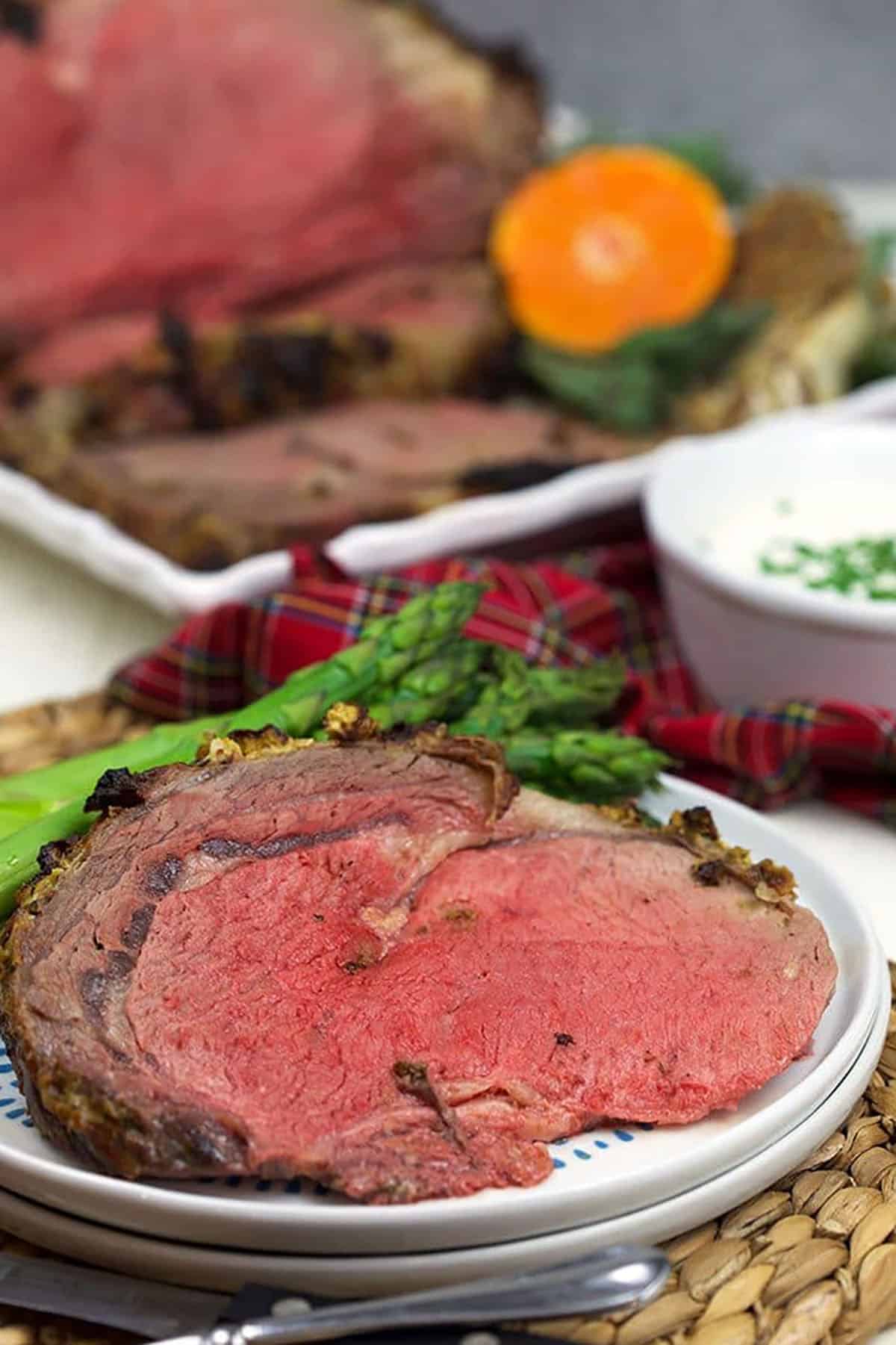
Table of Contents
- Kellie’s Note A Roast That Will Wow
- Why This Prime Rib Recipe Works
- Ingredients for Prime Rib
- What Is Prime Rib?
- How to Cook Prime Rib
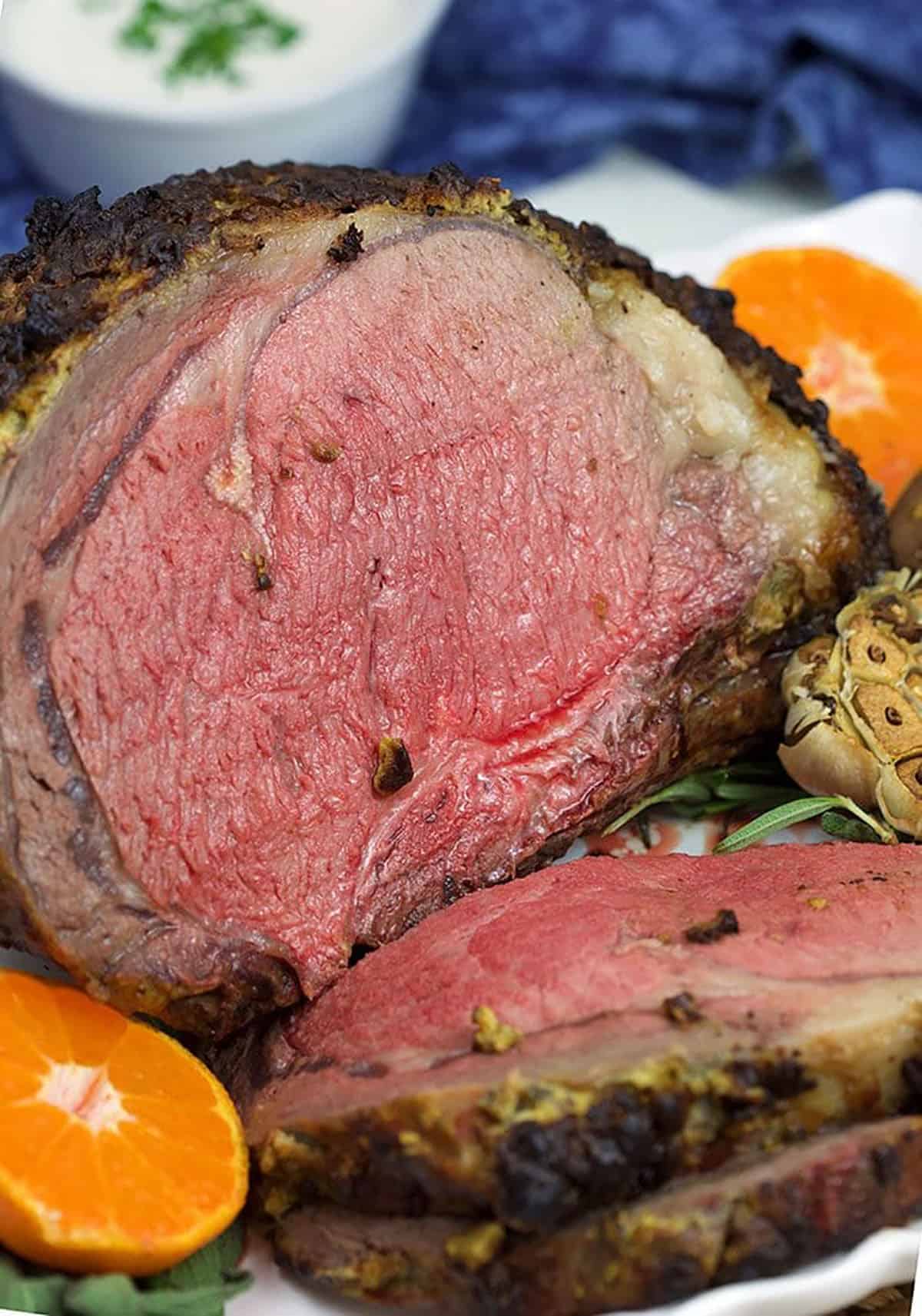
- What Temperature Should Prime Rib Be Cooked To?
- Kellie’s Tips for Perfect Prime Rib
- How Much Prime Rib Per Person Should You Buy?
- Should You Choose Bone-In or Boneless Prime Rib?
- What to Serve With Prime Rib Roast
- Can You Make Prime Rib Ahead of Time?
- How to Store Leftover Prime Rib
- How to Reheat Prime Rib Without Drying It Out
- More Easy Beef Recipes
- Prime Rib Roast Recipe
Perfect and super simple recipe! Highly recommend, especially if you’re a newbie to prime rib.
– Cheri
Updated for 2026: This post includes clearer temperature guidance, roast size tips, reheating instructions, and answers to common prime rib questions.
Kellie’s Note
A Roast That Will Wow

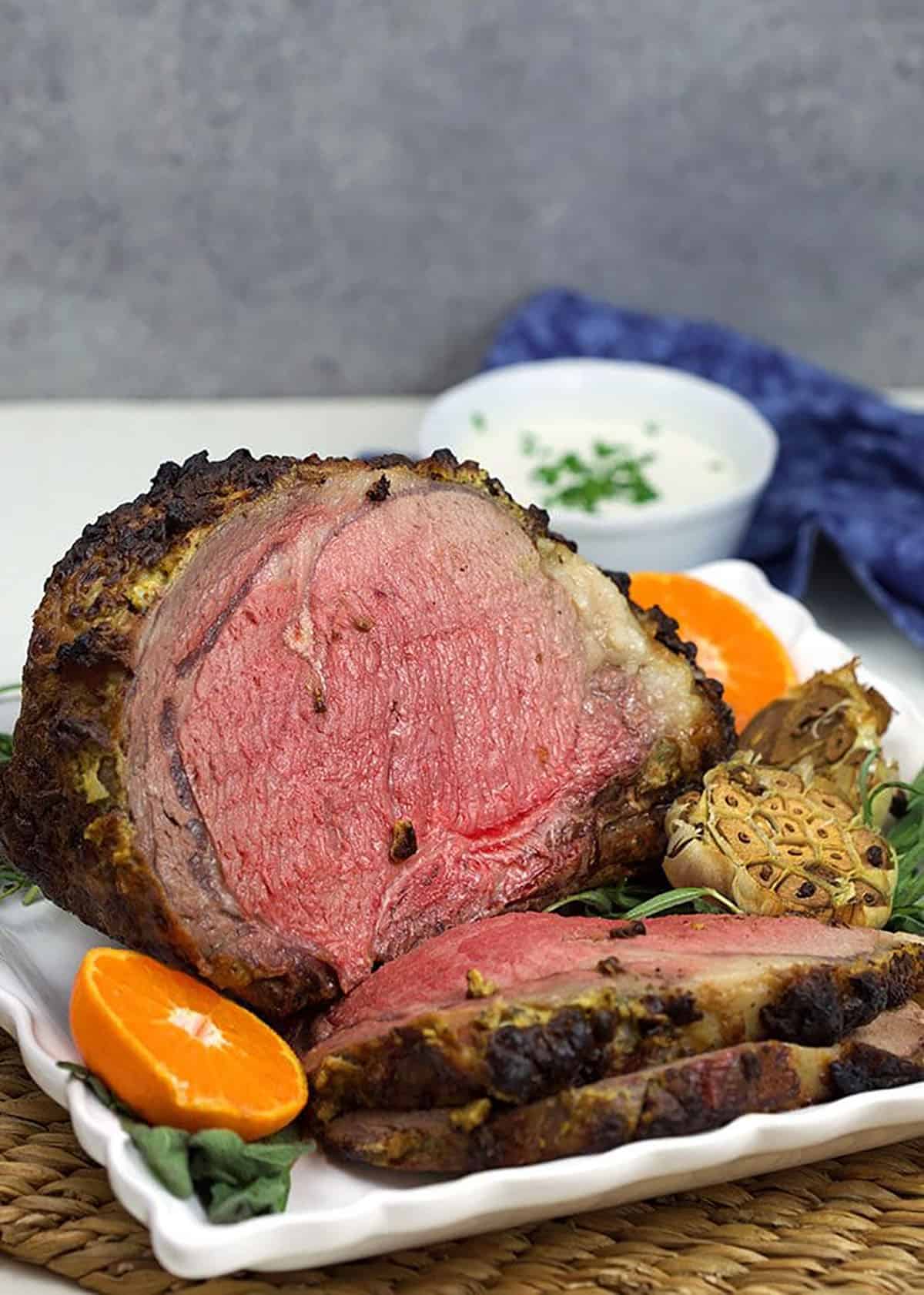
If you want to impress your guests, a standing rib roast will usually do it. I love a good beef recipe and this is the king of all roasts. It can go by many names, Prime Rib Roast, Standing Rib Roast, Bone-in Ribeye Roast. Call it what you want, this is the easiest, most jaw dropping roast I’ve ever made.
I made my first roast about 10 years ago for Christmas dinner and over the years this is the recipe that developed. This recipe is so simple and stress-free, it’s the best prime rib recipe perfect for special occasions. Trust me here. Give it a go this year and I bet it will become your new holiday tradition.
Just a little bit about this cut of beef, if you’re wondering what the difference is between Prime Rib Roast and a Standing Rib Roast, they can be the same thing, and they are not. All Prime Rib Roasts are Standing Rib Roasts but not all Standing Rib Roasts are Prime Rib.

Why This Prime Rib Recipe Works
- It’s simple enough for holidays, Christmas dinner, or any special occasion.
- The high-heat start helps create a beautifully browned crust.
- Roasting at a lower temperature helps the meat cook more evenly.
- A mustard and herb coating adds bold flavor and locks in moisture.
- Clear temperature guidance makes it much easier to hit your ideal doneness.
Ingredients for Prime Rib
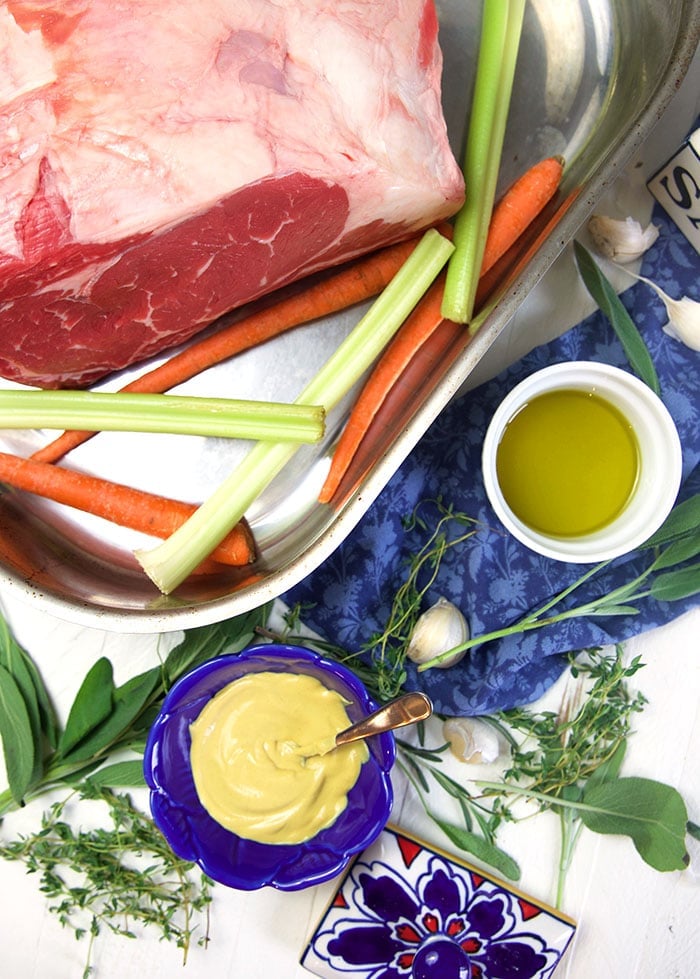
- Beef Rib Roast – I use a bone-in roast for my standing beef rib roast because the bones act as a roasting rack promoting a perfectly cooked roast. You can use a boneless prime rib roast but your cooking time will be shorter so plan accordingly.
- Dijon Mustard – Mustard adds a great flavor to the herb crust. You can substitute with your favorite mustard if you prefer.
- Garlic – Garlic cloves add a nutty flavor to the crust
- Herbs – A combination of fresh herbs like rosemary, sage and thyme are my favorites.
- Seasoning – Just kosher salt and black pepper are used to keep it simple.
For the full ingredient list and instructions, see the recipe card below.
What Is Prime Rib?
Prime rib, also called a standing rib roast when cooked bone-in, is one of the most flavorful and tender cuts of beef. It comes from the rib section and is known for its rich marbling, which helps keep the meat juicy and tender during roasting.
Despite the name, a prime rib roast does not always have to be USDA Prime grade. You can make an excellent prime rib roast with Prime or Choice beef, as long as the roast has good marbling and you cook it carefully.
How to Cook Prime Rib
- Bring the roast to room temperature. Remove the roast from the refrigerator 1 to 2 hours before cooking so it roasts more evenly.
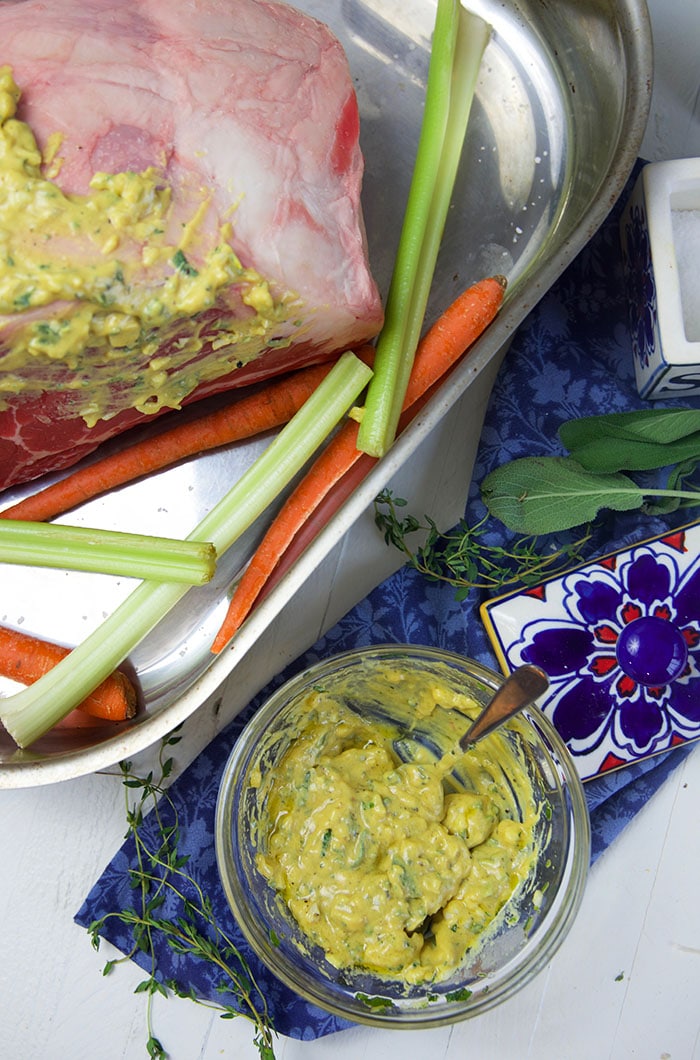
- Prep the roast. Pat the meat dry with paper towels, then coat it with mustard, herbs, garlic, salt, and pepper.
- Start with high heat. Roast at a higher temperature first to build a flavorful crust. I use this same method for my Roast Turkey Recipe.
- Lower the oven temperature. Continue roasting at a lower temperature until the roast reaches your desired internal temperature.
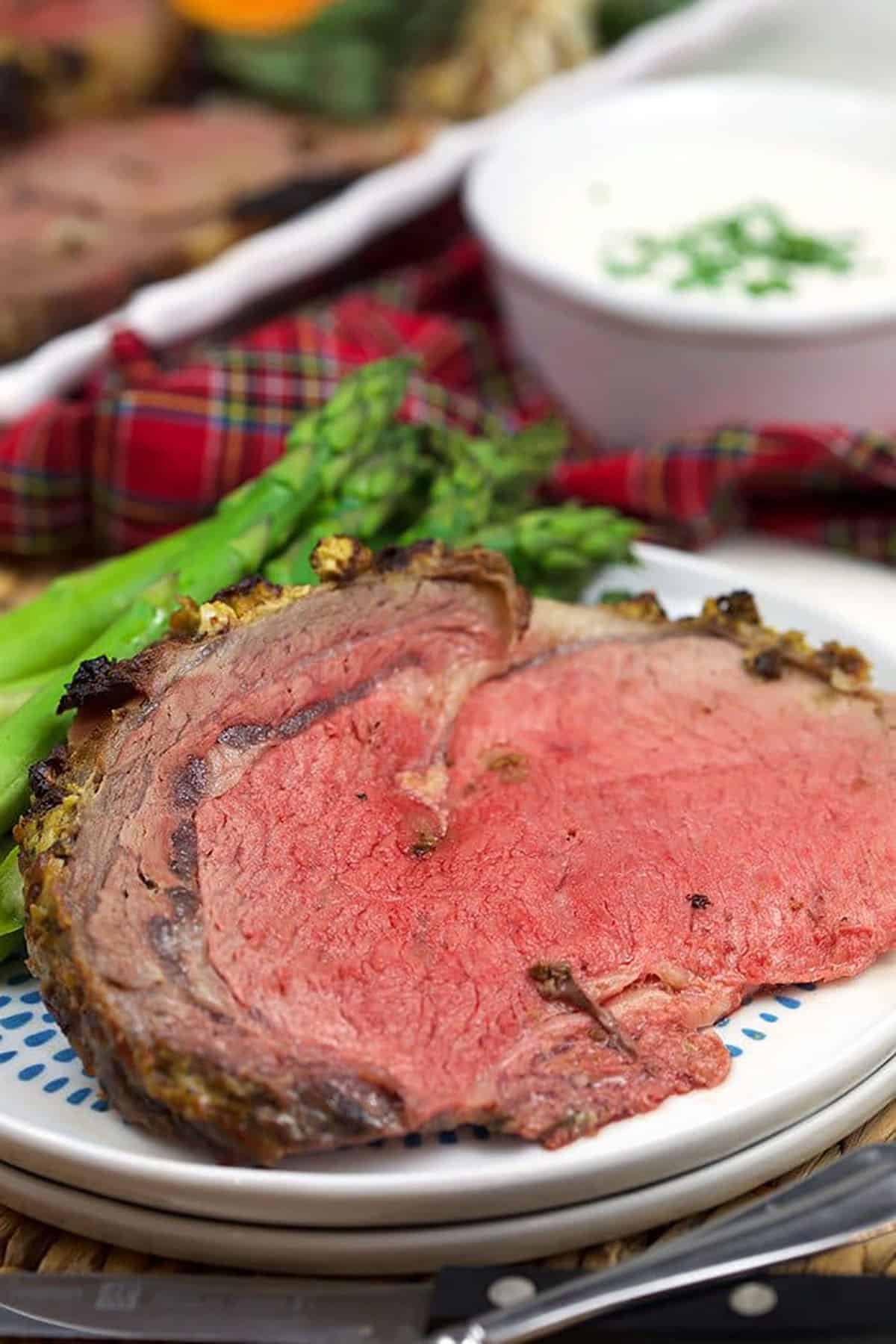
- Rest before slicing. Transfer the roast to a cutting board and let it rest for 20 to 30 minutes before carving.
- Slice and serve. Slice against the grain and serve with horseradish sauce or au jus.
What Temperature Should Prime Rib Be Cooked To?
The best way to know when your prime rib roast is done is to use an instant-read thermometer. Since the roast will continue to rise in temperature as it rests, remove it from the oven a little before it reaches your final target temperature.
Prime Rib Internal Temperature Guide
- Rare: pull at 115 to 120°F
- Medium-rare: pull at 120 to 125°F
- Medium: pull at 130 to 135°F
- Medium-well: pull at 140 to 145°F
For the juiciest and most tender roast, I recommend cooking prime rib to medium-rare.
Don’t Skip the Resting Time
Let the roast rest for at least 20 to 30 minutes before slicing. This gives the juices time to redistribute throughout the meat and helps keep every slice tender and flavorful.
Bonus points for the post roast resting period too….this gives you time to cook your side dishes like this easy Potato Gratin or my Creamy Christmas Fettuccine and suck down a glass of wine or a Bellini or, even, throw back a few shots.
Kellie’s Tips for Perfect Prime Rib
- Serve with sauce. Horseradish sauce or au jus adds even more flavor and makes every slice feel extra special.
- Start with room-temperature beef. Let the roast sit out for 1 to 2 hours before cooking so it roasts more evenly.
- Use a meat thermometer. Prime rib is too expensive to guess on doneness, so an instant-read thermometer is the best tool you can use.
- Pull it early. Remove the roast from the oven 5 to 10 degrees before your target temperature because it will continue to cook while it rests.
- Rest before slicing. Give the roast at least 20 to 30 minutes to rest so the juices stay in the meat instead of running onto the cutting board.
- Slice only what you need. Keeping the rest of the roast intact helps leftovers stay juicier.
How Much Prime Rib Per Person Should You Buy?
A good rule of thumb is to plan on about 1 pound of bone-in prime rib per person or about 3/4 pound per person for boneless prime rib. If you want leftovers for sandwiches, reheating, or next-day meals, it’s a good idea to buy a little extra.
Quick Prime Rib Size Guide
- 4 people: 4 to 5 pounds bone-in
- 6 people: 6 to 7 pounds bone-in
- 8 people: 8 to 10 pounds bone-in
- 10 people: 10 to 12 pounds bone-in
If you’re buying boneless prime rib, you can reduce the total weight slightly.
Should You Choose Bone-In or Boneless Prime Rib?
Bone-in prime rib is often preferred for holiday meals because the bones can help insulate the roast during cooking and add extra flavor. It also makes for a beautiful presentation on the table.
Boneless prime rib is easier to carve and can be a little simpler to manage in the oven. Both options work well, so the best choice really depends on how you want to serve it and how comfortable you are slicing the roast.
For the most traditional presentation, I recommend a bone-in standing rib roast. For easy carving, boneless is a great option.
What to Serve With Prime Rib Roast
This prime rib roast pairs beautifully with classic holiday side dishes and sauces. Some of my favorite options include:
- Best Scalloped Potatoes Recipe
- Twice Baked Potatoes
- Green Beans Almondine
- Loaded Iceberg Wedge Salad
- Cheesy Creamed Spinach Gratin
- The Best Creamy Horseradish Sauce
- Easy Homemade Steak Sauce Recipe
- How to Cook Lobster Tail Perfectly
- Easy Bearnaise Sauce Recipe
If you’re serving this for Christmas or another holiday dinner, add one or two make-ahead sides to keep the meal stress-free.
Can You Make Prime Rib Ahead of Time?
You can prep several parts of this recipe ahead of time to make holiday cooking easier. The herb and mustard mixture can be made in advance, and the horseradish sauce can be prepared a day or two ahead and stored in the refrigerator.
For the best texture and doneness, I recommend roasting the prime rib fresh the day you plan to serve it.
How to Store Leftover Prime Rib
Store leftover prime rib in an airtight container in the refrigerator for up to 3 to 4 days. For best results, keep the slices as large as possible so they stay more tender and juicy.
You can also freeze leftover prime rib. Wrap it tightly in plastic wrap and foil, then transfer it to a freezer-safe container or bag for up to 2 months.
How to Reheat Prime Rib Without Drying It Out
The best way to reheat prime rib is gently and slowly.
- Place the slices in a baking dish.
- Add a splash of beef broth or au jus.
- Cover tightly with foil.
- Warm in a 250°F oven until heated through.
This low-and-slow method helps keep the meat from drying out or overcooking. You can also reheat slices in a skillet over very low heat with a little broth or beef stock.
More Easy Beef Recipes
- Best Filet Mignon
- Red Wine Braised Short Ribs
- Bacon Wrapped Filet Mignon
- Grilled Filet Mignon
- Easy Beef Tenderloin Roast
Prime Rib Roast Recipe
Equipment
- 1 roasting pan
Ingredients
- 6 pound rib prime rib roast
- 4 tablespoons dijon mustard
- 3 tablespoons olive oil
- 5 garlic cloves, chopped fine
- 1 tablespoon kosher salt
- 1 tablespoon freshly ground pepper
- 1/4 cup chopped fresh herbs, I use rosemary, sage and thyme
- 1 cup sour cream
- 1/4 cup prepared horseradish
- 1 1/2 tablespoons dijon mustard
- 1 teaspoon champagne vinegar
- 1 teaspoon worcestershire sauce
- 1/2 tablespoon fresh chopped chives
- salt and pepper to taste
Instructions
- In a small bowl, combine the dijon, olive oil, garlic, salt, pepper and herbs in a bowl.
- Place the rib roast in a large roasting pan, bone side down, and spread the mustard/herb rub thickly all over the surface of the roast. Transfer to the refrigerator and chill for 1 hour or overnight.
- Remove the roast from the refrigerator and allow to rest at room temperature two hours prior to roasting. Preheat the oven to 500 degrees and place the oven rack to the second lowest position.
- Roast the meat for 30 minutes and then reduce the heat to 325 degrees. Continue roasting for approximately another hour and 30 minutes or until the internal temperature reaches 125 degrees on a meat thermometer (for medium-rare). Remove the meat from the oven and let rest for 30-40 minutes covered with foil.
- While the meat is resting, whisk together the sour cream, horseradish, dijon, vinegar, worcestershire sauce, salt, pepper and chives.
- Move the meat to a cutting board for carving and serve with the sauce.
Video
Notes
- You can make the herb butter mixture up to 3 days in advance. Store in an airtight container in the refrigerator then bring to room temperature before using.
- Let the roast sit at room temperature for 1 to 2 hours before roasting for more even cooking.
- Use an instant-read thermometer for the most accurate results.
- Remove the roast from the oven 5 to 10 degrees before it reaches your final desired temperature, since it will continue cooking as it rests.
- For medium-rare prime rib, pull the roast at about 120 to 125°F.
- Rest the roast for 20 to 30 minutes before slicing.
- Slice against the grain and serve with horseradish sauce or au jus.
Nutrition
Nutrition information is automatically calculated, so should only be used as an approximation.
You can prep the seasoning mixture and sauce ahead of time, but the roast itself is best cooked fresh for the most tender and juicy results.
Plan on about 1 pound per person for bone-in prime rib or about 3/4 pound per person for boneless prime rib.
Bone-in prime rib is great for presentation and flavor, while boneless prime rib is easier to carve. Both work well.
An instant-read meat thermometer is the best way to check doneness accurately.
Let the roast rest for 20 to 30 minutes before slicing so the juices can redistribute.
Reheat it gently in a low oven with a splash of broth or au jus, covered tightly with foil.









Delicious! Perfect! Easy! Will make Philly Cheesesteak wit left overs.
What a great idea! I’m happy you liked it.
Perfect and super simple recipe! Highly recommend, especially if you’re a newbie to prime rib.
Thank you so much!
How much of each of the herbs? I don’t want to use too much of either. I have fresh thyme, rosemary and sage…. Thank you!
1/4 cup total of whatever herbs you want to use.